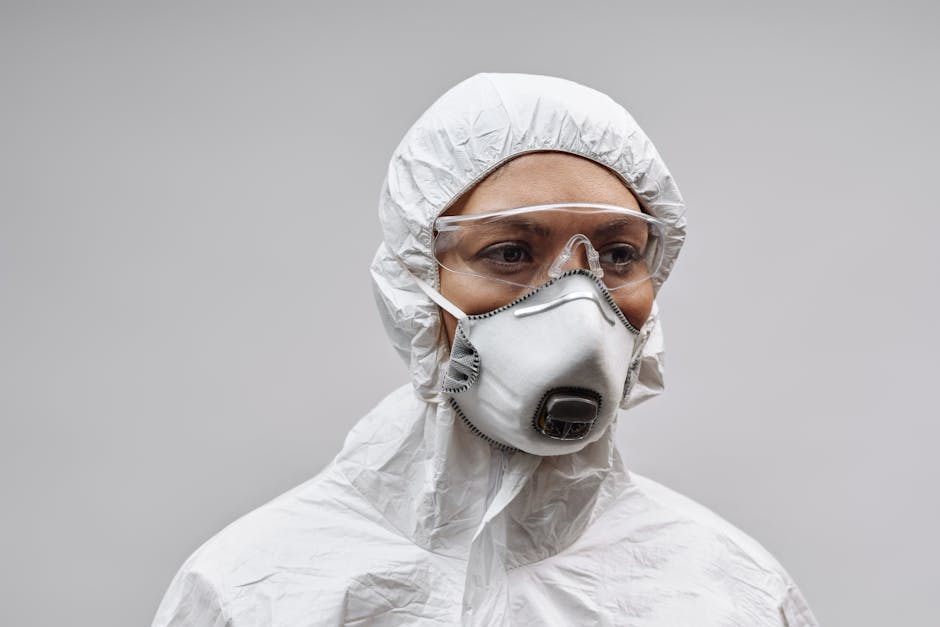
- The World Health Organization declared the Ebola outbreak in eastern DR Congo a Public Health Emergency of International Concern due to the risk of international spread.
- The current Ebola outbreak in DR Congo has approximately 246 confirmed cases and 80 deaths, but the context is uniquely challenging due to armed conflict and community mistrust.
- Healthcare workers in DR Congo face violence and misinformation, making containment of the Ebola outbreak a difficult task.
- The Ebola outbreak in DR Congo is unfolding in a region with weak health infrastructure and porous borders, increasing the risk of cross-border transmission.
- The WHO’s decision to declare a PHEIC was driven by the risk of escalation and cross-border transmission, rather than the current case count.
Is the Ebola outbreak in the Democratic Republic of Congo a looming global crisis? The World Health Organization (WHO) recently declared the resurgence of the virus in eastern DR Congo a Public Health Emergency of International Concern (PHEIC), reigniting fears of a widespread health catastrophe. While the current figures—approximately 246 confirmed cases and 80 deaths—do not approach the scale of the 2014-2016 West Africa epidemic, the context is uniquely challenging. Armed conflict, community mistrust, and porous borders with neighboring countries have hampered response efforts. Unlike past outbreaks, this one is unfolding in a region where healthcare workers face violence and misinformation, making containment a herculean task. The declaration underscores not the magnitude of the outbreak, but the very real risk of international spread due to regional instability and weak health infrastructure.
What Triggered the Global Health Emergency Declaration?

The WHO’s decision to declare a PHEIC for the DR Congo Ebola outbreak was driven less by the current case count and more by the risk of escalation and cross-border transmission. A PHEIC is the highest level of alarm the agency can sound, reserved for events that pose a public health risk to multiple countries and potentially require a coordinated international response. In this instance, the Emergency Committee emphasized the spread of the virus into urban centers like Goma, a city of over two million people and a major transit hub near the borders of Rwanda and Uganda. The presence of Ebola in such a densely populated, mobile area dramatically increases the potential for international dissemination. Although the outbreak does not meet the technical definition of a pandemic—which requires sustained human-to-human transmission across multiple continents—the conditions on the ground make containment precarious. The declaration aims to mobilize urgent funding, personnel, and political will to prevent a worst-case scenario.
What Evidence Supports the WHO’s Assessment?

Data from the Ministry of Health in DR Congo and WHO field reports confirm sustained transmission in North Kivu and Ituri provinces, regions plagued by over 100 armed groups and chronic displacement of civilians. According to WHO’s July 2023 statement, 246 probable and confirmed cases have been reported, with a case fatality rate hovering around 32%. Crucially, 20% of cases are linked to known transmission chains, indicating hidden spread within communities. Dr. Tedros Adhanom Ghebreyesus, WHO Director-General, stated, “The risk of regional spread remains very high, and the potential for global impact cannot be ignored.” Additionally, genomic sequencing has shown the virus strain belongs to the Zaire ebolavirus, the most lethal variant, with a historical mortality rate of up to 90% without treatment. While vaccines and therapeutics exist, their deployment is hindered by security threats; over 30 health workers have been attacked since the outbreak began, disrupting contact tracing and vaccination campaigns.
Are There Counterarguments to the Emergency Designation?

Some public health experts argue that the PHEIC declaration may be premature or politically motivated, given the relatively contained case numbers compared to past emergencies. They caution against alarmism that could lead to travel and trade restrictions, which often do more harm than good by isolating affected regions and discouraging medical aid. In a Reuters analysis, epidemiologists noted that the current outbreak remains regional and that previous Ebola flare-ups in DR Congo were managed without a global alert. They emphasize that declaring a PHEIC could divert resources from other pressing global health issues, such as cholera in Haiti or mpox resurgence in Central Africa. Others worry that the focus on international risk may overshadow the daily realities of Congolese communities living under both disease and conflict, potentially framing the crisis as a threat to the global North rather than a humanitarian emergency in the Global South.
What Are the Real-World Consequences of the Outbreak?

The human cost of the Ebola outbreak extends far beyond the official case count. In eastern DR Congo, hospitals have shut down due to insecurity, and routine immunization programs have been suspended, raising the risk of measles and polio resurgence. Families are afraid to seek medical care, fearing both infection and violence. In Beni and Butembo, markets have thinned as traders avoid suspected hotspots, deepening poverty in an already fragile economy. Cross-border movement has increased scrutiny at checkpoints, but informal pathways remain unmonitored, creating loopholes for undetected transmission. Uganda and Rwanda have bolstered surveillance and stockpiled vaccines, but health systems in the region remain underfunded. The outbreak has also reignited debates about global health equity, as the same communities that suffered during previous Ebola epidemics are once again on the frontlines, this time with diminished trust in authorities due to years of neglect and conflict.
What This Means For You
For most people outside Central Africa, the immediate risk of contracting Ebola remains extremely low. However, the outbreak is a reminder of how interconnected global health truly is. Weak health systems anywhere can become threats everywhere, especially in our era of rapid travel and climate-driven displacement. Supporting international health organizations and advocating for equitable vaccine distribution are practical steps toward preventing future emergencies. The situation in DR Congo also highlights the importance of addressing root causes like conflict and misinformation, not just treating symptoms of disease.
As the world watches the Ebola response in DR Congo, a critical question lingers: How can global health systems protect vulnerable populations without reinforcing colonial patterns of crisis intervention? The answer may lie not just in faster vaccines, but in longer-term investments in trust, infrastructure, and peacebuilding.
Source: BBC