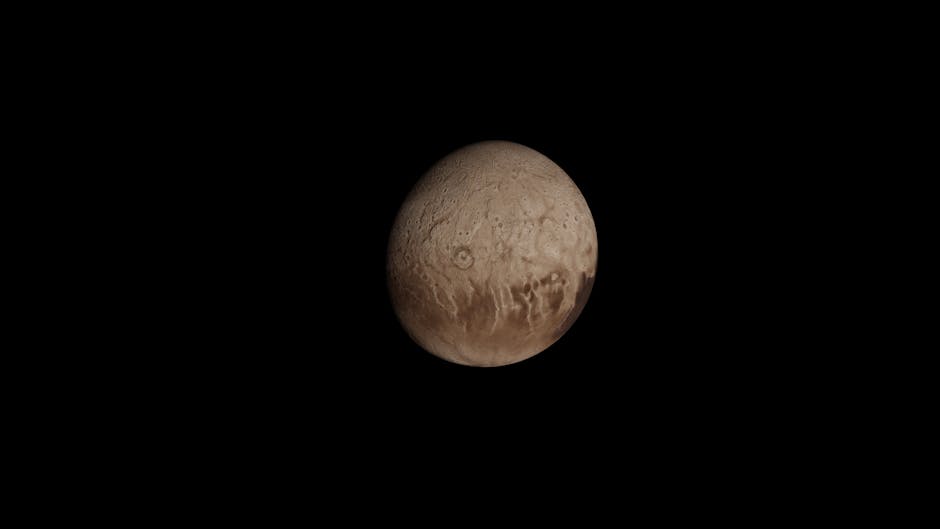
- New evidence from NASA’s New Horizons mission reveals Pluto’s active geology and complex atmosphere.
- Pluto’s features, including multiple moons, challenge the IAU’s 2006 definition of a planet.
- Over 500 exoplanets exhibit similar traits to Pluto, calling for a reevaluation of planetary criteria.
- The IAU’s 2006 definition prioritizes location over intrinsic properties, sparking debate among scientists.
- Recent analysis in Nature Geoscience argues that geophysical characteristics should define a planet.
In 2006, the International Astronomical Union (IAU) demoted Pluto from full planetary status, reducing it to a dwarf planet and sparking outrage among astronomers and the public alike. Nearly two decades later, new evidence from NASA’s New Horizons mission reveals that Pluto possesses active geology, a complex atmosphere, and multiple moons—features previously thought to distinguish only the eight recognized planets. Recent analysis of these findings, published in Nature Geoscience, argues that if geophysical characteristics define a planet, Pluto not only qualifies but challenges the very foundation of the IAU’s 2006 definition. With over 500 exoplanets now identified in our galaxy exhibiting similar traits, the criteria for what constitutes a planet may be due for a fundamental rethink.
The Definition That Changed Everything

The IAU’s 2006 decision hinged on three criteria: a planet must orbit the Sun, be spherical due to its own gravity, and have cleared its orbital neighborhood of debris. Pluto satisfies the first two but fails the third, sharing its orbit with numerous objects in the Kuiper Belt. This final condition has since drawn sharp criticism, particularly from planetary scientists who argue it is more about location than intrinsic properties. The debate intensified after the 2015 New Horizons flyby, which captured images of vast nitrogen ice plains, mountain ranges of water ice, and possible subsurface oceans. These discoveries suggested Pluto is more dynamically active than Mars or even Mercury, raising the question: if geological complexity defines planetary status, why is Pluto excluded? The current definition, critics say, reflects an outdated astronomical perspective rather than modern planetary science.
What New Horizons Revealed About Pluto

The New Horizons spacecraft, launched in 2006 and arriving at Pluto in 2015, transformed our understanding of the distant world. It captured high-resolution images of Sputnik Planitia, a heart-shaped glacier larger than Texas, and detected tectonic features indicating ongoing geological activity. Data also revealed a thin but layered atmosphere that interacts with solar radiation, creating complex hydrocarbon hazes. Perhaps most surprising was evidence suggesting a subsurface ocean—kept liquid by radioactive decay in Pluto’s core—that could potentially harbor conditions suitable for primitive life. These findings, analyzed by researchers at the Southwest Research Institute and NASA’s Jet Propulsion Laboratory, place Pluto in a class of celestial bodies that behave like planets regardless of their orbital environment. The mission’s success has emboldened scientists to push back against the IAU’s narrow classification, advocating for a geophysical definition that emphasizes internal processes over orbital dominance.
Science Versus Astronomy: A Clash of Definitions

The core of the debate lies in a disciplinary divide: planetary scientists, who study the physical and chemical properties of celestial bodies, increasingly favor a geophysical definition of a planet—one based on whether an object is large enough to be rounded by gravity and exhibit geological activity. In contrast, astronomers, particularly those focused on orbital mechanics, defend the IAU’s celestial-centric criteria. In 2017, a group of scientists led by planetary geologist Alan Stern proposed a new definition: any sub-stellar mass body that has never undergone nuclear fusion and has sufficient mass to assume a nearly round shape should be considered a planet. Under this model, not only Pluto, but over 100 bodies in our solar system—including moons like Europa and Titan—would qualify. While this would dramatically expand the planetary count, proponents argue it better reflects scientific understanding and educational clarity.
Implications for Planetary Science and Education

Reclassifying Pluto would have far-reaching consequences beyond nostalgia or public sentiment. It would force a reevaluation of how planets are defined in textbooks, research frameworks, and public outreach. Moons like Ganymede and Titan, which are larger than Mercury and exhibit atmospheres and organic chemistry, would also qualify under a geophysical model, reshaping our understanding of planetary systems. For educators, this could simplify rather than complicate teaching—emphasizing physical characteristics over technical orbital criteria. Moreover, as exoplanet discoveries grow, a flexible, geologically based definition could provide a more consistent framework for classifying distant worlds, many of which cannot be observed for orbital clearing but can be assessed for size and shape via indirect methods.
Expert Perspectives
“The IAU definition was a well-intentioned but flawed compromise,” says Dr. Kirby Runyon, a planetary scientist at the Johns Hopkins Applied Physics Laboratory and co-author of the 2017 geophysical proposal. “We should define planets by what they are, not where they are.” Conversely, astronomer Dr. Mike Brown, known for discovering Eris—a body that helped trigger Pluto’s demotion—defends the current standard. “If we don’t require orbital dominance, we could end up with hundreds of planets in our solar system,” he argues in his book *How I Killed Pluto*. The tension reflects a deeper philosophical divide: should science prioritize clean categorization or embrace complexity?
As NASA plans future missions to the outer solar system, including potential orbiters for Uranus and Neptune, the conversation around planetary classification is unlikely to fade. The upcoming Vera C. Rubin Observatory, set to begin full operations in 2025, will survey the Kuiper Belt in unprecedented detail, potentially identifying dozens of Pluto-like bodies. Whether the IAU revisits its 2006 resolution remains uncertain, but the momentum behind a geophysical redefinition is growing. The real question may not be whether Pluto is a planet, but whether science is ready to redefine one of its oldest categories for the modern era.
Source: BBC