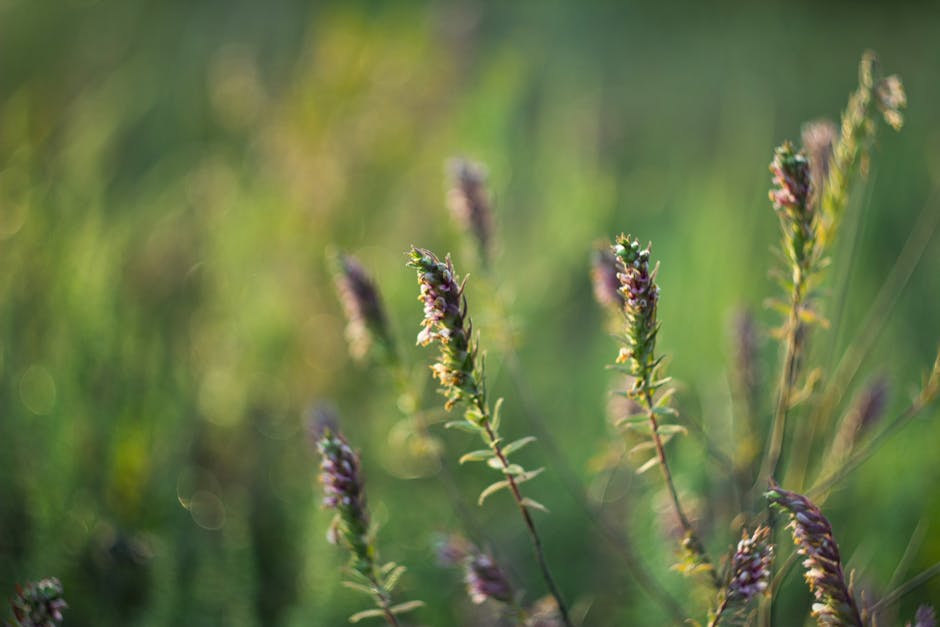
- A decade-long conservation effort led to a 700% increase in the Kentish milkwort population, highlighting the effectiveness of targeted conservation.
- The Kentish milkwort’s decline was largely driven by the degradation of its chalk grassland habitat due to agricultural expansion and urban development.
- The plant’s limited seed dispersal and low genetic diversity contributed to its struggle to recover from habitat loss.
- Community involvement and long-term monitoring were crucial components of the conservation effort’s success.
- The Kentish milkwort’s revival raises hopes for rescuing other vanishing flora species facing similar threats.
How does a plant that was teetering on the edge of extinction suddenly rebound? For the Kentish milkwort (Asperula cynanchica), a diminutive wildflower with star-shaped white blooms, the answer lies in a decade-long conservation effort that combined ecological precision, community involvement, and long-term monitoring. Once restricted to just a few coastal sites in Kent and East Sussex, the species had dwindled to fewer than 1,000 individuals by the early 2010s. With its chalk grassland habitat disappearing under development and agricultural expansion, the outlook was bleak. Yet, by 2023, surveys revealed a seven-fold increase in population—raising a critical question: can this rare plant’s revival serve as a blueprint for rescuing other vanishing flora?
What Caused the Kentish Milkwort’s Decline?

The decline of the Kentish milkwort was driven by the degradation of its specialized chalk grassland ecosystem, one of the most biodiverse habitats in the UK. These thin-soiled, nutrient-poor environments support a unique suite of plant and insect species, but they are highly vulnerable to agricultural intensification, urban development, and scrub encroachment. By the 2000s, over 80% of the UK’s chalk grasslands had been lost. The milkwort, which thrives in open, sun-drenched patches with minimal competition, struggled as taller vegetation took over. Compounding the issue, the plant’s limited seed dispersal and low genetic diversity made natural recovery nearly impossible. Conservationists recognized that without direct human intervention, extinction in the wild was a likely outcome.
What Conservation Actions Sparked the Comeback?

Beginning in 2013, a coalition led by Natural England, the Kent Wildlife Trust, and volunteers from the Botanical Society of Britain and Ireland launched a targeted recovery program. They restored over 50 hectares of chalk grassland by removing invasive scrub, reintroducing grazing with native livestock such as sheep and rabbits, and manually sowing seeds collected from surviving populations. Crucially, they also implemented a long-term monitoring system to track germination rates, flowering success, and population density. By 2023, the number of Kentish milkwort plants had surged from fewer than 1,000 to over 7,000 across 12 sites. According to Dr. Emily Carter, a conservation ecologist at the University of Sussex, “The recovery of Asperula cynanchica demonstrates that even species on the brink can rebound if we restore their ecological context with precision and persistence.”
Are There Skeptics About the Long-Term Success?

Despite the encouraging numbers, some ecologists caution against declaring full success. Dr. Marcus Lee of the Royal Botanic Gardens, Kew, notes that while population counts have risen, genetic diversity remains low across the restored sites—a potential vulnerability to disease or environmental shifts. “A population can look healthy on paper but still be a genetic monoculture,” he warns. Others point out that the recovery is heavily dependent on ongoing management; without continued grazing and scrub control, the habitat could degrade rapidly. Additionally, climate change introduces new pressures: drier summers may stress young seedlings, and shifting seasonal patterns could disrupt pollination. Some experts argue that true resilience will only be achieved if the milkwort can establish self-sustaining populations in new regions beyond its historic range—a challenge still unmet.
What Are the Real-World Implications of This Recovery?

The Kentish milkwort’s resurgence has already influenced conservation policy and practice. The success has prompted the UK government to expand its agri-environment schemes, offering farmers financial incentives to manage land for biodiversity. At the local level, schools and community groups have adopted “milkwort monitoring” as a citizen science project, fostering public engagement with ecological restoration. Beyond the UK, the case is being studied by conservationists in Europe working to save similar rare calcicole (lime-loving) plants. For instance, efforts to revive the Albanian endemic Dianthus callizonus are modeling their approach on the Kentish milkwort strategy. Moreover, the recovery underscores the importance of protecting entire ecosystems rather than focusing solely on charismatic animal species.
What This Means For You
The rebound of a small, unassuming wildflower may seem distant from daily life, but it reflects a broader truth: ecosystems are interconnected, and even minor species play vital roles. The return of the Kentish milkwort supports pollinators, stabilizes soil, and enriches the genetic tapestry of the countryside. For citizens, it’s a reminder that conservation works when supported by science, funding, and community action. You don’t need to be a biologist to contribute—supporting local land trusts, participating in biodiversity surveys, or advocating for green policies all make a difference. This success story proves that extinction is not always inevitable.
But a critical question remains: can we scale such targeted interventions to address the accelerating global biodiversity crisis? With nearly one million species at risk worldwide, as reported by the Intergovernmental Science-Policy Platform on Biodiversity and Ecosystem Services, the Kentish milkwort offers hope—but also highlights how much more needs to be done to protect Earth’s fragile web of life.
Source: BBC