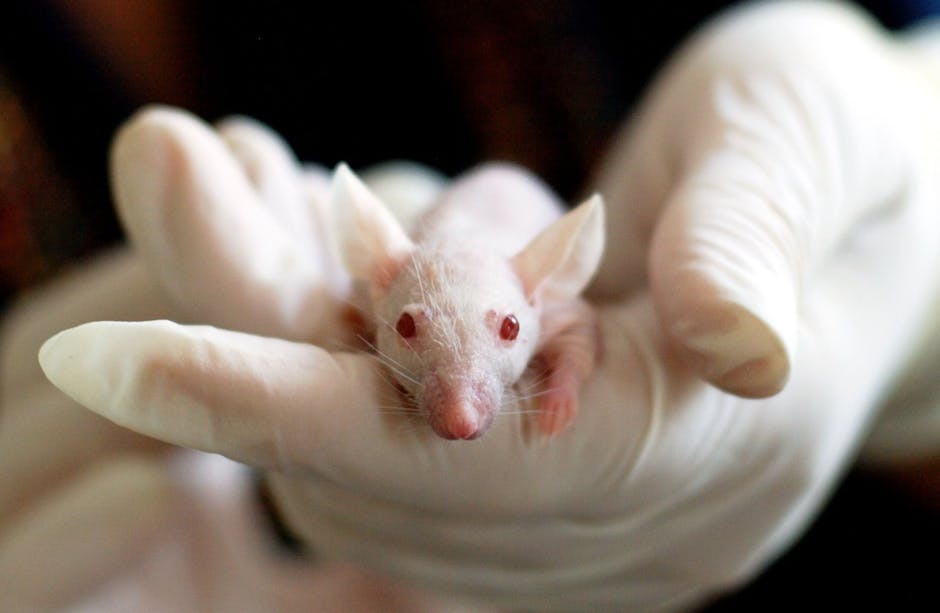
- A study reveals that a large proportion of genetically modified mouse strains carry unreported or incorrect genetic alterations.
- The survey found that discrepancies between documented and actual genetic makeup are systemic issues in preclinical research.
- The study raises concerns about the validity of numerous studies in various fields, including cancer, neuroscience, and drug development.
- The tools used in biomedical research may be flawed, prompting questions about the accuracy of existing scientific knowledge.
- The genetic survey’s findings highlight the need for reevaluation of preclinical research methods and data.
Could the foundation of decades of biomedical research be built on faulty genetic assumptions? A groundbreaking study published in Nature on May 15, 2026, has sent shockwaves through the scientific community by revealing that a large proportion of genetically modified mouse strains—cornerstones of preclinical research—carry unreported or incorrect genetic alterations. The survey, which analyzed more than 300 commonly used mouse strains across laboratories worldwide, found that discrepancies between the documented and actual genetic makeup are not rare exceptions but systemic issues. This raises urgent questions about the validity of countless studies in cancer, neuroscience, immunology, and drug development that rely on these models. If the tools themselves are flawed, how much of what we think we know needs to be reevaluated?
What Did the Genetic Survey Actually Find?

The study, led by an international consortium of genomics and translational medicine experts, conducted whole-genome sequencing on 327 mouse strains obtained from major research repositories and academic labs. Researchers compared the actual genetic profiles to the strains’ official documentation, including knockout targets, transgene insertions, and background strain purity. Alarmingly, they found that 68% of the strains contained unintended mutations, off-target edits, or significant genetic contamination from other mouse lines. In nearly 40% of cases, the mutations believed to be responsible for observed phenotypes were either absent or accompanied by confounding genetic variants. The most common issues included residual genetic material from embryonic stem cell donors, incomplete backcrossing, and CRISPR-Cas9 off-target effects. These findings suggest that many published results attributed to specific gene functions may instead reflect the influence of unrecognized genetic noise.
What Evidence Supports These Findings?

The study’s conclusions are backed by rigorous genomic analysis and independent validation. Using long-read sequencing and comparative genomics, researchers identified structural variants—such as deletions, duplications, and inversions—missed by conventional genotyping methods. For example, one widely used Alzheimer’s model, thought to carry only the human APP mutation, was found to have an additional deletion in the synaptic gene *Syt1*, potentially skewing behavioral results. In another case, a cancer immunotherapy model had a disrupted *Ifnar1* gene due to background contamination, which could exaggerate immune responses. The team cross-referenced their findings with published phenotypic data and found that strains with higher genetic discrepancies were more likely to produce inconsistent or irreproducible results across labs. As Dr. Elena Rodriguez, a co-author from the Wellcome Sanger Institute, stated: “We’re not just finding typos in the genetic blueprint—we’re discovering entire misassembled chapters.”
Are There Counterarguments or Alternative Views?

Despite the study’s alarming conclusions, some researchers caution against overgeneralization. Dr. Mark Tanaka, a mouse model specialist at the Jackson Laboratory, argues that while the findings are concerning, many labs already employ rigorous genotyping and backcrossing protocols to minimize such errors. He notes that the surveyed strains may overrepresent older or less-curated models, and that newer CRISPR-edited lines benefit from improved screening standards. Others point out that phenotypic robustness—consistent observable traits across environments—has historically served as a proxy for genetic validity, even in the face of minor genomic noise. Additionally, some biologists contend that biological systems are inherently complex, and that multiple genetic factors contributing to a phenotype may reflect real-world biology rather than experimental error. However, the study’s authors counter that without transparency and accuracy in genetic reporting, distinguishing true biological complexity from technical artifact becomes impossible.
What Are the Real-World Consequences?

The implications extend far beyond academic debate. Pharmaceutical companies have spent billions developing drugs based on mouse models now called into question. For instance, at least three failed clinical trials for neurodegenerative diseases may have stemmed from flawed animal data. One drug candidate that showed promise in a mislabeled Parkinson’s mouse model recently failed in Phase II trials, prompting investigators to reexamine the animal’s genetics—only to discover an unrelated mutation affecting dopamine metabolism. Research institutions are now initiating audits of their animal colonies, and major funders like the NIH are considering requiring whole-genome validation for genetically modified models in grant applications. Repositories such as the International Mouse Strain Resource are updating their curation standards, and some journals are discussing mandatory genomic certification for studies using engineered mice.
What This Means For You
If you’re a scientist, this study is a call to reevaluate how genetic models are sourced and validated. For the public, it underscores the importance of reproducibility in science—especially when animal research informs human treatments. While not all mouse studies are compromised, the findings highlight systemic vulnerabilities in how biological tools are shared and trusted. Moving forward, transparency, open data, and standardized genomic screening will be essential to maintaining confidence in preclinical research.
Now that we know many mouse models harbor hidden genetic flaws, the next critical question is: how many published findings will need to be replicated with genetically verified strains, and what might we discover when we do?
Source: Nature