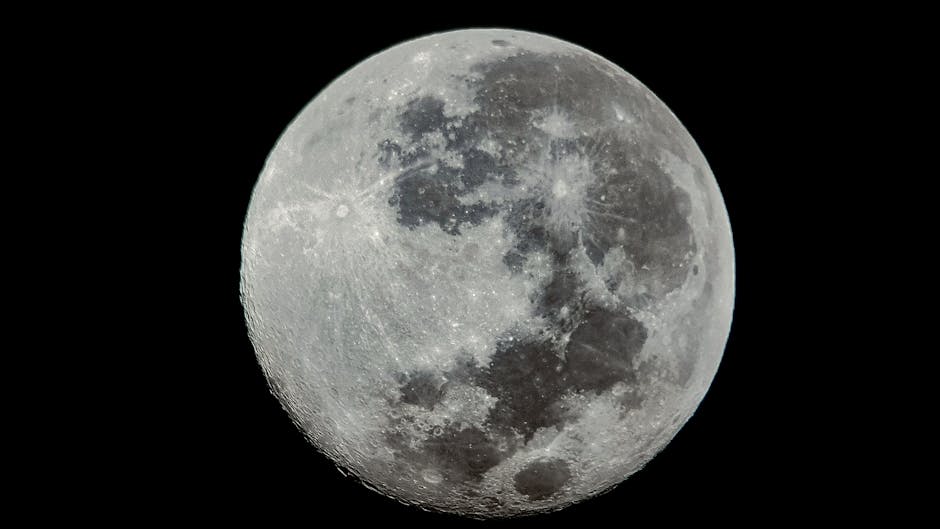
- NASA’s Artemis II mission marked the first time humans have traveled beyond low Earth orbit since 1972.
- The Orion spacecraft completed a full lunar flyby, coming within 7,400 miles of the moon’s surface.
- Astronauts Christina Hammock Koch, Victor Glover, Jeremy Hansen, and mission commander Reid Wiseman survived re-entry speeds of nearly 25,000 miles per hour.
- The Artemis II mission was a crucial step towards establishing a sustainable presence on the lunar surface.
- The successful mission paves the way for future human missions to the moon and beyond.
As the golden light of dawn spilled across the Pacific Ocean, a small capsule pierced the atmosphere like a shooting star, glowing white-hot against the morning sky. Thousands of miles from land, aboard recovery ships positioned in the precise corridor predicted by NASA engineers, teams held their breath. Cameras rolled, drones hummed overhead, and a quiet hush fell across the command center in Houston. Then, with a thunderous splash just off the coast of Southern California, the Orion spacecraft from the Artemis II mission settled into the waves. Inside, four astronauts — their voices steady but filled with emotion — confirmed they were safe. The world, watching via live stream, exhaled. Humanity had returned to deep space, not to land yet, but to prepare. This was not the end of a journey, but the rebirth of one long delayed.
Safe Return After Lunar Flyby

The Artemis II mission concluded successfully on Friday when the Orion capsule splashed down at 8:45 a.m. PST in the Pacific Ocean, approximately 450 miles west of Bakersfield, California. The 10-day mission marked the first time humans have traveled beyond low Earth orbit since Apollo 17 in 1972. Astronauts Christina Hammock Koch, Victor Glover, Jeremy Hansen, and mission commander Reid Wiseman completed a full lunar flyby, coming within 7,400 miles of the moon’s surface before executing a precision engine burn to return home. Re-entry speeds reached nearly 25,000 miles per hour, subjecting the crew and spacecraft to temperatures exceeding 5,000 degrees Fahrenheit — a critical test of Orion’s heat shield. All systems performed nominally, and the recovery team from NASA and the U.S. Navy secured the capsule within 30 minutes of splashdown.
The Road Back to the Moon

Artemis II is the latest milestone in NASA’s decades-long effort to reestablish a human presence on and around the moon. After the Apollo program ended, human spaceflight remained confined to low Earth orbit, first on the Space Shuttle and later aboard the International Space Station. The Vision for Space Exploration in 2004 and the Artemis program launched in 2017 reignited lunar ambitions. Artemis I, an uncrewed test flight in 2022, validated Orion’s design and performance. Artemis II builds on that success, proving that life support, navigation, and communication systems can safely sustain humans on deep-space trajectories. The mission also tested new radiation shielding and real-time health monitoring tools essential for longer-duration flights. These achievements lay the groundwork for Artemis III, which aims to land the first woman and first person of color on the lunar surface, possibly as early as 2026.
The Crew Behind the Mission

The four astronauts of Artemis II represent a new era of inclusivity and international collaboration in space exploration. Mission Commander Reid Wiseman, a veteran of the International Space Station, brought leadership and calm under pressure. Pilot Victor Glover, making history as the first Black astronaut on a lunar mission, emphasized the symbolic weight of his role. Mission Specialist Christina Hammock Koch, who holds the record for longest single spaceflight by a woman, contributed expertise in spacewalks and systems engineering. Canadian Space Agency astronaut Jeremy Hansen rounded out the crew, marking the first non-American to travel to lunar space — a nod to the international partnerships underpinning the Artemis Accords. Their training spanned years, including simulations in NASA’s Neutral Buoyancy Lab and geology drills in volcanic terrains meant to mimic the moon.
Impacts on Future Exploration

The success of Artemis II has immediate implications for the future of space exploration. For NASA, it validates critical technologies needed for sustained lunar operations, including the Space Launch System (SLS) rocket and the Orion spacecraft. The data collected on crew health, spacecraft performance, and deep-space navigation will inform not only Artemis III but also future missions to Mars. Commercial partners like SpaceX and Lockheed Martin will use insights from the mission to refine lunar landers and habitat modules. Internationally, the mission strengthens the Artemis Accords, now signed by over 30 nations, which establish norms for peaceful and cooperative use of space. For the public, Artemis II rekindles inspiration, drawing millions to watch the launch, flyby, and splashdown — a reminder that exploration remains a unifying human endeavor.
The Bigger Picture
Artemis II is more than a technical achievement; it is a cultural and geopolitical statement. At a time of growing global tensions, the mission exemplifies what international cooperation can achieve. It also signals a shift in how humanity views its future — not just on Earth, but beyond. The moon is no longer a destination of Cold War rivalry but a proving ground for sustainable exploration, scientific discovery, and eventual interplanetary travel. As climate change, resource scarcity, and technological disruption reshape life on Earth, space offers not an escape, but a mirror: a place to test resilience, innovation, and long-term thinking. The moon, once a symbol of unreachable dreams, is now a stepping stone.
What comes next is no longer a question of if, but when and how. Artemis III looms on the horizon, with its promise of lunar boots on regolith. But beyond that, NASA and its partners are already designing the Lunar Gateway, a space station in orbit around the moon, and planning test missions for Mars transit systems. The splashdown of Artemis II was not a finale, but a splash of hope — a signal that after decades of groundwork, humanity is finally moving forward, together, into the deep.
Source: The Guardian