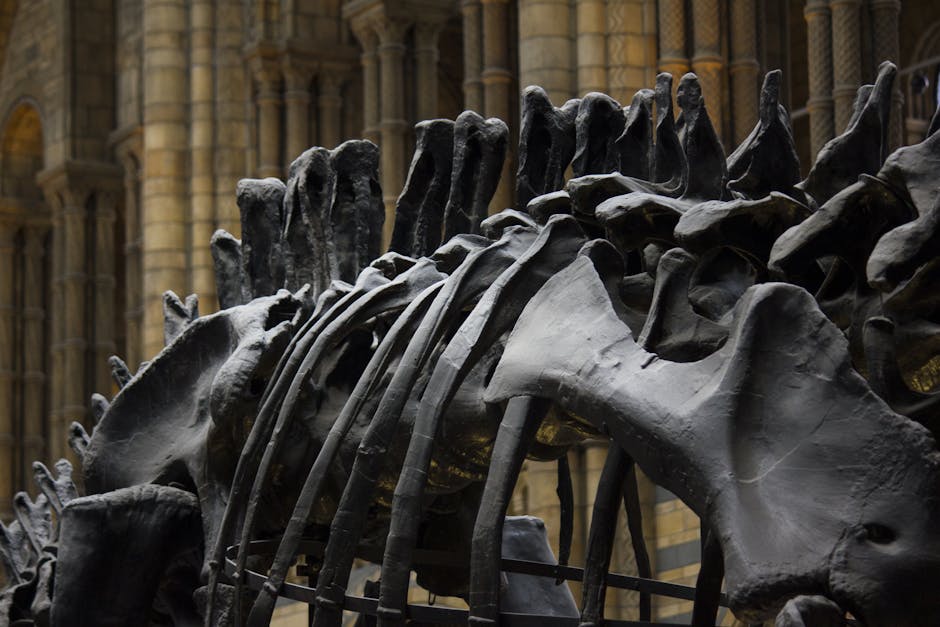
- A groundbreaking fossil discovery in Thailand reveals a new species of long-necked dinosaur, Nagatitan chaiyaphumensis, which sheds light on Southeast Asia’s prehistoric past.
- The newly described species fills a critical gap in the fossil record, suggesting colossal dinosaurs persisted in Southeast Asia far longer than previously believed.
- Nagatitan chaiyaphumensis is estimated to be 27 tonnes and over 15 meters in length, making it a massive sauropod with immense size and long necks.
- The discovery of Nagatitan chaiyaphumensis is a significant find, especially considering the sparse dinosaur record in Southeast Asia compared to other continents.
- The fossil find may represent the final chapter of a once-dominant lineage of dinosaurs, just before rising seas and shifting landmasses transformed the region’s ecosystems.
What did the last giants of Southeast Asia look like, and why did they vanish? A groundbreaking fossil discovery in northeastern Thailand has reignited scientific curiosity about the region’s prehistoric past. For decades, the dinosaur record in Southeast Asia has been sparse, especially compared to continents like South America or Africa, where massive sauropods are routinely unearthed. Now, researchers have identified a new species—Nagatitan chaiyaphumensis—that not only fills a critical gap in the fossil record but also suggests that colossal long-necked dinosaurs persisted in this part of the world far longer than previously believed. At an estimated 27 tonnes and over 15 meters in length, this titan may represent the final chapter of a once-dominant lineage, just before rising seas and shifting landmasses transformed the region’s ecosystems.
What Is Nagatitan chaiyaphumensis?

Nagatitan chaiyaphumensis is a newly described species of titanosaurian sauropod, a group of herbivorous dinosaurs known for their immense size, long necks, and pillar-like legs. Discovered in the Sao Khua Formation of Phu Wiang district in Chaiyaphum Province, the fossils—including vertebrae, limb bones, and pelvic fragments—were first unearthed in 2012 but required years of meticulous preparation and analysis. The name “Nagatitan” combines “Naga,” a serpent deity in regional mythology, with “titan,” reflecting both the creature’s mythic proportions and its cultural resonance. Scientists from Thailand’s Department of Mineral Resources and Japan’s Fukui Prefectural University collaborated on the study, which confirms that Nagatitan lived during the Early Cretaceous, approximately 115 to 100 million years ago. Its size and skeletal features suggest it was one of the last giant sauropods in Southeast Asia before environmental changes led to their regional extinction.
What Evidence Supports This Discovery?

The identification of Nagatitan rests on detailed anatomical analysis of fossilized bones, particularly the distinctive shape of its dorsal vertebrae and the robust structure of its humerus. According to the peer-reviewed study published in scientific journals and research databases, Nagatitan shares traits with other Asian titanosaurs but also exhibits unique adaptations, indicating a distinct evolutionary path. The fossil site, part of a larger dinosaur-rich geological layer, has previously yielded remains of smaller sauropods and carnivorous theropods, but nothing approaching this scale. Dr. Ekalak Sarasinsin, lead paleontologist on the project, stated, “This discovery shows that large-bodied sauropods were not only present but thriving in this region during a time when many assumed they were in decline.” The 27-tonne estimate, based on limb bone circumference and comparative scaling models, positions Nagatitan as the largest dinosaur ever documented in Southeast Asia.
Are There Skeptical Views on the Find?

While the discovery is widely celebrated, some paleontologists urge caution in interpreting Nagatitan as the “last titan” of Southeast Asia. Dr. Paul Upchurch of University College London, an expert in sauropod evolution, notes that the fossil record in the region remains fragmentary. “One near-complete specimen is exciting, but it doesn’t necessarily prove that large sauropods were common or long-lasting here,” he explains. Others point out that rising sea levels during the Late Cretaceous submerged much of what is now mainland Southeast Asia, potentially erasing later fossil evidence. It’s possible that titanosaurs like Nagatitan persisted beyond 100 million years ago but simply left no trace due to geological loss. Additionally, the classification of new sauropod species often hinges on subtle skeletal differences, leading to occasional disputes over whether a find represents a truly new genus or a variant of a known one. These debates underscore the challenges of reconstructing ancient ecosystems from incomplete data.
What Are the Real-World Implications?

Beyond its scientific significance, the discovery of Nagatitan has tangible impacts on paleontology and regional identity. Thailand is now emerging as a key site for understanding dinosaur evolution in tropical Asia, a region historically underrepresented in global studies. The Phu Wiang Dinosaur Museum, where the fossils are housed, has seen a surge in visitors and educational programs, fostering public interest in natural history. Moreover, the find highlights the importance of preserving geological sites amid development and climate change. Internationally, Nagatitan contributes to a growing body of evidence that sauropods were more adaptable and geographically widespread than once thought. As recent research in Nature has shown, titanosaurs successfully colonized diverse environments, from arid plains to coastal floodplains—ecosystems similar to those that existed in ancient Thailand.
What This Means For You
The story of Nagatitan reminds us that Earth’s history is still being uncovered, often in unexpected places. It challenges long-held assumptions about where and when giant dinosaurs lived, offering a more dynamic view of prehistoric life. For the public, it underscores the value of scientific exploration and the role of local communities in preserving natural heritage. Museums and educational initiatives inspired by such discoveries help bridge the gap between complex science and public understanding.
Yet, many questions remain: Were there even larger sauropods in Southeast Asia that we haven’t found? How did these giants adapt to changing climates and landscapes? And what can their extinction tell us about today’s biodiversity crisis? As new technologies and excavation methods evolve, the answers may lie buried just beneath our feet.
Source: ScienceDaily