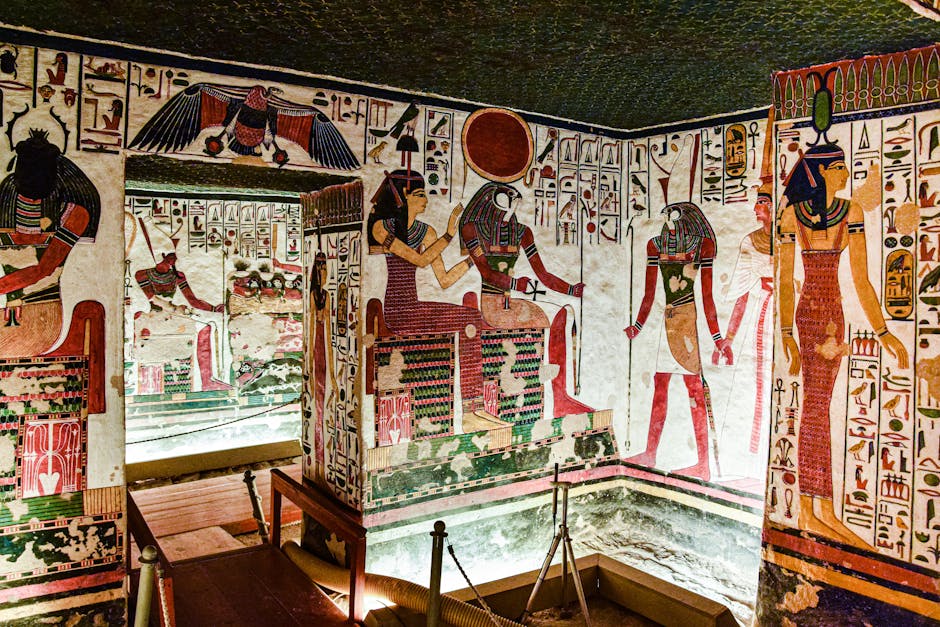
- A 2,000-year-old mummy was discovered with a papyrus scroll containing lines from Homer’s ‘Iliad’, sparking questions about the epic poem’s role in ancient Egyptian spirituality.
- The surprising find suggests that classical literature may have been seen as a spiritual tool, akin to a ‘literary passport’ to a better afterlife in ancient Egyptian culture.
- The discovery highlights the intellectual and religious syncretism of ancient Egyptian, Greek, and Roman traditions, where different cultures intertwined.
- The mummy, dated to the 2nd century CE, was found with Hellenistic-style funerary masks and traditional Egyptian amulets, reflecting the blending of cultures during Roman rule.
- Initial analysis confirms the papyrus scroll contains verses from Book 23 of Homer’s ‘Iliad’, marking one of the earliest known physical associations of a Homeric text with a funerary context in Egypt.
What did ancient Egyptians believe could help them navigate the afterlife beyond amulets and prayers? A startling discovery in a Roman-era tomb suggests the answer might include something unexpected: a copy of Homer’s ‘Iliad’. Unearthed by archaeologists near the Faiyum Oasis, the burial of a mummified individual included a papyrus scroll preserving lines from the Greek epic poem. This rare find raises a profound question: could classical literature have been seen not just as entertainment or education, but as a spiritual tool—something akin to a literary passport to a better afterlife? In a world where Egyptian, Greek, and Roman traditions intertwined, the contents of a tomb may reveal more about intellectual and religious syncretism than previously understood.
What Was Found in the Tomb—and Why It Matters

The burial, dated to the 2nd century CE during Roman rule in Egypt, contained a well-preserved mummy wrapped in linen, adorned with Hellenistic-style funerary masks and traditional Egyptian amulets. But the most remarkable artifact was a partially preserved papyrus scroll tucked near the chest. Initial analysis by the Egyptian Ministry of Antiquities and scholars from Cairo University confirmed it contains verses from Book 23 of Homer’s ‘Iliad’, which describes the funeral games for Patroclus. This is one of the earliest known physical associations of a Homeric text with a funerary context in Egypt. While Greek was widely spoken in urban centers like Alexandria and among the elite, finding a literary work—especially one so emblematic of Greek identity—integrated into a burial ritual is unprecedented. The implication is that Greek literature may have transcended its cultural origins to serve a functional, even sacred, role in personal eschatology.
What Evidence Supports the Spiritual Use of Literature?

Experts point to the broader context of Greco-Roman Egypt, where cultural boundaries were fluid. The city of Tebtunis, near where the tomb was found, was a multicultural hub with a library containing administrative texts, religious hymns, and classical literature. Studies of papyri from the region show that Homeric texts were copied and studied in schools, but also repurposed—sometimes as charms or protective inscriptions. Dr. Lamia al-Gammal, a papyrologist at Alexandria University, explains: ‘We’ve seen snippets of Homer used in magical spells. Placing a revered text in a tomb may have been believed to invoke its authority or heroic ethos in the afterlife.’ This aligns with Egyptian beliefs in the power of words—seen in the ‘Book of the Dead’—where reciting spells ensured safe passage. The ‘Iliad’ fragment may have served a similar function: not just a tribute to learning, but a textual amulet meant to grant dignity, recognition, or protection in the underworld.
Are There Alternative Interpretations of the Find?

Not all scholars agree that the ‘Iliad’ scroll had a ritual purpose. Some argue it may have simply reflected the deceased’s personal identity or social status. ‘This could be the library of a wealthy, Hellenized Egyptian who admired Greek culture,’ says Dr. Marcus Eubulus, a classicist at Oxford. ‘Including a favorite book in a grave isn’t inherently religious—it’s like burying someone today with their favorite novel.’ Others caution against overinterpreting fragmentary evidence. The scroll is damaged, and only a few lines are legible; it’s unclear whether the entire epic was present or if it was a school excerpt. Additionally, the blending of cultures doesn’t necessarily imply spiritual syncretism—elite Egyptians often adopted Greek language and customs without abandoning their own beliefs. So, while the presence of Homer is significant, it may represent cultural prestige more than esoteric function.
What Does This Mean for Our Understanding of Ancient Beliefs?

Regardless of intent, the discovery reshapes how we view identity and belief in Roman Egypt. It suggests that literature could occupy a liminal space between culture and cult, education and enchantment. In modern terms, it’s as if someone were buried with a copy of the Bible not for its religious doctrine, but for its literary gravitas—or with Shakespeare to invoke eloquence in the next world. At sites like the Tebtunis archive, researchers have found contracts, poems, and magical texts side by side, indicating that knowledge itself was seen as powerful. This mummy’s inclusion of the ‘Iliad’ may reflect a belief that heroic narratives could lend strength or legitimacy to the soul’s journey—transforming Achilles’ grief and glory into a template for eternal resilience.
What This Means For You
This discovery reminds us that the past is rarely as neatly divided as we assume. Cultures don’t just coexist—they merge, reinterpret, and innovate in unexpected ways. The idea that a Greek epic could become a spiritual companion in an Egyptian afterlife challenges rigid views of ancient identities. For modern readers, it underscores how stories transcend their original context, gaining new meanings across time and tradition. Literature, it seems, has long been more than art—it’s been a tool for meaning-making in life and death.
But if the ‘Iliad’ was meant to guide the dead, what other texts might have played hidden roles in ancient rituals? Could other Homeric works, or even plays by Sophocles, have been buried in tombs we’ve yet to discover? And how did non-elite individuals access or adapt such texts? These questions remain open, inviting both archaeologists and classicists to look beyond the surface of ancient scrolls—and consider the souls who carried them into eternity.
Source: The New York Times