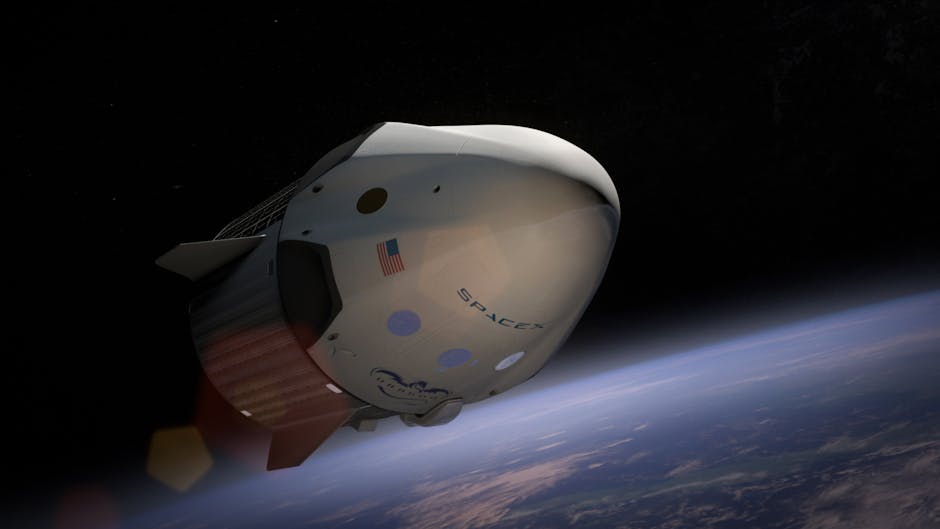
- NASA’s Artemis II mission successfully tested the Orion spacecraft and Space Launch System (SLS) rocket with humans aboard.
- The mission marked the first time humans have traveled to the vicinity of the Moon and returned safely to Earth since 1972.
- Artemis II flew within 100 kilometers of the Moon’s surface, a critical milestone in NASA’s plan to reestablish a human presence on the lunar surface.
- The mission validated critical life support, navigation, and communication systems needed for deep space travel.
- The successful return proves that NASA and its international partners can safely transport humans through challenging space conditions.
Did humanity just reignite its deep-space ambitions? After more than half a century, astronauts have once again traveled to the vicinity of the Moon and returned safely to Earth. The Artemis II mission, a pivotal step in NASA’s plan to reestablish a human presence on the lunar surface, culminated in a predawn splashdown in the Pacific Ocean off the coast of San Diego. Commander Reid Wiseman, pilot Victor Glover, mission specialist Christina Koch of NASA, and Jeremy Hansen of the Canadian Space Agency are now back on solid ground—healthy, elated, and part of a rare pantheon of humans who have left Earth’s orbit and ventured toward another world. This mission didn’t land on the Moon, but its symbolic and technical significance may prove just as monumental.
What Did the Artemis II Mission Accomplish?

Artemis II successfully tested the Orion spacecraft and Space Launch System (SLS) rocket with humans aboard, flying within 100 kilometers of the Moon’s surface before executing a gravity-assist maneuver to return home. Lasting approximately 10 days, the mission validated critical life support, navigation, and communication systems needed for deep space travel. Unlike uncrewed Artemis I in 2022, this flight carried live astronauts through the Van Allen radiation belts, lunar orbit trajectory, and high-speed reentry at nearly 40,000 kilometers per hour—conditions not faced by any human crew since 1972. The successful return proves that NASA and its international partners can safely send humans beyond low-Earth orbit, a prerequisite for landing the first woman and person of color on the Moon during the upcoming Artemis III mission.
What Evidence Confirms the Mission’s Success?

Real-time telemetry from Orion, broadcast by NASA, showed all systems performing within expected parameters throughout the journey. The capsule’s heat shield endured temperatures of nearly 2,760°C during reentry—the hottest ever recorded for a human spacecraft—thanks to advanced ablative materials developed by Lockheed Martin and NASA engineers. “Every system did exactly what it was supposed to do,” said NASA Administrator Bill Nelson in a post-splashdown press conference. “This wasn’t just a test flight; it was a triumph of international collaboration and engineering.” Data from onboard radiation monitors will also help refine models for astronaut safety on longer missions, such as those to Mars. The mission was supported by the European Space Agency’s service module and included live broadcasts from the crew, including a moving tribute to Indigenous communities by Canadian astronaut Jeremy Hansen, whose presence underscored the global nature of modern space exploration. More details on the mission’s technical benchmarks can be found at NASA’s official Artemis II page.
Are There Skeptics Questioning the Mission’s Value?

Despite widespread acclaim, some experts and policymakers have questioned the cost and pace of the Artemis program. With an estimated price tag of $93 billion through 2025, critics argue that robotic missions could achieve similar scientific goals at a fraction of the cost. “We’ve already been to the Moon,” said Dr. Michelle Hanlon, a space law scholar at the University of Mississippi, in a recent BBC interview. “The priority should be on sustainability and international norms, not symbolic milestones.” Others point to delays in developing the Human Landing System and concerns over the long-term viability of a lunar base. Additionally, the absence of a female crew member on Artemis II—despite Christina Koch’s prominent role as a mission specialist—has drawn scrutiny, especially given NASA’s public commitment to diversity. While the mission was a technical success, it also highlights the political and ethical complexities of modern spaceflight.
What Are the Real-World Impacts of Artemis II?

The ripple effects of Artemis II extend far beyond NASA. Commercial partners such as SpaceX and Blue Origin are already aligning their lunar lander and habitat projects with Artemis timelines. The mission has also inspired a new generation of STEM students, with over 15 million people watching the launch live, according to NASA’s outreach team. On the geopolitical front, the inclusion of the Canadian Space Agency—whose contribution includes the Canadarm3 robotic system for the planned Lunar Gateway—strengthens alliances in space analogous to those seen during the International Space Station era. Moreover, the data collected will directly inform not only Artemis III but also future Mars missions, particularly in understanding how humans cope with deep-space radiation and isolation. The success also pressures other spacefaring nations, including China and India, to accelerate their own lunar ambitions.
What This Means For You
While space exploration may seem distant, the technologies developed for Artemis often find their way into everyday life—from advanced water filtration systems to improved medical imaging. More importantly, Artemis II rekindles a sense of collective possibility, reminding us that ambitious, long-term projects can succeed through cooperation and persistence. For younger generations, it offers a new narrative of exploration that includes diverse voices and international partnership. And for humanity as a whole, it signals that our next chapter may not be confined to Earth.
But what comes next? Will the Artemis program maintain momentum, or will budget cuts and political shifts derail the dream of a sustained lunar presence? And how will emerging space powers shape the rules of exploration in the decades ahead? The safe return of Artemis II answers one historic question—but opens many more.
Source: The Guardian