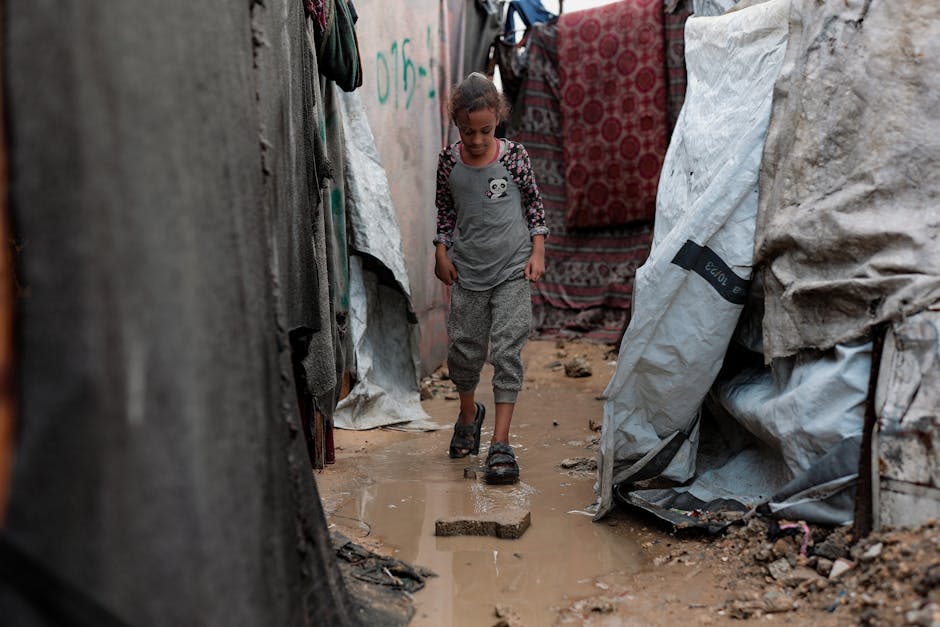
- The Nakba is a lived reality for Palestinians, with ongoing displacement and expansion of settlements in the West Bank.
- The 1948 Arab-Israeli war led to the ethnic cleansing of approximately 750,000 Palestinians from their homes.
- Nakba commemorations are a political statement, affirming identity and demanding the right of return.
- UN Resolution 194 stipulates the right of return for Palestinian refugees, which remains unaddressed.
- The Nakba is not just a historical event but a continuous process of displacement and erasure.
What does it mean to remember a catastrophe that never officially ended? For millions of Palestinians around the world, May 15 is not just a date on the calendar—it is Nakba Day, marking 78 years since the mass displacement and expulsion of Palestinians during the 1948 Arab-Israeli war. While Israel celebrates its independence, Palestinians mourn the loss of homes, land, and a way of life. Today, with Gaza under renewed bombardment and settlements expanding in the West Bank, the Nakba is not a distant memory but a lived reality. The question echoes across refugee camps, diaspora communities, and international forums: How can justice be achieved when the roots of displacement remain unaddressed?
What Is the Nakba and Why Is It Still Commemorated?

The term “Nakba,” meaning “catastrophe” in Arabic, refers to the ethnic cleansing of approximately 750,000 Palestinians from their homes during the 1948 war that accompanied Israel’s establishment. Over 500 villages were destroyed, and families were scattered across Jordan, Lebanon, the West Bank, Gaza, and beyond. The United Nations Partition Plan of 1947 and the subsequent war led to a permanent demographic shift, with many Palestinians barred from returning. Today, Nakba commemorations are not only acts of remembrance but political statements—affirming identity, demanding the right of return as stipulated in UN Resolution 194, and resisting historical erasure. Despite decades of occupation and fragmentation, the Nakba remains central to Palestinian national consciousness, passed down through generations as both trauma and testament to resilience.
What Evidence Supports the Ongoing Impact of the Nakba?

Historical records, oral histories, and UN archives confirm the scale of displacement. According to the United Nations Relief and Works Agency (UNRWA), there are over 5.9 million registered Palestinian refugees today, many of whom are descendants of those expelled in 1948. UNRWA continues to provide services across the region, underscoring the unresolved nature of the refugee crisis. Israeli historian Ilan Pappé, in his work “The Ethnic Cleansing of Palestine,” documents military operations aimed at depopulating Palestinian areas. Meanwhile, organizations like the Palestinian Youth Movement organize global rallies each May 15, linking the Nakba to current events, such as the 2023–2024 Gaza war, where over 35,000 people have been killed, according to Gaza health authorities. These connections illustrate how policies of displacement and confinement today mirror the mechanisms of 1948, reinforcing the perception that the Nakba is an ongoing process rather than a historical event.
Are There Alternative Perspectives on the Meaning of the Nakba?

Within Israel, the Nakba is largely unacknowledged in official narratives, with public discourse emphasizing the war of independence and Jewish self-determination after the Holocaust. Some Israeli scholars and activists, such as those in the Zochrot organization, work to educate Israelis about the Nakba and advocate for acknowledgment and reparations. However, laws like Israel’s 2011 “Nakba Law” penalize institutions that commemorate the event, reflecting a state policy of historical suppression. Critics argue that framing the Nakba as an ongoing process risks undermining Israel’s legitimacy, while others contend that recognizing historical truth is essential for peace. Some international policymakers view the right of return as impractical, fearing demographic changes in Israel, yet human rights advocates assert that refugee rights are non-negotiable under international law. These tensions reveal the deep ideological divides that continue to block reconciliation.
How Does the Nakba Shape Lives Today?

The legacy of the Nakba is visible in the daily realities of Palestinians. In Gaza, where over 80% of residents are refugees or their descendants, blockades and repeated military assaults have created what the UN has called “the world’s largest open-air prison.” In the West Bank, Israeli settlements expand on land once farmed by displaced families, while movement is restricted by checkpoints and the separation barrier. Palestinian citizens of Israel, though holding citizenship, often live in marginalized towns like Umm al-Fahm or Saffuriyya—villages destroyed in 1948 and never rebuilt. Meanwhile, diaspora Palestinians in Lebanon and Syria face legal discrimination and limited rights. The annual Nakba marches, often met with violence, underscore how memory and resistance are intertwined. When Israel evicts families from East Jerusalem or demolishes homes in the South Hebron Hills, many see not isolated incidents but extensions of the same logic that drove the original expulsions.
What This Means For You
Understanding the Nakba is essential to making sense of today’s Middle East conflicts. It is not merely a historical grievance but a framework for interpreting current events—from refugee rights to settlement expansion. For global citizens, recognizing the Nakba challenges us to confront how historical injustices shape present inequalities. It invites reflection on the power of memory, the ethics of displacement, and the long path toward repair. Whether through education, advocacy, or informed discourse, acknowledging this history is a step toward more honest and equitable dialogue.
Yet critical questions remain unresolved: Can a just resolution accommodate both Palestinian rights and Israeli security? And how can historical accountability be achieved in a political landscape so deeply polarized? As new generations inherit the legacy of 1948, the Nakba continues to ask not just what happened—but what must be done.
Source: Al Jazeera