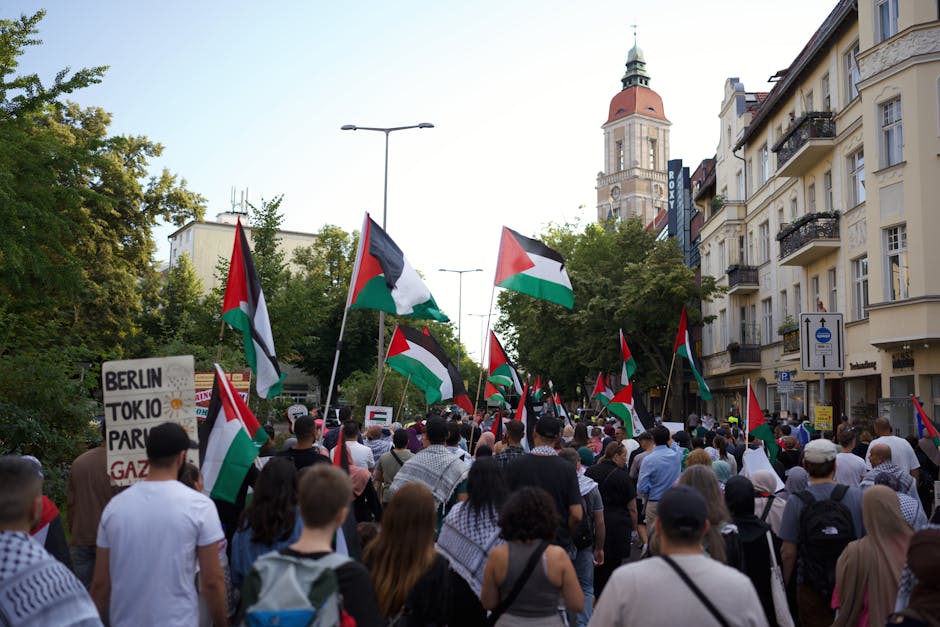
- Nakba Day commemorates the violent displacement of over 750,000 Palestinians in 1948.
- The event is marked with silence, poetry, and protest, rather than celebrations.
- The word ‘Nakba’ translates to ‘catastrophe’ in Arabic, representing the traumatic event.
- Nakba Day transforms public spaces into sites of political and cultural assertion each year.
- The day is etched in collective memory as an ongoing reality, shaping lives across generations.
At dawn on May 15, smoke rises from bonfires lit on hilltops across the West Bank and Gaza. In refugee camps from Lebanon to Jordan, families gather around black-and-white photographs of keys, olive trees, and stone houses that no longer exist. In Haifa, Acre, and Jaffa, small groups place wreaths at abandoned cemeteries and whisper names of villages erased from modern maps. This is Nakba Day—not a celebration, but a ritual of remembrance. For 78 years, Palestinians have marked this date not with fireworks or parades, but with silence, poetry, and protest. The word ‘Nakba,’ meaning ‘catastrophe’ in Arabic, encapsulates the violent rupture of 1948, when more than 750,000 Palestinians were expelled or fled their homes during the creation of the state of Israel. It is a day etched in collective memory, not as history, but as an ongoing reality—a story of erasure, exile, and resistance that continues to shape lives across generations.
The Nakba Today: Commemoration Amid Conflict

Each year on May 15, Nakba Day transforms public spaces into sites of political and cultural assertion. In 2024, thousands marched in Ramallah, waving keys symbolizing ancestral homes and holding banners with the names of destroyed villages like Deir Yassin and al-Lydd. Israeli forces blocked access to many historic Palestinian towns, citing security concerns, while tear gas and rubber-coated bullets dispersed demonstrators near the Gaza border. In Lebanon’s Shatila camp, elders recounted stories of flight to wide-eyed children born decades after the original displacement. The United Nations Relief and Works Agency (UNRWA) reported that over 5.9 million Palestinian refugees are registered across the region—most direct descendants of those expelled in 1948 and 1967. Despite decades of diplomatic stagnation, Nakba Day remains a unifying force, challenging official Israeli narratives that frame 1948 as a war of independence without acknowledging the accompanying expulsion of civilians. Protests in East Jerusalem were met with mass arrests, underscoring the sensitivity of memory in a contested landscape.
How the Nakba Began: The 1948 War and Ethnic Cleansing

The roots of the Nakba lie in the final years of the British Mandate for Palestine and the 1947 United Nations partition plan, which proposed dividing the territory into separate Jewish and Arab states. While Jewish leadership accepted the plan, Arab leaders rejected it, viewing it as unjust given that Jews owned only 6% of the land at the time, despite comprising a third of the population. Violence escalated rapidly. From late 1947 to 1949, during what Israelis call the War of Independence, more than 500 Palestinian villages were destroyed or repopulated by Jewish immigrants. Historians such as Ilan Pappé have documented systematic expulsions carried out by Zionist militias, including the Haganah, Irgun, and Stern Gang. The massacre at Deir Yassin in April 1948, in which over 100 civilians were killed, sent shockwaves through Palestinian communities and triggered mass flight. By the time the war ended and Israel declared sovereignty, roughly 80% of the Palestinian population in what became Israel had been displaced. The Israeli government prevented their return, confiscating land under the Absentees’ Property Law of 1950.
The People Who Keep Memory Alive

The preservation of Nakba memory has been led by survivors, scholars, artists, and grassroots organizations. Palestinian oral historians have spent decades recording testimonies from elderly refugees, creating archives like those at the Institute for Palestine Studies in Beirut. Activists such as Mahmoud Darwish, Palestine’s national poet, transformed personal loss into powerful literary resistance. Today, younger generations use digital tools—Instagram timelines, TikTok documentaries, and augmented reality maps—to reconstruct lost villages. In Israel, Palestinian citizens—descendants of those who remained in 1948—commemorate the day despite legal restrictions. The Association for the Defense of the Rights of the Internally Displaced (ADRID) files symbolic return claims each year. Meanwhile, Israeli historians known as the ‘New Historians,’ including Benny Morris and Avi Shlaim, have challenged state narratives by declassifying archival evidence of expulsions. Their work, though sometimes contested, has lent academic weight to Palestinian claims of systematic displacement.
Consequences of Unresolved Dispossession

The Nakba’s legacy extends far beyond memory. The denial of the right of return for Palestinian refugees remains a central obstacle to peace. Under UN General Assembly Resolution 194, passed in 1948, refugees were promised the right to return to their homes, a provision consistently rejected by Israel. Today, this unresolved issue fuels resentment and distrust, undermining diplomatic efforts. In Lebanon and Jordan, Palestinian refugees face legal and economic marginalization, barred from owning property or accessing certain professions. In the occupied West Bank and Gaza, Israeli settlements expand over former village lands, erasing physical traces of Palestinian presence. The trauma of displacement reverberates in mental health crises, fragmented families, and intergenerational poverty. Yet the Nakba is not just a wound—it is a foundation of Palestinian national identity, a shared narrative that binds a dispersed people.
The Bigger Picture
The Nakba is not an isolated historical event but part of a broader pattern of settler colonialism and forced displacement seen across the 20th century. Its persistence in public discourse challenges dominant narratives of progress and peacebuilding that often sideline victimhood. As global attention shifts to new conflicts, the Nakba reminds us that unresolved pasts can perpetuate present violence. The annual commemoration defies erasure, asserting that justice requires acknowledgment as much as policy. In an age of rising nationalism and contested histories, remembering the Nakba is an act of moral clarity.
What comes next remains uncertain. Diplomatic channels remain frozen, and Israeli policies continue to marginalize Palestinian narratives. Yet every May 15, the keys reappear, the names are spoken aloud, and the maps of lost villages are redrawn in chalk and memory. As long as the right of return remains unrealized, Nakba Day will endure—not as a relic, but as a demand. The catastrophe of 1948 is not over. It is remembered, resisted, and, for millions, still lived.
Source: Al Jazeera