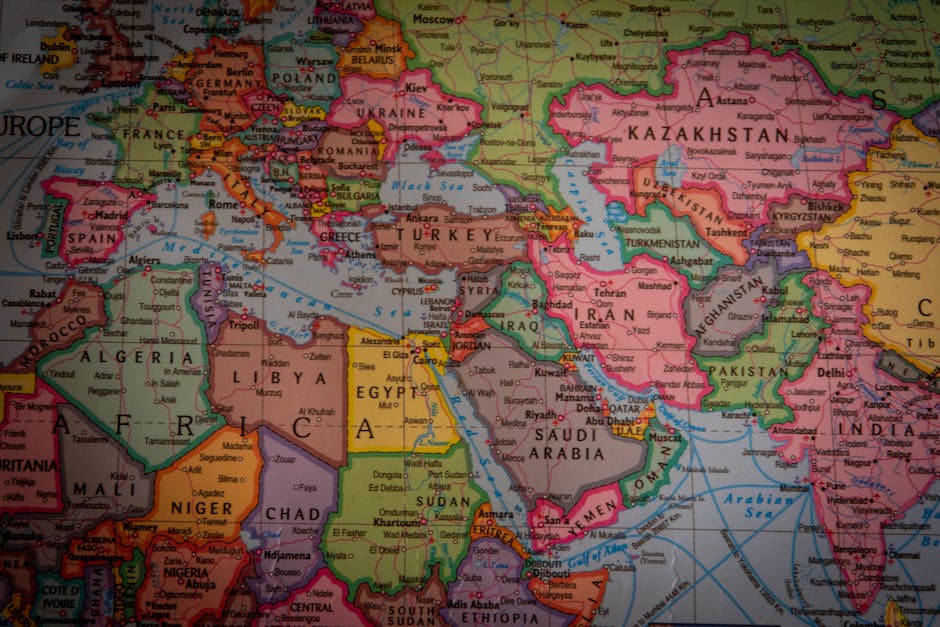
- Iran’s live-fire drills and naval activities near the Strait of Hormuz have raised tensions in the Persian Gulf.
- Global powers, including the US and China, prioritize maintaining open navigation through the Strait of Hormuz for global energy markets and international commerce.
- China relies heavily on the Persian Gulf for over 80% of its crude oil imports, making the region crucial for its economy.
- The US and China have expressed their mutual interest in maintaining open passage through the Strait of Hormuz during an urgent bilateral discussion.
- The precarious balance of trade, diplomacy, and brinkmanship is converging on the critical maritime corridor of the Strait of Hormuz.
Smoke curled into the predawn sky over Bandar Abbas as Iranian naval vessels conducted live-fire drills just miles from the Strait of Hormuz. The narrow waterway, no wider than 21 nautical miles at its chokepoint, pulsed with tension. Satellite imagery showed merchant tankers altering course, their captains wary of straying too close. In Beijing, the glow of dawn crept across the Forbidden City as President Xi Jinping prepared for a secure call. Thousands of miles away in Washington, President Donald Trump paced the Roosevelt Room, clutching a briefing on Iranian missile deployments. The world held its breath—not from the threat of open war, but from the precarious balance of trade, diplomacy, and brinkmanship now converging on one of Earth’s most critical maritime corridors.
Global Powers Prioritize Maritime Access

On the 77th consecutive day of heightened military activity in the Persian Gulf, U.S. President Donald Trump and Chinese President Xi Jinping held an urgent bilateral discussion confirming their mutual interest in maintaining open navigation through the Strait of Hormuz. According to statements released by both the White House and China’s Ministry of Foreign Affairs, the two leaders emphasized that unrestricted passage through the strait is essential for global energy markets and international commerce. China, the world’s largest importer of crude oil, receives over 80% of its petroleum via the Persian Gulf, while the United States relies on stable oil flows to influence global prices and support allies. The joint stance marks a rare alignment between Washington and Beijing amid broader geopolitical rivalry, underscoring the strait’s strategic centrality. No military coordination was announced, but both nations signaled readiness to support multinational naval efforts if Iran attempts to obstruct shipping lanes.
From Sanctions to Strategic Posturing

The current crisis traces back to 2018, when the Trump administration unilaterally withdrew from the Joint Comprehensive Plan of Action (JCPOA) and reimposed stringent sanctions on Iran’s energy and financial sectors. Over the following years, Tehran incrementally breached nuclear program limits, while its Islamic Revolutionary Guard Corps (IRGC) escalated harassment of commercial vessels. The immediate trigger for the 77-day escalation was the U.S. assassination of IRGC Quds Force commander Qasem Soleimani in January 2020—an act that brought the two nations to the brink of war. Since then, Iran has launched drone swarms, seized tankers, and conducted missile tests near critical shipping routes. The Biden administration later attempted diplomatic reengagement, but negotiations collapsed in 2023. Now, under a re-elected Trump, the U.S. has resumed maximum pressure tactics, prompting Tehran to leverage its geographical advantage at Hormuz as a bargaining chip.
Tehran’s Diplomatic Offensive in the Global South

With Western pressure intensifying, Iran has turned to the BRICS bloc—Brazil, Russia, India, China, and South Africa—as a platform for political legitimacy and economic resilience. During a high-profile summit in Cape Town, Iranian Foreign Minister Hossein Amir-Abdollahian urged fellow members to back a multipolar world order and resist unilateral sanctions. While China stopped short of endorsing Iranian provocations, it reiterated its opposition to Western-led regime change and called for dialogue. Russia, already allied with Iran in Syria and Ukraine, has supplied military drones and satellite intelligence. Meanwhile, India remains cautious, balancing its energy needs with strategic ties to the U.S. The outreach reflects a broader shift: as Iran faces isolation from traditional Western partners, it is cultivating alliances with nations skeptical of U.S. hegemony. This diplomatic realignment does not guarantee military support, but it does provide Tehran with economic lifelines and diplomatic cover.
Economic and Military Repercussions Loom

The stakes extend far beyond the Persian Gulf. Over 20% of the world’s petroleum passes through the Strait of Hormuz daily—roughly 17 million barrels. Any sustained disruption would send shockwaves through global markets, spiking fuel prices and triggering inflation. Insurers have already raised premiums for vessels transiting the region, and shipping companies are rerouting via the Cape of Good Hope, adding days to delivery times. Militarily, the U.S. Fifth Fleet, based in Bahrain, maintains a robust presence, while the UK and France have deployed additional frigates. Yet direct conflict remains a last resort; both Washington and Tehran appear more interested in signaling strength than initiating full-scale war. For China, the priority is stability—not confrontation—though Beijing is quietly expanding its naval footprint in the Indian Ocean as a contingency measure.
The Bigger Picture
This moment reflects a deeper transformation in global power dynamics. The U.S. can no longer unilaterally dictate security terms in key regions, while rising powers like China pursue influence through economic statecraft rather than direct military intervention. The Strait of Hormuz has become a symbolic and strategic arena where energy, sovereignty, and multipolarity collide. As non-Western nations assert greater agency, traditional alliances are being tested, and new alignments forged. The crisis is not merely about one waterway—but about who gets to shape the rules of the 21st-century world order.
What comes next may hinge not on military maneuvers, but on backchannel diplomacy and economic calculus. Iran seeks relief from sanctions, the U.S. demands nuclear restraint, and China advocates for dialogue—all while the world’s oil tankers sail through a narrow blue ribbon of sea, guarded by the fragile equilibrium of deterrence. The current standoff could ease with renewed negotiations, or spiral into miscalculation. For now, the Strait remains open—but the currents beneath run deep.
Source: Al Jazeera