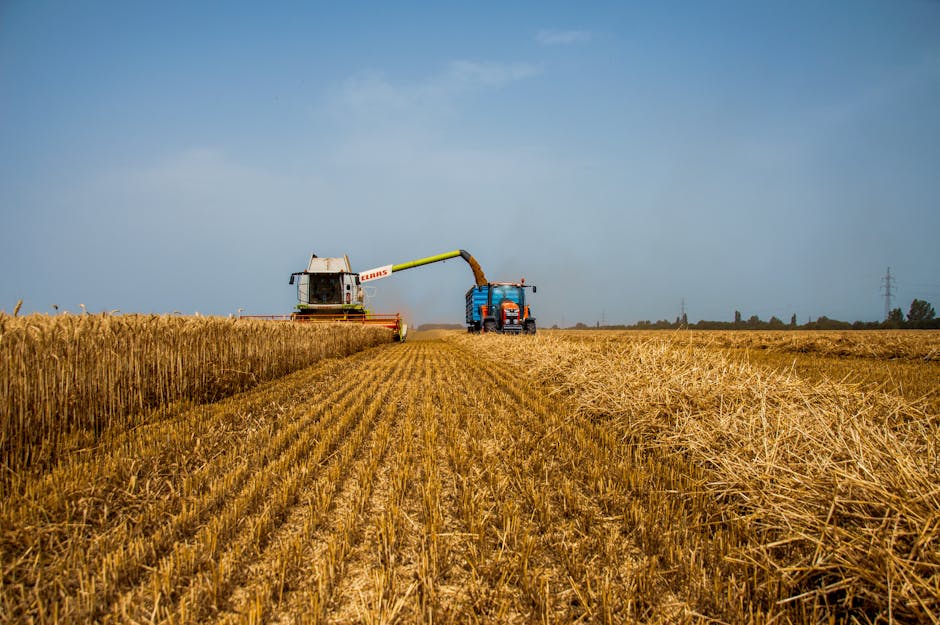
- The 2024 US wheat harvest is projected to be the smallest since 1972 due to extreme drought conditions.
- The USDA estimates a national wheat yield of 41.4 bushels per acre, down 5% from last year.
- Total wheat production is expected to be 1.12 billion bushels, the lowest since 1972.
- The Great Plains, which produce over 40% of the country’s winter wheat, are severely affected by drought.
- The US wheat harvest is a critical concern for global food security and international trade balances.
How bad is the current U.S. wheat harvest, and what does it mean for global food security? After months of relentless drought across the nation’s critical wheat-growing regions, the U.S. Department of Agriculture (USDA) has released a stark projection: the 2024 wheat harvest is expected to be the smallest since 1972. With yields plummeting in the Great Plains — the heartland of American wheat production — farmers, policymakers, and global markets are bracing for ripple effects. This isn’t just a rural concern; wheat is a staple crop affecting everything from bread prices to international trade balances. As climate volatility intensifies, the question emerges: is this a one-year anomaly, or a sign of deeper systemic stress in global agriculture?
What the USDA’s 2024 Wheat Forecast Reveals

The USDA’s latest World Agricultural Supply and Demand Estimates (WASDE) report projects a national wheat yield of 41.4 bushels per acre, down 5% from last year and well below the 5-year average of 47.3 bushels. Total production is estimated at 1.12 billion bushels, the lowest since 1972’s 1.06 billion. The primary cause? Extreme drought conditions spanning Kansas, Oklahoma, Texas, and Colorado — states that collectively produce over 40% of the country’s winter wheat. According to the U.S. Drought Monitor, more than 70% of the winter wheat acreage sits in moderate to exceptional drought. These conditions have stunted plant growth, reduced tillering, and led to widespread crop failure. With spring wheat also facing dry planting conditions in the Northern Plains, the outlook remains grim.
Climate Data and Farmer Testimonies Confirm Crisis

Scientific and on-the-ground evidence underscores the severity of the situation. NOAA climate data shows that the Southern Plains have experienced their driest 12-month period since 2011, with部分地区 receiving less than 50% of average precipitation. Satellite imagery from the USDA’s Crop Condition Monitoring Program reveals large swaths of brown, dormant fields where green canopy should dominate. Farmers are sounding the alarm: “I’ve been farming 35 years, and I’ve never seen it this dry this early,” said Gary Anderson, a third-generation wheat grower in western Kansas, in an interview with Reuters. Economically, the impact is mounting. Wheat futures on the Chicago Board of Trade have surged over 20% since April, reflecting tightening supply. The International Grains Council also revised its global wheat production forecast downward, citing U.S. shortfalls as a major factor.
Skepticism and Alternative Explanations

While drought is the dominant narrative, some experts caution against oversimplification. Agricultural economists at Kansas State University argue that shifting planting patterns and reduced acreage — due to profitability concerns with wheat versus corn or soybeans — also contribute to lower totals. Additionally, critics note that USDA projections are based on early-season data and could improve if late-season rains materialize. Historical context offers nuance: the 1972 harvest, often cited for comparison, occurred during a different agricultural era with less advanced irrigation and seed technology. Some analysts suggest that while yields are low, modern logistics and global stockpiles may buffer the blow to food security. Still, these counterpoints don’t negate the immediate hardships faced by producers or the long-term signal drought patterns send about climate risk.
Global and Domestic Consequences of the Shortfall

The ripple effects of a diminished U.S. wheat harvest extend far beyond farm borders. Domestically, consumers may see higher prices for bread, pasta, and baked goods later this year. Ethanol producers, which use wheat as a feedstock in some processes, could face cost increases. Internationally, the U.S. is a top wheat exporter, shipping over 25 million metric tons annually, much of it to countries in North Africa and the Middle East. Nations like Egypt and Yemen, already vulnerable to food insecurity, rely heavily on American wheat. Any supply disruption risks inflaming inflation and political instability in import-dependent regions. The U.S. Agency for International Development (USAID) has quietly begun reassessing food aid allocations, aware that domestic production limits could constrain humanitarian shipments.
What This Means For You
If you buy bread, pasta, or cereal, the drought-driven wheat shortage may soon affect your grocery bill. More broadly, this event highlights how climate extremes can disrupt essential supply chains, even in highly developed agricultural systems. Supporting sustainable farming practices, diversifying crop sources, and advocating for climate-resilient policies can help mitigate future shocks. While one bad harvest won’t cause famine in the U.S., it serves as a warning: food security is not guaranteed in a warming world.
Could this be the first of many climate-driven crop failures in the coming decade? And how will global agriculture adapt if droughts become the new normal? As scientists refine climate models and farmers adopt new technologies, the answers will shape not just farming, but the future of food itself.
Source: Agweb