- A powerful solar storm from 1200 CE has been discovered using ancient tree rings and medieval sky observations.
- The event, previously undocumented, was detected through sharp spikes in carbon-14 isotope levels in subfossil Japanese cedars.
- The solar storm was characterized by intense solar particle activity exceeding typical solar cycle behavior.
- This discovery reshapes our understanding of historical space weather and raises concerns about the Sun’s potential to generate extreme storms during previously quiet periods.
- The research highlights the importance of studying the Sun’s behavior to better understand its potential impact on Earth’s climate and civilization.
Researchers have uncovered evidence of a powerful solar storm that struck Earth around 1200 CE, using a combination of ancient tree rings and medieval sky observations. The event, previously undocumented in modern records, was detected through sharp spikes in carbon-14 isotope levels preserved in subfossil Japanese cedars. These radiocarbon anomalies, paired with historical accounts of prolonged red auroras across East Asia, point to an intense solar particle event far exceeding typical solar cycle behavior. This discovery not only reshapes our understanding of historical space weather but also raises concerns about the Sun’s potential to generate extreme, civilization-disrupting storms during periods previously considered quiet.
Carbon-14 Spikes in Ancient Wood

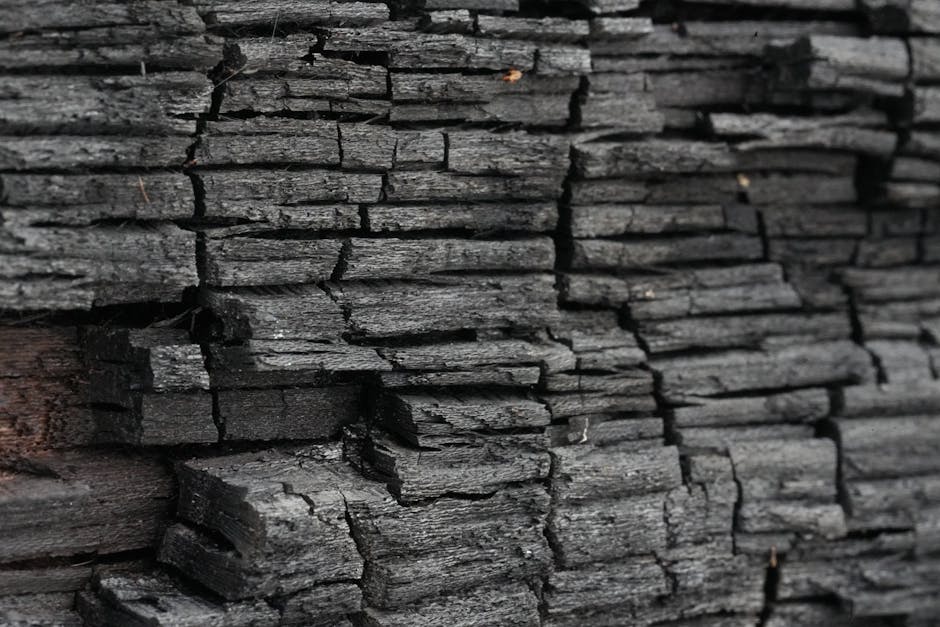
At the heart of the discovery is a precise spike in carbon-14 concentrations found in tree rings from subfossilized Japanese cedars buried in wetlands near Yakushima Island. These trees, some over 2,000 years old, provide a year-by-year record of atmospheric chemistry. The research team, led by scientists at Nagoya University, identified a sudden 0.6% increase in carbon-14 levels around 1198–1202 CE—a rise comparable to known solar events like the 774–775 CE Miyake event, one of the most intense cosmic radiation spikes in recorded history. Unlike gradual increases from background cosmic rays, such sharp jumps are typically caused by massive solar proton events that bombard Earth’s upper atmosphere, triggering nuclear reactions that produce excess radiocarbon. The data, published in Scientific Reports, suggest a prolonged and unusually powerful solar eruption, possibly lasting several weeks.
Medieval Observers and the Red Sky

The isotopic evidence aligns with historical documents from Japan and Korea describing strange celestial phenomena between 1200 and 1204. Japanese chronicles, including the Meigetsuki diary kept by court noble Fujiwara no Teika, record repeated sightings of a “red sky” or “red vapor” in the northern sky, lasting for multiple nights. These descriptions match modern understandings of intense proton auroras, which can appear blood-red when high-energy particles interact with nitrogen in the upper atmosphere. Unlike typical polar auroras, these were visible at mid-latitudes, suggesting a geomagnetic storm of exceptional strength. Researchers believe these sightings, long dismissed as atmospheric anomalies or omens, were in fact early eyewitness accounts of extreme space weather—a rare convergence of paleoscientific data and human observation that strengthens the case for a major solar event.
Trade-Offs in Solar Activity Reconstructions

While the carbon-14 and historical evidence are compelling, interpreting ancient solar events involves significant uncertainty. Radiocarbon spikes can also result from supernovae or gamma-ray bursts, though no corresponding stellar events have been detected from that period. Additionally, tree ring data reflect integrated annual signals, making it difficult to pinpoint the exact duration or timing of the solar burst. On the other hand, historical texts may suffer from translation ambiguities or symbolic interpretations. Yet, the geographic and temporal alignment between the radiocarbon anomaly and the auroral reports strengthens the solar hypothesis. The trade-off lies in balancing scientific precision with interdisciplinary inference—using both hard data and narrative records to reconstruct events beyond instrumental reach. This dual-method approach enhances credibility but requires careful skepticism to avoid overinterpretation.
Why This Discovery Matters Now

The timing of this finding is critical as modern society grows increasingly vulnerable to space weather. The 1200 CE event occurred during a period once thought to be magnetically quiet, yet it appears the Sun was undergoing unusually short and volatile solar cycles. Recent studies suggest the Sun may have operated on 8- to 9-year cycles then, compared to the modern 11-year average, potentially increasing the frequency of extreme eruptions. Understanding these historical anomalies helps refine models of solar behavior and improves risk assessments for future superstorms. With satellite infrastructure, power grids, and communication systems all susceptible to geomagnetic disruption, evidence of past extreme events underscores the need for robust space weather preparedness—a lesson drawn not from modern instruments, but from 800-year-old wood and medieval ink.
Where We Go From Here
In the next 6 to 12 months, researchers plan to expand the search for similar carbon-14 anomalies in global tree ring archives, particularly in North America and Europe, to determine the event’s geographical extent. Second, historians and astrophysicists will collaborate to re-examine medieval chronicles for overlooked auroral descriptions, potentially uncovering a network of sightings that confirm the storm’s global impact. Third, solar physicists may revise models of solar cycle variability to account for such intense medieval activity, possibly linking it to deeper dynamo processes within the Sun. These steps could lead to a revised timeline of solar extremes, better informing space weather forecasting and long-term infrastructure planning in an age dependent on fragile electronic systems.
Bottom line — the discovery of a major solar storm in 1200 CE, hidden in ancient trees and medieval skies, forces a reevaluation of the Sun’s historical behavior and highlights the persistent threat of extreme space weather to modern technological civilization.
Source: ScienceDaily