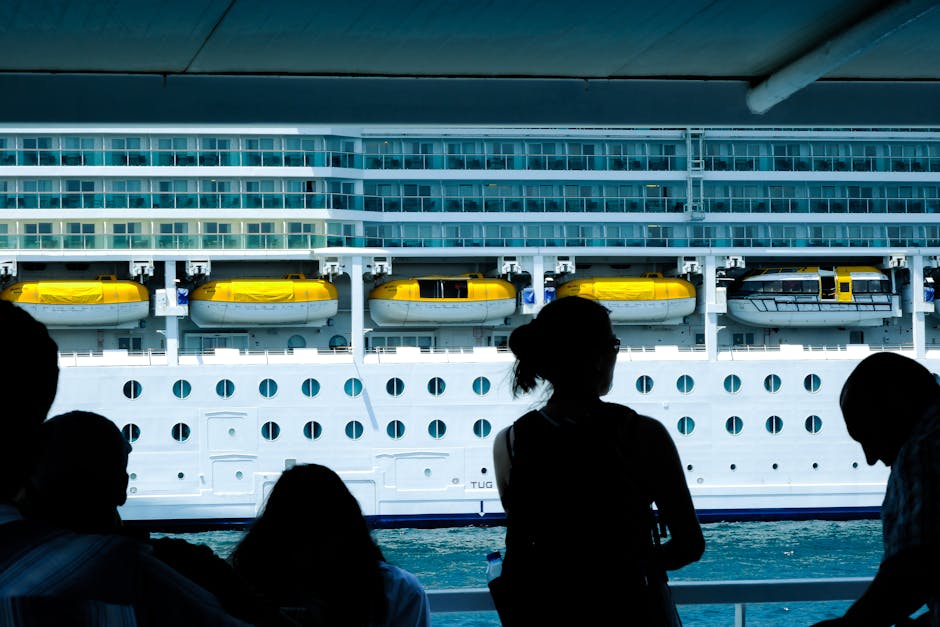
- Over 1,000 passengers and crew on the MS Celestria cruise ship are quarantined due to a severe gastroenteritis outbreak.
- The outbreak has been linked to norovirus, a highly contagious pathogen that quickly spreads in confined spaces.
- More than 600 cases of vomiting, diarrhea, and fever have been medically documented among passengers and crew.
- The ship was diverted to Marseille, where emergency medical teams and port health inspectors are on board.
- All disembarkation has been suspended indefinitely, leaving passengers stranded on the ship.
At dawn, the MS Celestria lay motionless in the harbor of Marseille, its glittering decks eerily empty, life ring buoys gently clinking against the hull. What was meant to be a weeklong Mediterranean escape for 2,400 passengers has instead become a floating containment unit. Inside, families huddle in cramped cabins, children restless, adults queasy and anxious. The scent of disinfectant wafts through sealed corridors where crew members in masks shuttle trays of bottled water and dry toast. Outside, French health officials in blue protective suits board in shifts, taking swab samples and conducting triage. This is no longer a vacation — it’s a public health emergency unfolding at sea, where luxury once reigned and now uncertainty dominates every hour.
Passengers Stranded Amid Rising Infection Count

More than 1,000 passengers and crew aboard the MS Celestria remain under quarantine after a severe gastroenteritis outbreak swept through the vessel during its return leg from Ajaccio, Corsica, to Marseille. French health authorities confirmed that over 600 cases have been medically documented, with symptoms including vomiting, diarrhea, and fever, consistent with norovirus — a highly contagious pathogen known for rapid transmission in confined spaces. The ship was diverted to Marseille early Thursday morning, where it was met by emergency medical teams and port health inspectors. All disembarkation has been suspended indefinitely. Passengers are restricted to their cabins, with meals delivered under strict hygiene protocols. The regional health agency, ARS Provence-Alpes-Côte d’Azur, stated that environmental decontamination is underway, focusing on high-touch surfaces, dining halls, and ventilation systems. Testing is ongoing to confirm the exact viral strain and trace its origin.
The Voyage That Turned Into a Crisis

The MS Celestria, operated by international cruise line OceanView Cruises, departed Barcelona on Sunday with stops planned in Naples, Sicily, and Corsica before returning to France. Initial reports from the ship’s medical logs indicate that the first cases emerged on Tuesday, two days into the journey, with a small cluster of passengers reporting gastrointestinal distress. By Wednesday, the number of sick individuals had ballooned, overwhelming the ship’s medical staff. OceanView’s internal protocol triggered isolation measures, but with shared dining rooms, elevators, and entertainment venues, containment proved nearly impossible. The company activated its emergency response plan and alerted French authorities while en route. The decision to dock in Marseille — a major port with robust public health infrastructure — was made in coordination with the French Ministry of Health. This incident echoes past outbreaks on cruise ships, including the 2006 norovirus epidemic aboard the Norwegian Jewel, which sickened nearly 600 people, reinforcing long-standing concerns about hygiene and disease control in the cruise industry.
Those on the Front Lines and in the Cabins

Onboard, the crew — many of whom are from the Philippines, India, and Eastern Europe — are working 18-hour shifts to clean, deliver food, and comfort frightened passengers, all while risking their own health. Union representatives from the International Transport Workers’ Federation have raised concerns about inadequate personal protective equipment and mental strain. Meanwhile, OceanView Cruises’ executive leadership, based in Miami, has issued multiple public statements expressing concern and pledging full cooperation with French authorities. Passengers, many of whom booked the trip as a long-awaited family holiday, are growing increasingly frustrated. Social media posts from cabin balconies show stacks of unused life jackets, untouched excursions, and tearful video messages. One British tourist, Sarah Langston, told BBC News via text: “We were promised sun and sea. Instead, we’re locked in, scared, and treated like biohazards.”
Health, Legal, and Financial Fallout Looms

The immediate impact is medical, but the ripple effects are vast. French officials are monitoring nearby hospitals for overflow cases, though no secondary infections have been reported on land. OceanView Cruises faces potential fines under EU passenger health regulations and may be liable for compensation claims from affected travelers. Travel insurers are bracing for a surge in claims related to trip interruption and medical expenses. The reputational damage could be long-lasting; past outbreaks have led to significant booking declines for cruise lines. Meanwhile, public health experts warn that climate change and increased global mobility are making such outbreaks more frequent. The World Health Organization has emphasized the need for real-time disease surveillance on international vessels, particularly as cruise tourism rebounds post-pandemic.
The Bigger Picture
This event is not just a maritime health incident — it’s a reflection of how interconnected and vulnerable global travel systems have become. In an era of rapid movement and mass tourism, a single infected individual can trigger a cascade across borders. The MS Celestria’s ordeal underscores the fragility of confined communal environments and the importance of rigorous, transparent health protocols. As leisure travel continues to grow, especially in regions like the Mediterranean, regulatory bodies must insist on stronger onboard medical capabilities and faster international response frameworks. The cruise industry cannot afford to treat such outbreaks as rare anomalies — they are foreseeable risks demanding systemic solutions.
What happens next depends on the results of viral sequencing and the effectiveness of decontamination. French authorities estimate the quarantine may last another 72 to 96 hours. For now, the MS Celestria remains a symbol of both modern travel’s pleasures and its perils — a vessel suspended between sea and shore, its passengers waiting for the all-clear that will let them step back into the world.
Source: BBC