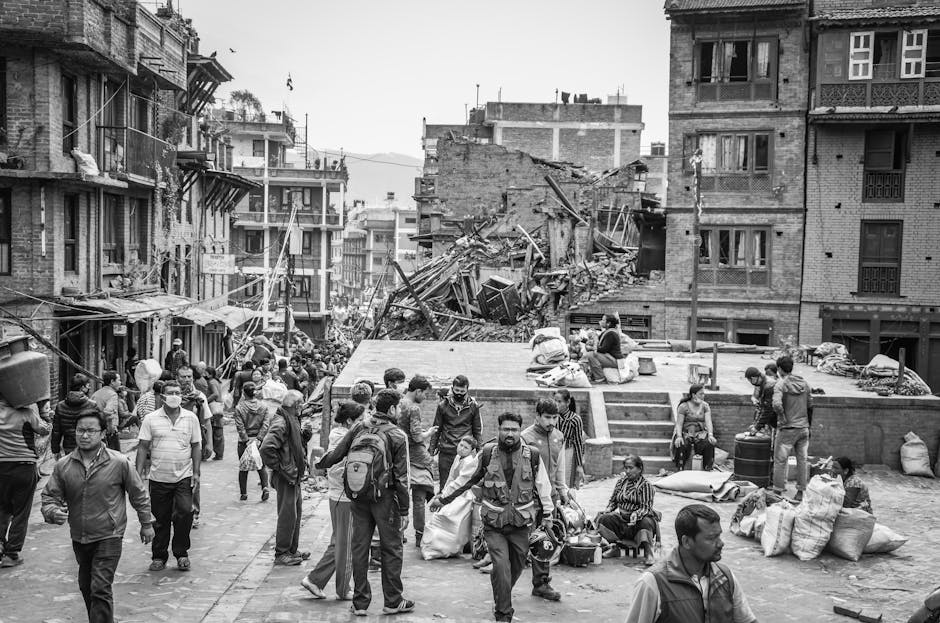
- A 5.2 magnitude earthquake hit Tehran, causing widespread fear and panic among residents.
- The quake’s epicenter was near the town of Shahedshahr, approximately 40 kilometers northeast of Tehran.
- Initial reports indicated no immediate fatalities but minor injuries and power outages in northern districts.
- The quake’s shallow depth of 10 kilometers contributed to strong shaking in densely populated areas.
- The earthquake has heightened tensions in Tehran, already under strain from sanctions and war threats.
Just after midnight, the ground beneath Tehran shuddered with a sudden, violent jolt. In high-rise apartments across the Iranian capital, dishes clattered to the floor, elevator cables groaned, and sleepers leapt from beds in panic. For nearly 20 seconds, the city swayed—a moderate but unmistakable earthquake rolling in from the Alborz mountain range to the north. The tremor, measuring 5.2 on the Richter scale, sent thousands rushing into the streets in bathrobes and slippers, many clutching children or elderly parents. Amid the darkness and confusion, a deeper unease took hold. This was not just a geological event; it was a visceral reminder of vulnerability in a city already fraying under the weight of sanctions, political repression, and the very real threat of war with Israel and its allies. The quake’s epicenter, near the town of Shahedshahr some 40 kilometers northeast of Tehran, caused limited structural damage, but its symbolic force reverberated far wider.
Immediate Impact and Public Response

Iranian state media confirmed the quake within hours, reporting no immediate fatalities but acknowledging power outages and minor injuries in several northern districts. The U.S. Geological Survey logged the event at 00:07 a.m. local time on April 8, 2024, with a depth of 10 kilometers—shallow enough to produce strong shaking in densely populated areas. Social media footage showed cracked walls in older buildings, swaying traffic lights, and frightened residents huddled in parking lots and parks. The Iranian Red Crescent reported rapid deployment of emergency teams, though communication delays and traffic congestion hampered initial assessments. In northern Tehran’s Velenjak and Elahieh neighborhoods—where many government officials reside—security forces were seen reinforcing building perimeters, possibly due to heightened fears of instability. While Tehran is no stranger to seismic activity, with a major fault line running beneath it, the timing could not have been more fraught. Just days earlier, Iran had launched an unprecedented drone and missile strike on Israel in retaliation for an alleged airstrike on its Damascus consulate, drawing the region closer to open conflict.
Seismic Risks and a History of Neglect

Tehran sits atop the North Tehran Fault, one of the most dangerous seismic zones in the Middle East. Geologists have long warned that a major earthquake—magnitude 6.5 or higher—could kill tens of thousands and collapse thousands of buildings, many of which were constructed before modern safety codes. According to a 2021 study published in Scientific Reports, over 60% of Tehran’s building stock is vulnerable to collapse in a strong quake. Despite repeated warnings from seismologists, urban planning reforms and retrofitting programs have stalled, hindered by economic sanctions, bureaucratic inertia, and corruption. The last major earthquake to strike near Tehran was in 2004, a 6.3-magnitude event in the southeast of the country that killed over 30,000. Since then, preparedness drills have been sporadic, and public trust in government responsiveness remains low. In this context, even a moderate tremor serves as a nerve-rattling preview of a potential catastrophe.
Leadership Under Pressure

The current crisis unfolds under the leadership of President Ebrahim Raisi, a hardline cleric whose administration has prioritized ideological loyalty over technical expertise. While Raisi has publicly praised the country’s civil defense units, critics argue that systemic neglect of infrastructure reflects a broader pattern of mismanagement. At the same time, Iran’s Revolutionary Guard Corps (IRGC), which controls vast sectors of the economy and security apparatus, has directed resources toward regional proxy warfare rather than domestic resilience. Meanwhile, ordinary Iranians—already burdened by inflation, internet blackouts, and repression of dissent—express growing frustration. In online forums and encrypted messaging apps, citizens exchanged not just safety tips, but dark jokes about whether the earth itself was rebelling against the regime. One widely shared post read: “Even the tectonic plates can’t tolerate this government.” These sentiments, while informal, underscore a deep erosion of public trust at a moment of national fragility.
Regional Implications and Humanitarian Concerns

The earthquake’s timing amplifies risks far beyond Tehran’s borders. With Iran poised for possible retaliation after its failed strike on Israel, any major domestic disruption could alter strategic calculations on all sides. A large-scale disaster could force Tehran to de-escalate militarily to manage internal chaos—or, conversely, hardliners might exploit the crisis to consolidate power and blame external enemies for national suffering. Humanitarian agencies, meanwhile, warn that Iran’s strained healthcare system, already under pressure from sanctions limiting medical imports, would struggle to respond to mass casualties. The World Health Organization has previously flagged Iran’s limited emergency stockpiles and outdated ambulance fleets. If a major quake were to strike during an active conflict, the convergence of natural and human-made disasters could overwhelm response capacity and trigger a regional refugee surge.
The Bigger Picture
This event is more than a natural disaster or a geopolitical footnote. It is a convergence of environmental hazard and political fragility, a phenomenon increasingly common in the 21st century. From Haiti to Ukraine, earthquakes, floods, and fires are no longer just acts of nature—they are shaped by governance, inequality, and war. In Tehran, the ground trembled, but the deeper instability lies in institutions, trust, and the choices of leaders who must now navigate both tectonic shifts and the tremors of history.
What comes next remains uncertain. Aftershocks continue to rattle northern Iran, and seismic experts warn the fault system remains active. Diplomatic efforts to de-escalate tensions with Israel are ongoing, but fragile. For Tehran’s residents, the memory of that midnight jolt lingers—a physical and psychological aftershock reminding them that in times of crisis, the earth beneath can shift without warning, and so too can the foundations of power.
Source: The New York Times