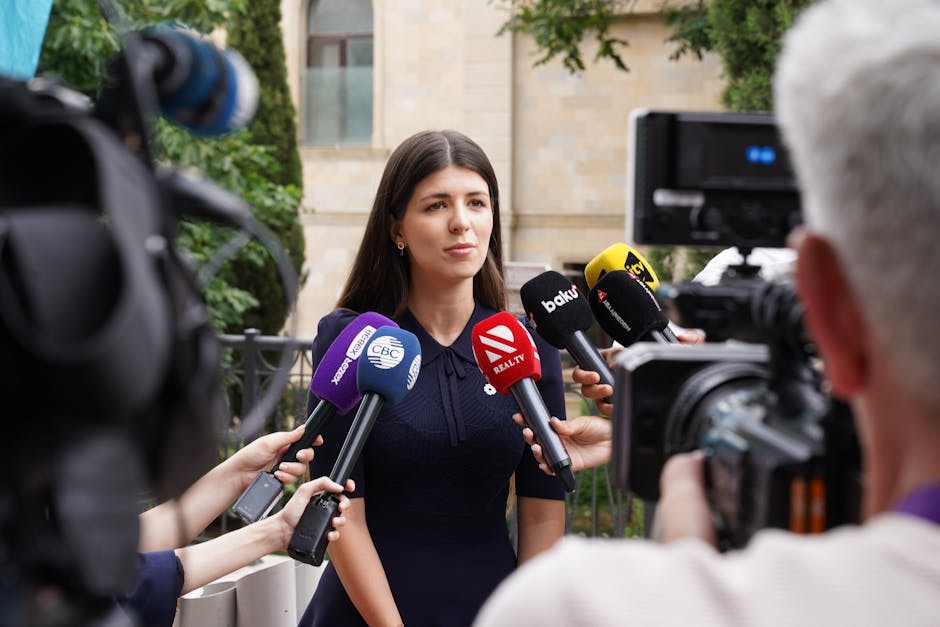
- Shireen Abu Akleh’s death sparked a new wave of Palestinian youth to pursue journalism, amplifying Palestinian voices.
- Despite Israeli forces’ attempt to intimidate Palestinian journalists, the number of independent Palestinian news outlets and social media correspondents has risen.
- Over 100 Palestinian journalists have been detained or injured since 2022, yet they continue to report on and document their stories.
- Shireen Abu Akleh’s legacy serves as a symbol of resilience and inspiration for young Palestinian journalists.
- Her death has galvanized Palestinian media resistance, refusing to let violence dictate silence.
What happens when an act meant to suppress a people’s voice instead amplifies it? That’s the question echoing across the West Bank and Gaza Strip two years after the killing of Shireen Abu Akleh, the veteran Al Jazeera journalist whose death at the hands of Israeli forces shocked the world. Shot while wearing a clearly marked press vest during an Israeli military raid in Jenin refugee camp, her killing was widely interpreted as a deliberate attempt to intimidate Palestinian journalists and stifle coverage of Israel’s military operations. But rather than instill fear, her death has galvanized a new wave of Palestinian youth to pick up cameras, record audio, and tell their stories—refusing to let violence dictate silence.
Did Israel succeed in silencing Palestinian journalists?

No—quite the opposite. While Shireen Abu Akleh’s killing delivered a chilling message, it failed to crush Palestinian media resistance. Instead, it catalyzed a surge in grassroots journalism, particularly among young Palestinians who view reporting as both a duty and an act of survival. According to the Committee to Protect Journalists (CPJ), over 100 Palestinian journalists have been detained or injured since 2022, yet the number of independent Palestinian news outlets and social media correspondents has risen sharply. Many cite Abu Akleh as their inspiration, describing her not just as a journalist but as a symbol of resilience. Her death, rather than deterring coverage, has become a rallying cry for those determined to expose life under occupation, often at great personal risk.
What evidence shows a rise in Palestinian media activism?

Data from press freedom organizations and field reports confirm a measurable uptick in Palestinian journalistic activity since 2022. UNESCO has documented a 40% increase in the number of young Palestinians enrolling in journalism programs across the West Bank and Gaza. Simultaneously, digital platforms like YouTube, Instagram, and TikTok have become vital tools for citizen reporters in areas where traditional media access is restricted. Reuters reported in 2023 that over 200 independent Palestinian media collectives have emerged since Abu Akleh’s death, many run by women and students. One such initiative, Nahj, trains teenagers in video storytelling and digital safety. “Shireen didn’t just report the news—she lived it,” said Lina al-Hathloul, a 21-year-old reporter with Nahj. “Now, we owe it to her to keep her lens open.”
Are there those who doubt this legacy of empowerment?

Yes, some journalists and analysts caution against romanticizing the surge in youth reporting amid ongoing repression. They argue that while Abu Akleh’s death inspired many, the structural dangers remain overwhelming. Israeli military restrictions, internet blackouts, and targeted detentions continue to stifle coverage. The Guardian reported in early 2023 that Israel had issued gag orders on over 90% of military investigations involving Palestinian journalists, effectively shielding perpetrators from accountability. Critics also warn that social media visibility doesn’t equate to lasting change—stories may go viral, but without institutional support, many young reporters burn out or face severe consequences. Moreover, some fear that the emotional charge of Abu Akleh’s legacy may overshadow the need for rigorous, fact-based reporting in high-risk environments.
How is this new wave changing the narrative on the ground?

The impact is visible in real time. From Nablus to Gaza City, young journalists are reshaping how the world sees Palestinian life. In 2023, a 19-year-old from Jenin gained international attention for live-streaming an Israeli raid on his neighborhood, his footage picked up by major global networks. Another collective, Eye on Gaza, has documented medical shortages and school demolitions with a level of granularity that traditional outlets often miss. These reporters aren’t just covering events—they’re embedding themselves in communities, preserving oral histories, and challenging both Israeli and Palestinian authorities when necessary. Their work has influenced UN reports and shifted editorial decisions at international newsrooms, proving that localized, on-the-ground storytelling can alter global perceptions.
What This Means For You
Shireen Abu Akleh’s legacy reminds us that truth-telling in conflict zones is neither passive nor safe—it’s an act of defiance. For global audiences, her story underscores the importance of supporting press freedom and verifying sources from regions where journalism is criminalized. For aspiring journalists everywhere, it’s a lesson in courage: one voice silenced can spark a thousand more. The rise of Palestinian youth media shows that even under occupation, narrative control is not absolute.
But critical questions remain: Can this grassroots movement sustain itself under relentless pressure? And how can international institutions better protect those who risk everything to report the truth? The answer may determine not just the future of Palestinian journalism—but the integrity of global news itself.
Source: Al Jazeera