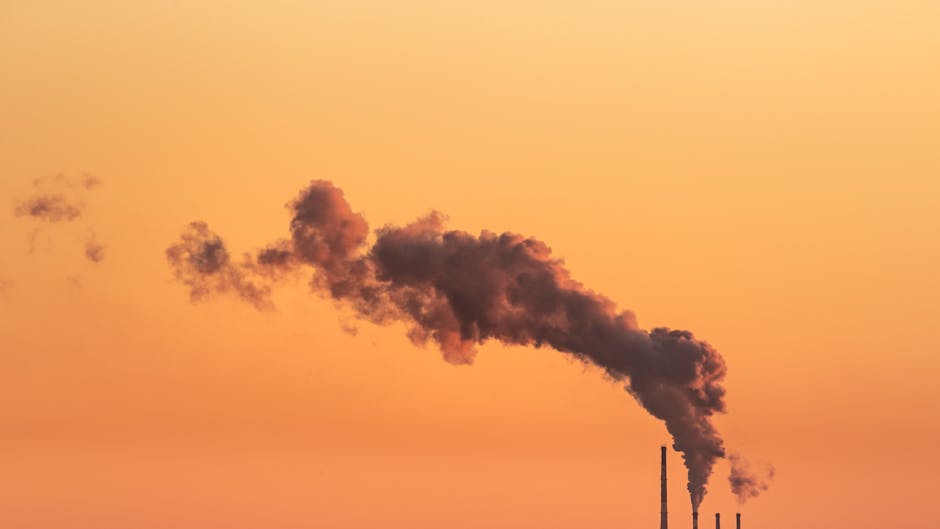
- Carbon dioxide levels in Earth’s atmosphere reached 424 ppm in early 2024, the highest in at least 2 million years.
- This surge is the sixth consecutive year of accelerated CO2 growth, far exceeding the 350 ppm threshold considered safe by climate scientists.
- The rate of increase in CO2 levels is faster than at any point in the past 66 million years, according to scientists.
- The 424 ppm level represents a 50% increase in carbon dioxide since the Industrial Revolution, with severe ecological implications.
- Record CO2 levels are linked to extreme weather events, including floods, record heat, and devastating wildfires worldwide.
At the top of Mauna Loa in Hawaii, where the air is so clean it feels like breathing space, a quiet alarm is sounding. At the NOAA-operated Mauna Loa Atmospheric Baseline Observatory, instruments have recorded a chilling milestone: carbon dioxide levels in Earth’s atmosphere have climbed to 424 parts per million (ppm) in early 2024. That number, measured consistently across multiple global monitoring stations, is not just a statistic—it’s a suffocating portrait of a planet under siege. The reading, the highest in at least 2 million years, arrives amid a cascade of extreme weather: floods in Kenya, record heat in India, and wildfires devouring swathes of Canada. Scientists here speak in hushed tones of ‘sleepless nights’ and ‘baked-in suffering,’ knowing this figure represents not just pollution, but a trajectory toward irreversible ecological change.
Record CO2 Levels Defy Climate Pledges

The latest data from the National Oceanic and Atmospheric Administration (NOAA) and the World Meteorological Organization (WMO) confirm that atmospheric CO2 concentrations rose by 2.8 ppm from 2023 to 2024—the sixth consecutive year of accelerated growth. This surge pushes the planet far beyond the 350 ppm threshold long considered safe by climate scientists. The 424 ppm level means carbon dioxide has increased by more than 50% since the Industrial Revolution. Even more alarming, the rate of increase is faster than at any point in the past 66 million years, according to ice core and sediment records. Despite nearly 200 nations pledging net-zero emissions under the Paris Agreement, fossil fuel combustion—especially from coal in Asia and oil production in the U.S. and Middle East—continues to drive emissions upward. The WMO warns that current policies put Earth on track for a 2.5°C to 2.9°C rise in global temperatures by 2100, well above the 1.5°C safety limit.
The Long Ascent of Carbon

The roots of today’s crisis stretch back to the late 18th century, when James Watt’s steam engine unlocked the vast energy stored in coal. Over the next two centuries, industrialization, deforestation, and mass transportation transformed carbon from a natural atmospheric component into a global threat. Charles David Keeling’s pioneering measurements at Mauna Loa in 1958 first revealed the steady climb of CO2, now known as the Keeling Curve. Back then, levels stood at 315 ppm. By 1988, when NASA scientist James Hansen first testified before Congress about global warming, the number had reached 350 ppm. Each decade since has added a new spike: the 1990s saw the rise of China’s coal economy; the 2000s brought explosive growth in SUVs and air travel; and the 2010s witnessed unprecedented Arctic ice melt and coral bleaching. The current rate of increase—roughly 2.5 ppm per year—is more than double the average of the 1960s.
Scientists, Policymakers, and Polluters

Today, the battle over carbon is fought by a diverse cast: climate scientists sounding alarms, energy executives defending fossil fuel investments, and activists demanding systemic change. Dr. Pieter Tans, a senior scientist at NOAA’s Global Monitoring Laboratory, calls the latest data “depressing but not surprising.” He and colleagues face the grim task of documenting a crisis they cannot stop. Meanwhile, leaders at major oil companies like ExxonMobil and Saudi Aramco continue to expand drilling operations, arguing that energy demand justifies supply. On the other side, youth-led movements like Fridays for Future and groups such as the Climate Action Network pressure governments to enforce stricter regulations. The European Union has implemented a carbon border tax, while U.S. legislation like the Inflation Reduction Act channels billions into renewable energy. Yet, as UN Secretary-General António Guterres recently stated, “We are still on a highway to climate hell with our foot on the accelerator.”
Consequences Across Continents

The implications of 424 ppm are already being felt worldwide. Coastal cities like Jakarta and Miami face chronic flooding as sea levels rise. Agricultural yields in sub-Saharan Africa and South Asia are declining due to heat stress and erratic rainfall. In the Arctic, permafrost thaw is releasing methane, a greenhouse gas far more potent than CO2, creating a dangerous feedback loop. Small island nations such as Tuvalu and Kiribati are drafting plans for ‘migration with dignity,’ anticipating the loss of their homelands. Insurers are recalculating risk models, while militaries, including the U.S. Department of Defense, now classify climate change as a ‘threat multiplier’ for conflict and instability. Even the global economy is at risk: a 2023 report by the Swiss Re Institute estimated that unchecked warming could erase up to 18% of global GDP by 2050.
The Bigger Picture
This isn’t just about warmer summers or melting glaciers. It’s about the fundamental stability of the Earth system that has allowed human civilization to flourish. The Holocene epoch, spanning the last 11,700 years, provided the climatic calm for agriculture, cities, and societies to emerge. Now, by pushing CO2 to levels not seen since the Pliocene—when sea levels were 25 meters higher—we are exiting that safe operating space. The planet’s carbon cycle, finely tuned over millennia, is being overwhelmed by human activity. As Dr. Katharine Hayhoe, chief scientist at The Nature Conservancy, puts it, ‘We are running the largest uncontrolled experiment in Earth’s history.’
What comes next depends on choices made in the next few years. The International Energy Agency has stressed that to meet the 1.5°C target, global emissions must peak by 2025 and decline rapidly after. That means ending new fossil fuel projects, scaling up renewables, and protecting forests. The technology exists. The science is clear. The question is whether the political and economic will can catch up with the pace of change already underway. Until then, the Keeling Curve climbs, and the air gets heavier.
Source: Scientificamerican