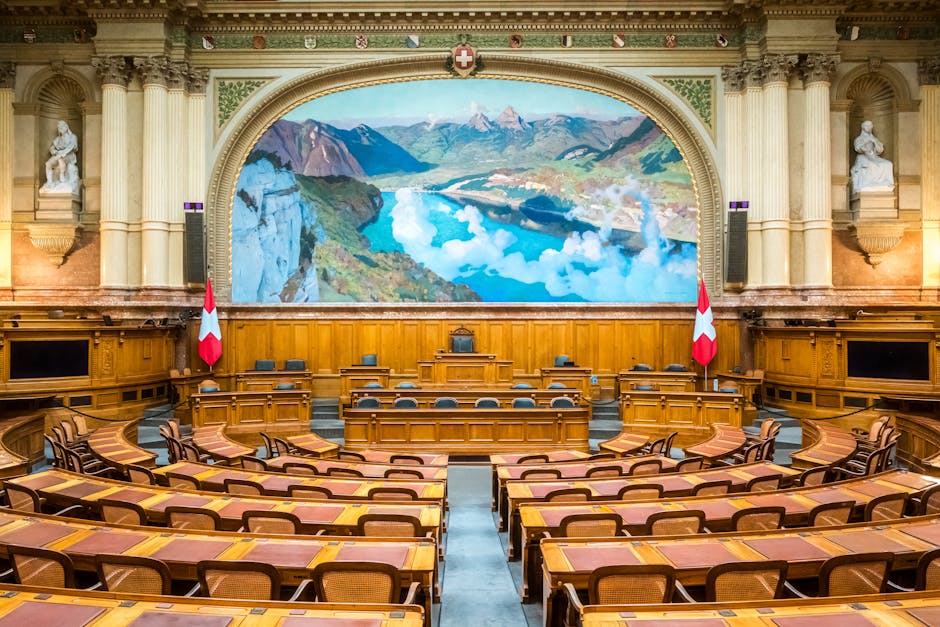
- Switzerland rejected a resolution to recognize Palestine, joining a shrinking minority of Western nations.
- The decision was made by a decisive margin in the Swiss National Council, with 134 voting against and 49 in favor.
- Switzerland’s stance is at odds with recent recognitions by Norway, Spain, and Ireland, highlighting a diplomatic divide over Middle East peace.
- Human rights groups and pro-Palestinian advocates argue that recognition is a moral imperative amid ongoing conflict in Gaza.
- Recognition is seen as a prerequisite for a two-state solution, increasing pressure on Israel to negotiate with the Palestinian Authority.
Switzerland has joined a shrinking minority of Western nations by refusing to recognize Palestinian statehood, as its federal parliament rejected a resolution to formally acknowledge Palestine by a decisive margin. Despite mounting global momentum—with over 140 UN member states already recognizing Palestine—the Swiss National Council voted 134 to 49 against the move in May 2024, signaling a cautious, consensus-driven foreign policy stance. This decision places Switzerland at odds with recent recognitions by Norway, Spain, and Ireland, and highlights the persistent diplomatic divide over how best to advance peace in the Middle East. The vote has drawn sharp reactions from human rights groups and pro-Palestinian advocates, who argue that recognition is a moral imperative amid ongoing conflict in Gaza.
Why Recognition Matters Now

The debate over Palestinian statehood has intensified since October 2023, following the Hamas-led attacks on Israel and the subsequent military response in Gaza, which has resulted in over 35,000 reported deaths, according to Gaza health authorities. As global attention focuses on humanitarian crises and long-term political solutions, symbolic diplomatic acts like state recognition have gained renewed weight. Recognition is seen by many as a prerequisite for a two-state solution, reinforcing the legitimacy of the Palestinian Authority and increasing pressure on Israel to negotiate. Switzerland, historically neutral and deeply involved in humanitarian efforts through the International Committee of the Red Cross, has long advocated for dialogue over unilateral actions. However, critics argue that neutrality in the face of ongoing occupation and violence risks complicity, especially as more European nations shift toward recognition as a tool of moral and political leverage.
Inside the Swiss Parliamentary Debate

The resolution, introduced by the Social Democratic Party, called on Switzerland to recognize Palestine within the 1967 borders, with East Jerusalem as its capital. Proponents argued that recognition would align Swiss policy with international law and bolster efforts to revive peace negotiations. Key supporters included left-wing and green parties, who emphasized Switzerland’s role in promoting human rights and international justice. Opponents, including the center-right Liberal Greens and conservative factions, countered that unilateral recognition could undermine Swiss neutrality and harm its ability to mediate in future peace talks. The Federal Council, Switzerland’s executive branch, advised against the move, stating that recognition should emerge from negotiations, not political declarations. The final vote reflected strong cross-party resistance, with even some center-left members abstaining due to concerns over timing and regional stability.
Causes and Consequences of the Decision

Switzerland’s refusal to recognize Palestine reflects a broader European divide on Middle East policy. While Norway, Spain, and Ireland made recognition moves in 2024, citing moral obligation and international law, others like Germany and Switzerland insist on a negotiated settlement. Analysts note that Switzerland’s decision stems from its unique diplomatic identity—neutrality is not just a policy but a constitutional principle. Reuters reported that Swiss officials fear premature recognition could alienate Israel and reduce Switzerland’s utility as a diplomatic intermediary. Yet, data from the European Council on Foreign Relations shows that public support for Palestine in Europe has surged, with over 60% of citizens in major EU countries favoring recognition. This gap between public opinion and government action raises questions about democratic responsiveness and the role of small states in shaping global norms.
Who Is Affected by the Vote?

The Swiss decision impacts multiple stakeholders. For Palestinians, it represents a setback in their campaign for broad international legitimacy, particularly in Western Europe. For Swiss civil society groups and diaspora communities, it fuels frustration with what they see as inconsistent human rights policies. Meanwhile, Israel has welcomed the decision, viewing it as a sign of continued Western support during a period of regional isolation. The vote may also influence other neutral or hesitant countries, such as Canada and Japan, that are weighing recognition. Crucially, the refusal could affect Switzerland’s standing in multilateral forums, including the UN, where over two-thirds of member states support Palestinian statehood. As diplomatic recognition becomes a proxy for broader geopolitical alignments, Switzerland’s stance may test the limits of neutrality in an increasingly polarized world.
Expert Perspectives
Experts are divided on the implications. Dr. Sarah Grotter, a Middle East analyst at the University of Geneva, argues that “recognition is not symbolic—it’s strategic. States that recognize Palestine strengthen the hand of moderates within the Palestinian Authority and isolate extremist factions.” In contrast, international law scholar Markus Wenger contends that “unilateral acts risk bypassing the peace process altogether. Switzerland’s insistence on negotiation, though unpopular, preserves the framework for a sustainable solution.” Others note that recognition does not automatically confer power; Palestine remains dependent on aid and lacks full control over territory, making diplomatic status alone insufficient without political and economic sovereignty.
Looking ahead, the question is not whether Palestine will eventually gain wider recognition, but under what conditions. With the International Criminal Court investigating potential war crimes and the UN Security Council deadlocked, diplomatic recognition by individual states may become the primary tool for advancing Palestinian statehood. Switzerland may face renewed pressure to reconsider, especially if the two-state solution appears increasingly unattainable through traditional negotiations. Observers will watch whether neutrality can adapt to moral imperatives in an age of global accountability—or whether it risks becoming an excuse for inaction.
Source: Swissinfo