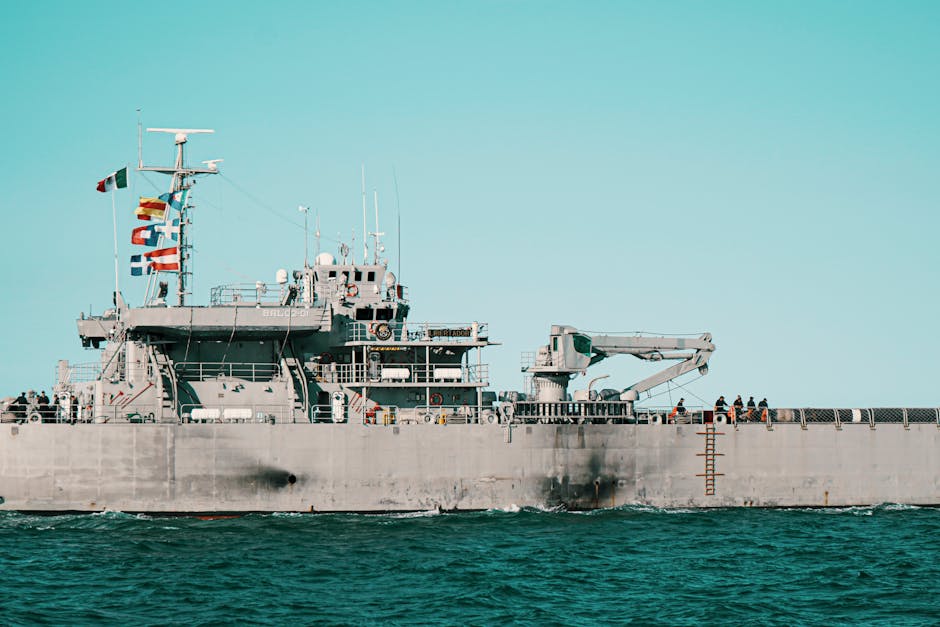
- The US has denied a report that a US warship was hit by Iranian missiles in the Strait of Hormuz, calling it a fabrication.
- The US plans to escort vessels out of the Strait of Hormuz due to concerns over the safety of international shipping.
- Iran has denied any wrongdoing in the Strait of Hormuz, warning that it will defend its interests in the region.
- The US and Iran have a history of conflict, with the current tensions centered on the issue of oil and the Strait of Hormuz.
- The Strait of Hormuz is a critical waterway for international shipping, with over 20% of global oil supplies passing through it.
The sun was setting over the Strait of Hormuz, casting a golden glow over the bustling waterway as news broke of a potential missile strike on a US warship. The report, which originated from Iranian media outlets, claimed that the warship had been hit by multiple missiles, sparking a flurry of concern and speculation among global leaders. However, the US was quick to deny the report, dismissing it as nothing more than a fabrication designed to escalate tensions in the region.
Current Tensions in the Gulf

The current situation in the Gulf is one of heightened tension, with the US and Iran engaging in a war of words over the safety of the Strait of Hormuz. The US has accused Iran of attempting to disrupt the flow of oil through the strait, while Iran has denied any wrongdoing. The US has also announced that it will begin to escort vessels out of the strait, citing concerns over the safety of international shipping. This move has been seen as a provocative gesture by Iran, which has warned that it will not hesitate to defend its interests in the region.
A History of Conflict

The story behind the current tensions in the Gulf is a long and complex one, dating back decades. The US and Iran have a history of conflict, with the two nations engaging in a series of proxy wars and skirmishes over the years. The current tensions, however, are centered on the issue of oil and the Strait of Hormuz, which is a critical waterway for international shipping. The US has long been concerned about the potential for Iran to disrupt the flow of oil through the strait, and has taken steps to protect its interests in the region. This has included the deployment of military assets, including warships and fighter jets, to the Gulf.
Key Players in the Conflict

The key players in the current conflict are the US and Iran, with each nation having its own motivations and interests. The US is driven by a desire to protect its interests in the region, including the safety of international shipping and the flow of oil. Iran, on the other hand, is motivated by a desire to assert its dominance in the region and to protect its own interests. The Iranian government has long been suspicious of US intentions in the Gulf, and has accused the US of attempting to undermine its authority. Other nations, including the UK and Saudi Arabia, are also playing a role in the conflict, with each having its own interests and motivations.
Consequences of the Conflict

The consequences of the current conflict are far-reaching, with the potential to impact not just the US and Iran, but also the global economy. The Strait of Hormuz is a critical waterway for international shipping, with a significant proportion of the world’s oil passing through it. Any disruption to the flow of oil through the strait could have a major impact on the global economy, leading to increased prices and potential shortages. The conflict also has the potential to escalate into a wider war, drawing in other nations and causing significant loss of life and destruction.
The Bigger Picture
The current conflict in the Gulf is part of a larger pattern of tension and instability in the region. The Middle East has long been a source of conflict and instability, with a range of nations and interests competing for power and influence. The US has long been a major player in the region, with a significant military presence and a range of economic and strategic interests. However, the rise of other nations, including Iran and China, is challenging US dominance and creating new tensions and uncertainties. As the situation in the Gulf continues to unfold, it is clear that the consequences will be far-reaching, with the potential to impact not just the US and Iran, but also the wider region and the global economy.
The situation in the Gulf is likely to continue to escalate in the coming days and weeks, with the US and Iran engaging in a war of words and a series of provocative gestures. The international community is watching with bated breath, aware of the potential for the conflict to escalate into a wider war. As the US begins to escort vessels out of the Strait of Hormuz, it is clear that the situation is becoming increasingly volatile, with the potential for significant consequences. The US has stated that it will continue to work with its allies to protect the safety of international shipping and to defend its interests in the region, while Iran has warned that it will not hesitate to defend its own interests. For more information on the conflict, visit the Reuters website or the BBC website.
Source: BBC