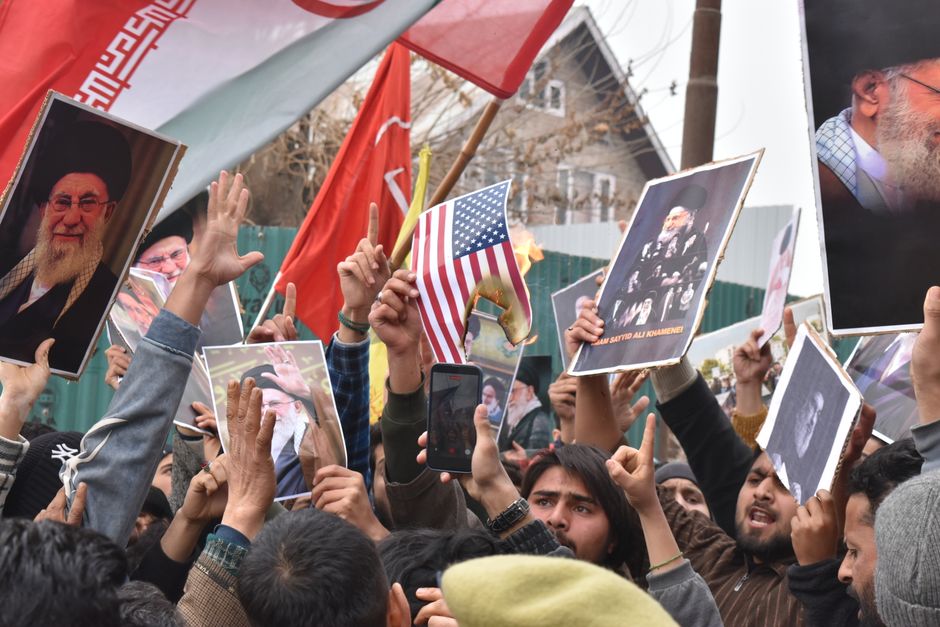
- Iran’s Supreme Leader Ali Khamenei was killed in a US-Israeli air strike in February, sparking widespread outrage.
- The death of Khamenei has raised concerns about a power vacuum and further instability in the region.
- The US-Israeli air strike has been widely condemned, with many countries calling for restraint and a return to diplomacy.
- The Iranian government has vowed to retaliate, but the nature and timing of such retaliation remain unclear.
- US President Donald Trump has vowed to hold fire, at least during the funeral, to avoid escalating the situation further.
Iran is mourning the death of its Supreme Leader Ali Khamenei, who was killed in a US-Israeli air strike in February, with huge crowds gathering to pay their respects. The strike, which also killed members of Khamenei’s family, has sparked widespread outrage and raised tensions in the region. As the country observes a period of mourning, US President Donald Trump has vowed to hold fire, at least during the funeral, in a bid to avoid escalating the situation further.
Current Tensions

The current situation in Iran is highly volatile, with many fearing that the death of Khamenei could lead to a power vacuum and further instability in the region. The US-Israeli air strike has been widely condemned, with many countries calling for restraint and a return to diplomacy. The Iranian government has promised to retaliate, but the nature and timing of such retaliation remain unclear. As the funeral procession makes its way through the streets of Tehran, the world is watching with bated breath, wondering what will happen next.
Historical Context

The story behind Khamenei’s death is complex and multifaceted, with roots in the long-standing tensions between Iran, the US, and Israel. For decades, the three countries have been locked in a struggle for power and influence in the Middle East, with each side seeking to assert its dominance. The US has long been critical of Iran’s nuclear program, while Israel has viewed Iran as an existential threat. The killing of Khamenei is the latest escalation in this long-running conflict, and it remains to be seen how the situation will unfold.
Key Players

The individuals shaping this crisis are numerous and diverse, with each having their own motivations and agendas. Trump, who has long been a vocal critic of Iran, has vowed to take a tough line against the country, while Israeli Prime Minister Benjamin Netanyahu has welcomed the killing of Khamenei as a major blow to Iranian power. Meanwhile, Iranian leaders are scrambling to respond to the crisis, with some calling for revenge and others urging restraint. As the situation continues to unfold, the actions of these key players will be closely watched.
Consequences

The consequences of Khamenei’s death are far-reaching and potentially devastating, with the potential to impact not just Iran but the entire region. The US and Israel are bracing for potential retaliation, while other countries in the region are watching with concern. The Iranian economy, already struggling under the weight of sanctions, is likely to suffer further, while the country’s people may face increased hardship and instability. As the world waits to see what will happen next, one thing is clear: the death of Khamenei has marked a significant turning point in the region.
The Bigger Picture
The killing of Khamenei is not just a regional issue but a global one, with implications for international relations, global security, and the future of the Middle East. The use of force by the US and Israel has raised questions about the role of military power in resolving conflicts, while the reaction of the international community will be closely watched. As the situation continues to unfold, it is clear that the death of Khamenei has marked a significant moment in modern history, one that will have far-reaching consequences for years to come.
As the funeral of Ali Khamenei comes to a close, the world is left to wonder what will happen next. Will the US and Israel continue to pursue a policy of aggression, or will they seek a path of diplomacy and dialogue? How will Iran respond to the killing of its leader, and what will be the impact on the region and the world? These are the questions that will be answered in the days and weeks to come, as the situation in Iran continues to unfold. For now, one thing is clear: the death of Khamenei has marked a significant turning point in the region, one that will have far-reaching consequences for years to come. Follow live updates on the situation in Iran for the latest news and analysis.
Source: Al Jazeera