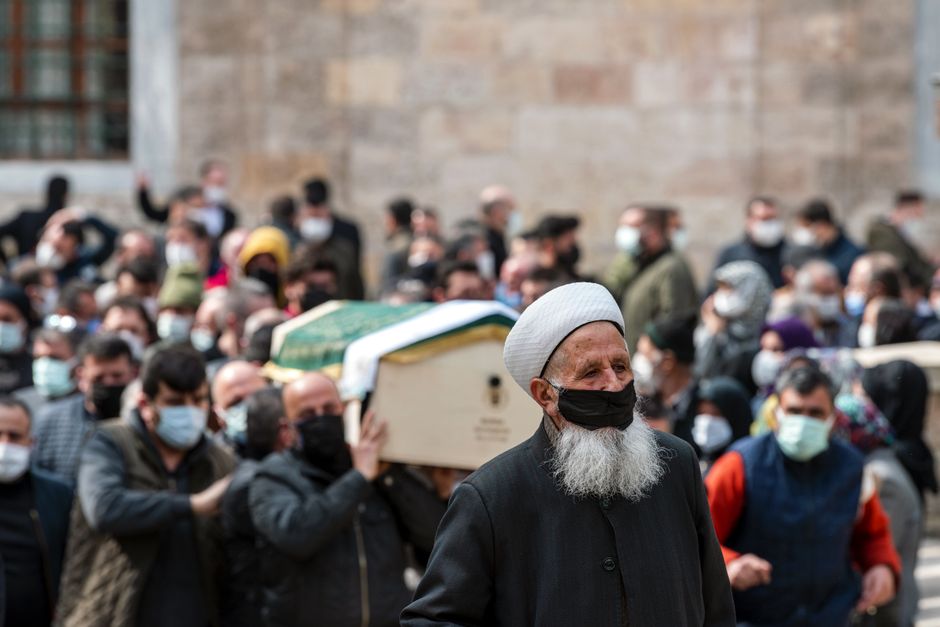
- Iran’s Supreme Leader funeral is expected to be a major challenge due to the potential for widespread unrest and chaos.
- The last time a Supreme Leader was buried, in 1989, millions of mourners attended, causing logistical nightmares and violence.
- The Iranian government is taking steps to prevent a repeat of the 1989 chaos, but the stakes are high and the country is on edge.
- The funeral of Ayatollah Khomeini in 1989 was a turning point in Iran’s history, marking a significant moment of turmoil and unrest.
- Despite preparations, the funeral is expected to be a difficult event for the authorities to control, with concerns about stampedes and violence.
Iran is bracing for potential turmoil as it prepares to bury its Supreme Leader, Ayatollah Khamenei. The last time a Supreme Leader was buried, in 1989, chaos erupted, with millions of mourners attending the funeral and widespread unrest reported. This time, the Iranian government is taking steps to prevent a repeat of those scenes, but the stakes are high, and the country is on edge.
What Happened Last Time?

In 1989, the funeral of Ayatollah Khomeini, the founder of the Islamic Republic, was a chaotic and emotional event. Millions of mourners attended, and the crowd became so large that it was difficult for the authorities to control. The funeral procession was delayed, and there were reports of stampedes and violence. The government was caught off guard, and the event marked a turning point in the country’s history. This time, the government is better prepared, but the funeral is still expected to be a major challenge.
Supporting Evidence

According to reports from the time, the 1989 funeral was a logistical nightmare. The crowd was so large that it was difficult for the authorities to provide basic services, such as food and water. There were also reports of political unrest, with some mourners using the occasion to express their dissatisfaction with the government. The event was widely covered in the international media, and it marked a turning point in the country’s relations with the outside world. This time, the government is taking steps to prevent a repeat of those scenes, including deploying thousands of security personnel and restricting access to the funeral site.
Counter-Perspectives

Some analysts argue that the government’s efforts to control the funeral may actually increase the risk of unrest. By restricting access to the funeral site and deploying large numbers of security personnel, the government may be creating a sense of tension and anticipation among the mourners. Others argue that the funeral may be an opportunity for the government to show its strength and legitimacy, and that the authorities are well-prepared to handle any potential unrest. The BBC has reported that the government is taking a firm but restrained approach to the funeral, and that the mood in the country is one of sadness and reflection.
Real-World Impact

The funeral of Ayatollah Khamenei is expected to have significant real-world consequences. The event may mark a turning point in the country’s history, and it is likely to have a major impact on the government’s relations with the outside world. The funeral may also be an opportunity for the government to reset its relations with other countries, and to reassert its influence in the region. The economic consequences of the funeral are also likely to be significant, with the event expected to have a major impact on the country’s oil exports and trade relations.
What This Means For You
The funeral of Ayatollah Khamenei is a significant event that is likely to have major consequences for the country and the wider region. As the government prepares to bury its Supreme Leader, it is important to understand the historical context of the event, and the potential risks and opportunities that it presents. The funeral may be a turning point in the country’s history, and it is likely to have a major impact on the government’s relations with the outside world.
As the world watches the events unfolding in Iran, it is worth asking what the future holds for the country and its people. Will the government be able to maintain control and stability, or will the funeral mark a new era of uncertainty and change? The answer to this question will depend on a variety of factors, including the government’s response to the funeral, and the international community’s reaction to the event. One thing is certain, however: the funeral of Ayatollah Khamenei is a significant event that will have major consequences for the country and the wider region.
Source: The New York Times