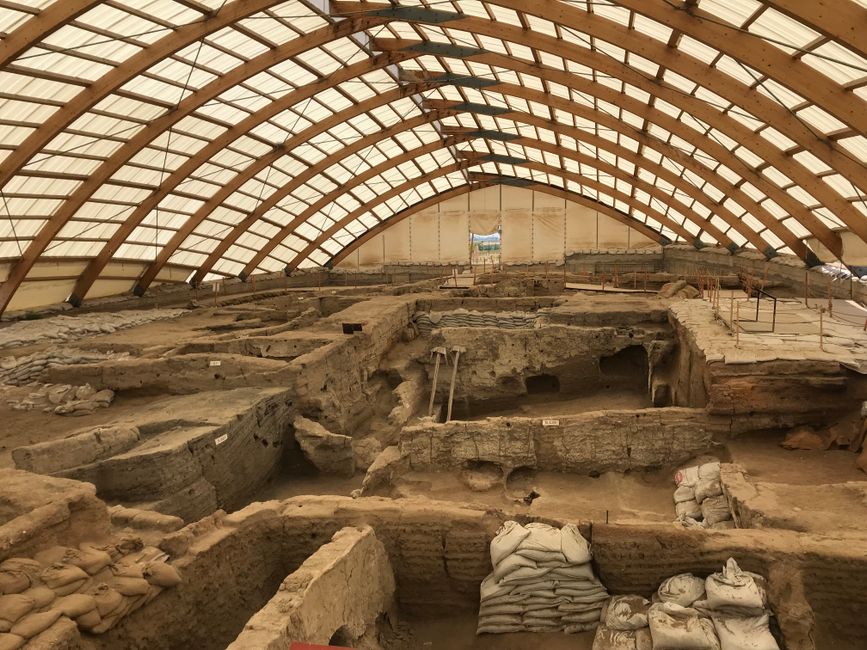
- Archaeologists have discovered a remarkably well-preserved ancient Byzantine city in Egypt’s Dakhla oasis.
- The find includes residential and religious structures, offering a unique glimpse into daily life, urban development, and economic activities of the Byzantine era.
- The discovery is expected to shed new light on the history of the Byzantine era and its impact on the region.
- The site has yielded a treasure trove of information about the Byzantine era, including a basilica-style church, coins, pottery fragments, and tools.
- The find is significant not only for Egypt but also for the broader understanding of Byzantine history and culture.
Archaeologists in Egypt have made a groundbreaking discovery, unearthing a remarkably well-preserved ancient Byzantine city in the western desert, specifically in the Dakhla oasis. The fourth-century quarters, which include residential and religious structures, offer a unique glimpse into daily life, urban development, and economic activities of the time. This significant find is expected to shed new light on the history of the Byzantine era and its impact on the region.
The Discovery and Its Significance

The discovery of this ancient city is particularly noteworthy due to its excellent state of preservation, with many of its original structures and artifacts still intact. The presence of a basilica-style church, coins, pottery fragments, and tools provides a comprehensive understanding of the daily lives of the people who inhabited this city. This find is not only significant for Egypt but also for the broader understanding of Byzantine history and culture, as it fills a gap in the knowledge of urban development and economic activities during that period.
Key Details of the Find

The archaeological site in the Dakhla oasis has yielded a treasure trove of information about the Byzantine era. The residential quarters, along with the basilica-style church, indicate a well-planned urban settlement with a strong religious presence. The variety of artifacts found, including coins and pottery, suggests a thriving economy with trade connections. Furthermore, the tools discovered provide insights into the technological capabilities and daily occupations of the inhabitants. This wealth of information will be crucial in reconstructing the history of this ancient city and its place within the broader Byzantine world.
Analysis of the Discovery

The causes behind the excellent preservation of this ancient city can be attributed to its location in the western desert, which has protected it from the elements and human interference over the centuries. The effects of this discovery are multifaceted, ranging from a deeper understanding of Byzantine architecture and urban planning to insights into the economic and religious practices of the time. Expert analysis of the artifacts and structures will continue to unveil more details about the daily life and cultural practices of the people who lived in this city. For instance, the study of the coins found can reveal trade patterns and the economic status of the city, while the analysis of pottery can provide information on dietary habits and cultural exchange.
Implications of the Discovery

The implications of this archaeological find are far-reaching, affecting not only our understanding of Egyptian history but also the broader narrative of the Byzantine era. The discovery will undoubtedly impact the field of archaeology, as it presents a unique opportunity for scholars to study a well-preserved ancient city. Additionally, it may attract tourism to the region, contributing to the local economy. However, it also raises questions about the preservation and protection of such sites, highlighting the need for careful management to ensure that these historical treasures are safeguarded for future generations.
Expert Perspectives
Experts in the field of archaeology and history are eagerly awaiting the full publication of the findings, as it is expected to contribute significantly to the current body of knowledge on the Byzantine era. Some scholars have already begun to speculate about the potential connections between this city and other known Byzantine settlements, highlighting the possibility of a more extensive network of trade and cultural exchange. Others have emphasized the importance of preserving the site and its artifacts, given the insights they provide into a previously understudied period of history.
Looking forward, the next steps will involve a thorough excavation and analysis of the site, followed by conservation efforts to protect the discovered structures and artifacts. As researchers delve deeper into the history of this ancient city, the public can expect a more detailed understanding of life in the Byzantine era. A key question that remains is how this discovery will influence our current understanding of the transition from the Roman to the Byzantine period in Egypt and the wider Mediterranean region. For more information on the Byzantine era and its history, readers can visit the Byzantine Empire page on Wikipedia or consult encyclopedia entries on Byzantine Egypt.
Source: The Guardian