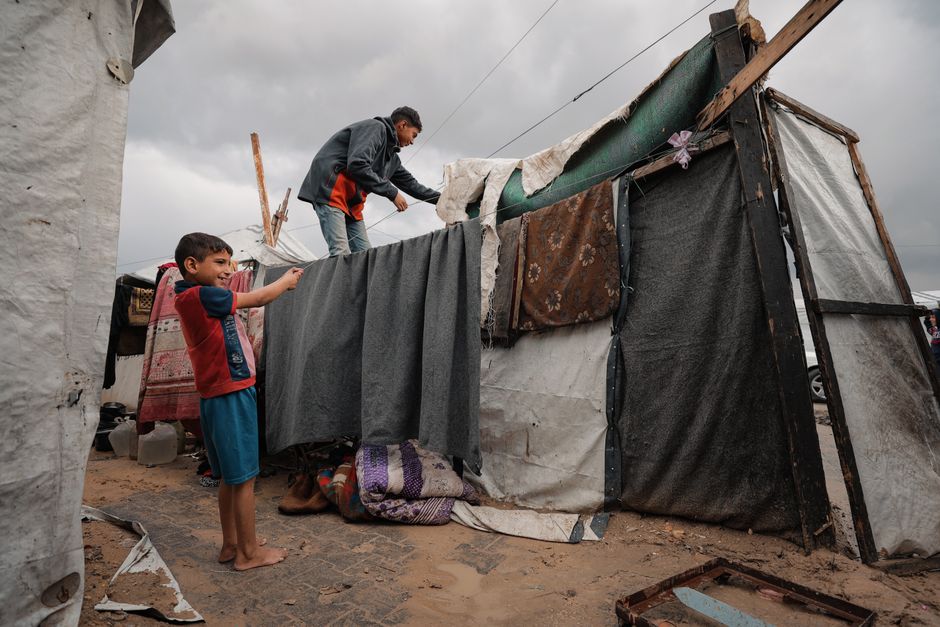
- Israeli politicians consider building settlements in Gaza, sparking widespread concern and outrage.
- The humanitarian crisis in Gaza remains dire, with residents struggling to access basic necessities.
- Israel’s plans to settle Gaza are met with resistance from Palestinian leaders and the international community.
- The move could be a violation of international law, exacerbating existing tensions in the region.
- A long history of conflict between Israelis and Palestinians has led to the current state of affairs in Gaza.
Israeli politicians are now considering building settlements in Gaza, a move that comes after a genocidal war and famine have devastated the region. The announcement has sparked widespread concern and outrage, with many questioning the feasibility and legality of such a plan. As the international community grapples with the aftermath of the conflict, Israel’s plans for Gaza have become a major point of contention, with many wondering what this could mean for the future of the region and its inhabitants.
Current State of Affairs

The current situation in Gaza is dire, with the region still reeling from the effects of the war and famine. The humanitarian crisis is ongoing, with many residents struggling to access basic necessities like food, water, and shelter. Despite these challenges, Israeli leaders are pushing forward with their plans to settle the area, citing a need to establish a permanent Israeli presence in the region. This move has been met with resistance from Palestinian leaders and the international community, who argue that such a plan would be a violation of international law and would only serve to exacerbate the existing tensions in the region.
Historical Context

The story behind Israel’s plans to settle Gaza is complex and rooted in a long history of conflict between Israelis and Palestinians. The region has been a major point of contention for decades, with both sides claiming it as their own. In recent years, the situation has escalated, with periodic outbreaks of violence and a worsening humanitarian crisis. The latest war has only added to the instability, and many are now wondering if a peaceful resolution is even possible. To understand the current situation, it’s essential to consider the historical context and the competing claims to the region, as well as the role of international law and the responsibilities of the global community to protect human rights.
Key Players and Motivations

The key players in this situation are the Israeli politicians who are driving the push to settle Gaza. These leaders are motivated by a desire to establish a permanent Israeli presence in the region and to assert their claim to the land. However, their plans are not without controversy, and many are questioning the true motivations behind this move. Some argue that the plan is an attempt to annex the region and suppress the Palestinian population, while others see it as a genuine effort to establish a peaceful and stable Israeli presence. As the situation continues to unfold, it’s essential to consider the motivations and actions of these key players and to hold them accountable for their decisions.
Consequences and Implications

The consequences of Israel’s plans to settle Gaza could be far-reaching and devastating. If the plan is allowed to move forward, it could lead to a significant escalation of the conflict, as well as a worsening of the humanitarian crisis. The international community has a responsibility to act and to prevent such a scenario from unfolding. The United Nations Charter is clear on the need to respect the sovereignty and territorial integrity of all nations, and it’s essential that this principle is upheld in the case of Gaza. As the situation continues to evolve, it’s crucial that the international community remains vigilant and works to prevent any actions that could exacerbate the conflict.
The Bigger Picture
This situation is not just about Israel and Gaza; it’s also about the broader implications for the region and the world. The conflict between Israelis and Palestinians is a longstanding and complex one, and it has significant implications for global stability and security. As the international community works to address this crisis, it’s essential that we consider the bigger picture and the potential consequences of our actions. The Middle East peace process has been stalled for years, and it’s unclear what the future holds. However, one thing is certain: the international community must work together to prevent further conflict and to promote a peaceful and stable resolution to this crisis.
In conclusion, the situation in Gaza is complex and volatile, and Israel’s plans to settle the region have only added to the uncertainty. As the international community works to address this crisis, it’s essential that we consider the historical context, the motivations of the key players, and the potential consequences of our actions. The road ahead will be challenging, but it’s crucial that we work towards a peaceful and stable resolution that respects the rights and dignity of all parties involved. The coming weeks and months will be critical in determining the future of Gaza and the region, and it’s essential that the international community remains vigilant and committed to promoting peace and stability.
Source: Al Jazeera