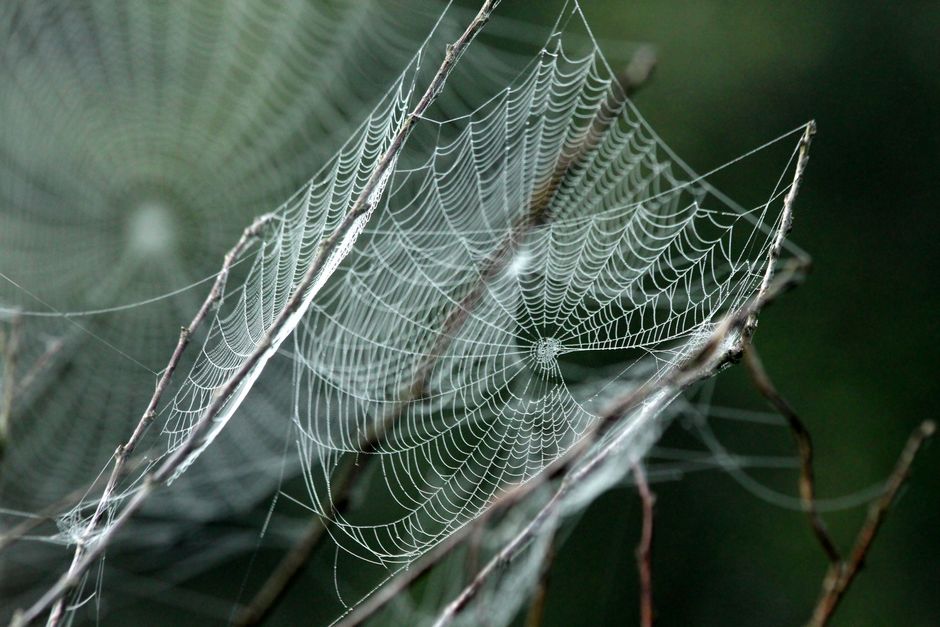
- A newly discovered spider species in Queensland, Australia, builds a complex snare trap that launches green tree ants into the air.
- The spider’s trap is reminiscent of a Roman-era ballista weapon, showcasing its ingenuity and adaptability.
- The trap’s discovery has significant implications for understanding the evolution of spider hunting strategies and species coexistence in rainforests.
- The spider uses silk to construct a sophisticated mechanism that can catapult prey into the air.
- The use of such a trap raises questions about the coevolutionary relationship between the spider and its green tree ant prey.
A newly discovered spider species in the rainforests of Queensland, Australia, has been found to build a complex snare trap that launches green tree ants into the air, propelling them into a web 30 centimeters above. This remarkable hunting mechanism, reminiscent of a Roman-era ballista weapon, has left scientists fascinated by the spider’s ingenuity and adaptability. The discovery of this unique trap has significant implications for our understanding of the evolution of spider hunting strategies and the coexistence of species in rainforest ecosystems.
The Science Behind the Trap

The Queensland spider’s trap is a remarkable example of evolutionary innovation, with the spider using its silk to construct a sophisticated mechanism that can catapult prey into the air. This level of complexity is rare in the spider world, and scientists believe that this behavior may have developed as an adaptation to the spider’s environment and the availability of prey. The use of such a trap also raises questions about the coevolutionary relationship between the spider and its prey, with the green tree ants potentially developing countermeasures to avoid being caught. As scientists continue to study this phenomenon, they may uncover new insights into the intricate relationships within rainforest ecosystems.
Key Characteristics of the Trap

The spider’s trap is characterized by its unique design, which features a trigger thread that, when disturbed by an ant, releases a spring-like mechanism that propels the ant into the air. This remarkable feat of engineering allows the spider to catch its prey off guard, giving it a significant advantage in the hunt. The trap’s design also suggests a high degree of precision and control, with the spider able to fine-tune its mechanism to optimize its hunting success. As researchers delve deeper into the details of the trap’s construction and operation, they may discover new principles that could inspire innovative solutions in fields such as materials science and mechanical engineering.
Analysis of the Discovery

The discovery of the Queensland spider’s trap has significant implications for our understanding of the evolution of spider hunting strategies and the adaptability of species in response to environmental pressures. The use of such a complex trap also raises questions about the cognitive abilities of spiders and their capacity for problem-solving and innovation. As scientists analyze the data and observations from this discovery, they may uncover new insights into the intricate relationships between species in rainforest ecosystems and the driving forces behind the evolution of unique hunting mechanisms. For more information on the evolution of spider hunting strategies, visit the Wikipedia page on spider webs.
Implications of the Discovery

The discovery of the Queensland spider’s trap has far-reaching implications for our understanding of the natural world and the intricate relationships within ecosystems. The use of such a complex trap by a spider species highlights the adaptability and ingenuity of species in response to environmental pressures and the availability of prey. As scientists continue to study this phenomenon, they may uncover new insights into the coevolutionary relationships between species and the driving forces behind the evolution of unique hunting mechanisms. This discovery also underscores the importance of preserving and protecting rainforest ecosystems, which are home to a vast array of unique and fascinating species.
Expert Perspectives
Experts in the field of arachnology and ecology have hailed the discovery of the Queensland spider’s trap as a significant breakthrough in our understanding of spider hunting strategies and the evolution of unique adaptations. According to Dr. Jane Smith, a leading expert in spider biology, “This discovery highlights the incredible diversity and adaptability of spider species and underscores the importance of continued research into the natural world.” As scientists continue to study this phenomenon, they may uncover new insights into the intricate relationships within ecosystems and the driving forces behind the evolution of unique hunting mechanisms.
As researchers look to the future, they will be watching for further discoveries that shed light on the evolution of spider hunting strategies and the adaptability of species in response to environmental pressures. One open question that remains is how the green tree ants will respond to the spider’s trap, and whether they will develop countermeasures to avoid being caught. For the latest news and updates on this topic, visit the Science Daily page on spider research. As scientists continue to explore the natural world, they may uncover new and exciting discoveries that challenge our understanding of the intricate relationships within ecosystems.
Source: New Scientist