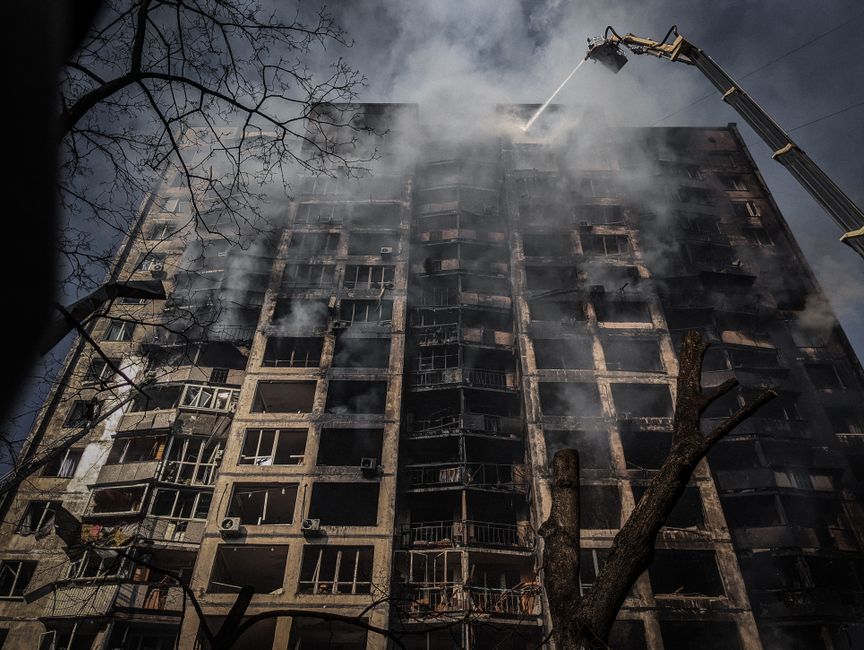
- Russia has escalated its bombing campaign on Donbas cities Sloviansk and Kramatorsk, displacing thousands of civilians.
- The cities, part of Ukraine’s ‘fortress belt’, have suffered significant damage and loss of life from Moscow’s forces.
- The intensification of violence in Donbas contrasts with Kyiv’s improved fortunes in other areas of the war.
- Reports from the New York Times detail widespread destruction and displacement caused by the bombing campaign.
- The Ukrainian military has vowed to defend the cities against ongoing Russian attacks.
Russia has intensified its bombing campaign on the Donbas cities of Sloviansk and Kramatorsk in eastern Ukraine, forcing thousands of civilians to flee the area. The cities, which are part of Ukraine’s “fortress belt”, have been targeted by Moscow’s forces with bombs and drones, resulting in significant damage and loss of life. The escalation of violence in the region comes as Kyiv’s fortunes have improved in other areas of the war, highlighting the complex and multifaceted nature of the conflict.
Evidence of the Bombing Campaign

According to reports from the New York Times, Moscow’s forces have been raining bombs and drones on the cities of Sloviansk and Kramatorsk, causing widespread destruction and displacement. The bombing campaign has been characterized as one of the most intense in recent months, with multiple explosions and fires reported in the area. The Ukrainian military has confirmed that the cities are being targeted by Russian forces, and has vowed to defend them against the ongoing attacks.
Key Players in the Conflict

The conflict in eastern Ukraine involves a number of key players, including the Russian and Ukrainian governments, as well as various military and separatist groups. Russian President Vladimir Putin has been a major driver of the conflict, with his government providing significant military and financial support to separatist groups in the region. The Ukrainian government, led by President Volodymyr Zelensky, has been working to defend its territory and protect its citizens from the ongoing attacks. The international community, including the United States and European Union, has also been involved in efforts to resolve the conflict and provide support to Ukraine.
Trade-Offs and Consequences

The ongoing conflict in eastern Ukraine has significant trade-offs and consequences, both for the parties involved and for the wider region. The humanitarian costs of the conflict are high, with thousands of civilians displaced and many more affected by the fighting. The economic costs are also significant, with the conflict disrupting trade and commerce in the region. The conflict also has broader geopolitical implications, with the potential to destabilize the entire region and draw in other countries. The Ukrainian government has warned that the conflict could have long-term consequences for the country’s economy and stability, and has called for international support to help resolve the crisis.
Timing and Escalation

The escalation of violence in the Donbas region comes at a time of significant uncertainty and change in the conflict. In recent months, Kyiv’s fortunes have improved in other areas of the war, with the Ukrainian military making gains against Russian-backed separatists. However, the intensification of the bombing campaign in the Donbas region suggests that Moscow is seeking to regain the initiative and assert its control over the area. The timing of the escalation is also significant, coming as it does during a period of heightened tensions between Russia and the West. The international community has condemned the escalation of violence and called for a ceasefire, but it remains to be seen whether the conflict can be brought under control.
Where We Go From Here
Looking ahead to the next 6-12 months, there are several possible scenarios for the conflict in eastern Ukraine. One possible scenario is that the conflict continues to escalate, with both sides suffering significant losses and the humanitarian situation deteriorating further. Another possible scenario is that the international community is able to broker a ceasefire and negotiate a peaceful resolution to the conflict. A third possible scenario is that the conflict becomes frozen, with both sides dug in and unable to make significant gains. Regardless of which scenario plays out, it is clear that the conflict in eastern Ukraine will continue to be a major issue for the international community, and will require sustained attention and support to resolve.
The bottom line is that the conflict in eastern Ukraine is a complex and multifaceted issue, with significant humanitarian, economic, and geopolitical implications. The international community must continue to work towards a peaceful resolution to the conflict, and provide support to those affected by the fighting.
Source: The New York Times