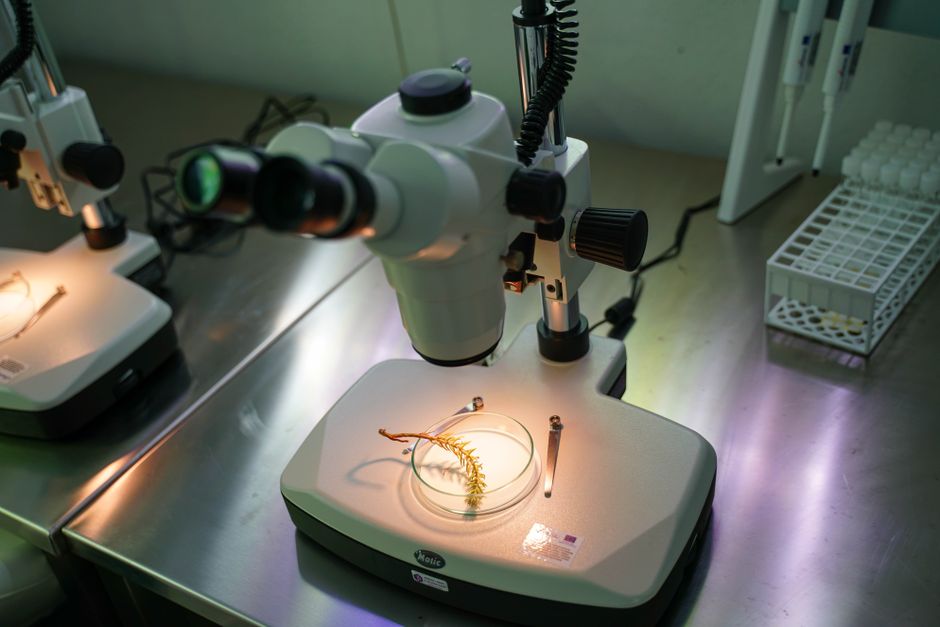
- Heliconius butterflies’ exceptional lifespan is attributed to their unique diet of pollen, providing essential nutrients and micronutrients.
- Research found a significant correlation between pollen consumption and longevity in various Heliconius species, highlighting the importance of their diet.
- The pollen diet of Heliconius butterflies is a key factor in their ability to live longer than other butterfly species.
- Heliconius butterflies play a vital role in their ecosystems as pollinators and seed dispersers, influencing plant-pollinator interactions.
- Their long lifespan allows Heliconius butterflies to interact with their environment in complex ways, impacting ecosystem dynamics.
The Heliconius genus of butterflies has long fascinated scientists with their exceptionally long lifespan, with some species living up to several months, a rarity in the insect world. Recent research published in Nature has shed light on the secret to their graceful ageing, attributing it to a unique diet of pollen. This discovery not only deepens our understanding of the biology of these butterflies but also has broader implications for our knowledge of ageing and longevity in insects.
The Science Behind Longevity

Studies have shown that the pollen diet of Heliconius butterflies provides them with essential nutrients, including proteins and other micronutrients, that are crucial for their extended lifespan. By analyzing the diet and lifespan of various Heliconius species, researchers found a significant correlation between pollen consumption and longevity. This hard data suggests that the unique adaptation of these butterflies to feed on pollen is a key factor in their ability to live longer than other butterfly species.
Key Players in the Ecosystem

The Heliconius butterflies play a vital role in their ecosystems, serving as pollinators and seed dispersers for various plant species. Their long lifespan allows them to interact with their environment in complex ways, influencing the dynamics of plant-pollinator interactions. Furthermore, the study of these butterflies has involved collaborations among entomologists, ecologists, and evolutionary biologists, highlighting the interdisciplinary nature of research into ageing and longevity.
Trade-Offs and Adaptations

While the pollen diet of Heliconius butterflies confers the benefit of extended lifespan, it also comes with potential costs and risks. For instance, the reliance on a specific food source may make these butterflies more vulnerable to environmental changes, such as fluctuations in pollen availability. Additionally, their unique adaptation may limit their ability to adapt to new environments, potentially restricting their geographical range. Understanding these trade-offs is essential for appreciating the complex interplay between diet, longevity, and environmental resilience in these species.
Timing and Evolutionary Context

The evolution of the pollen diet in Heliconius butterflies is believed to have occurred as an adaptation to their environment, allowing them to exploit a reliable food source. This evolutionary innovation has enabled these butterflies to thrive in their ecosystems, contributing to their diversity and speciation. The timing of this adaptation is crucial, as it has allowed Heliconius butterflies to occupy a unique ecological niche, characterized by their long lifespan and specialized diet.
Where We Go From Here
Looking ahead, researchers anticipate three potential scenarios for the study of Heliconius butterflies and their secret to graceful ageing. Firstly, further research into the nutritional and physiological basis of their longevity could reveal new insights into ageing processes. Secondly, the study of these butterflies could inform strategies for conservation and management of ecosystems, highlighting the importance of preserving pollinator populations. Lastly, the unique adaptation of Heliconius butterflies may inspire novel approaches to promoting healthy ageing in other organisms, including humans. As scientists continue to unravel the mysteries of these long-lived butterflies, we can expect a deeper understanding of the intricate relationships between diet, longevity, and environmental resilience.
In conclusion, the discovery of the pollen diet as the secret to Heliconius butterflies’ graceful ageing underscores the complexity and fascination of insect biology, offering valuable lessons for our understanding of ageing and longevity across species.
Source: Nature