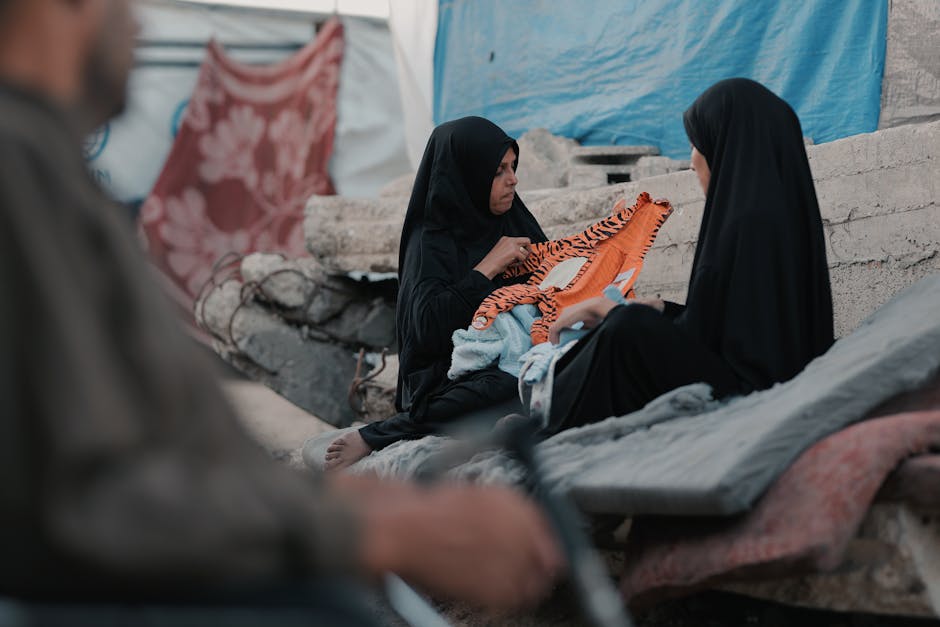
- Israeli forces attacked a Gaza City tent camp on June 6, 2026, resulting in Palestinian deaths and injuries, drawing international condemnation.
- Palestinian officials strongly condemned the attack, labeling it as reckless and an indiscriminate use of force by Israeli military.
- The incident intensifies already high tensions between Israel and Palestine, underscoring the urgent need for a lasting conflict resolution.
- The current environment in Gaza City is marked by significant uncertainty and fear of escalating violence following the devastating attack.
- Reports from Al Jazeera indicate the death toll from the tent camp attack is expected to increase, adding to the humanitarian crisis.
Israeli forces have launched a deadly attack on a tent camp in Gaza City, killing several Palestinians and injuring many more. The attack, which occurred on June 6, 2026, has sparked widespread condemnation and raised concerns about the escalating violence in the region. The Israeli military has yet to comment on the attack, but Palestinian officials have denounced it as a reckless and indiscriminate use of force. The incident has highlighted the ongoing tensions between Israel and Palestine, and the need for a lasting resolution to the conflict.
Current Situation in Gaza City

The current situation in Gaza City is one of heightened tension and uncertainty. The attack on the tent camp has left many Palestinians in a state of shock and grief, and has raised fears of further violence. The Israeli military has a history of launching attacks on Gaza, and the Palestinian population has borne the brunt of these actions. The international community has called for calm and restraint, but the situation on the ground remains volatile. The Al Jazeera news network has reported that several Palestinians have been killed and injured in the attack, and that the death toll is likely to rise.
Historical Context of the Israeli-Palestinian Conflict

The Israeli-Palestinian conflict has a long and complex history, dating back to the early 20th century. The conflict has its roots in the displacement of Palestinians during the creation of the state of Israel in 1948, and has been marked by periods of violence and negotiation. The Israeli military has occupied the West Bank and Gaza Strip since 1967, and has imposed strict controls on the movement of Palestinians. The conflict has resulted in the deaths of thousands of Palestinians and Israelis, and has had a profound impact on the region. The Israeli-Palestinian conflict is one of the most enduring and complex conflicts in the world.
Key Players in the Conflict

The key players in the Israeli-Palestinian conflict are the Israeli government and military, and the Palestinian Authority and militant groups. The Israeli government has been criticized for its handling of the conflict, and its use of force against Palestinian civilians. The Palestinian Authority has been weakened by internal divisions and a lack of international support, and has struggled to negotiate a lasting peace with Israel. Militant groups such as Hamas have launched attacks on Israel, and have been targeted by the Israeli military in response. The motivations of these players are complex and multifaceted, and have been shaped by a range of historical, cultural, and political factors.
Consequences of the Attack

The consequences of the attack on the Gaza City tent camp are likely to be severe and far-reaching. The attack has already resulted in the deaths of several Palestinians, and has injured many more. The attack has also damaged homes and infrastructure, and has left many Palestinians without access to basic necessities such as food and water. The international community has condemned the attack, and has called for an investigation into the circumstances surrounding it. The attack has also raised concerns about the impact of the conflict on civilians, and the need for a lasting resolution to the conflict.
The Bigger Picture
The attack on the Gaza City tent camp is part of a larger pattern of violence and instability in the region. The Israeli-Palestinian conflict has been marked by periods of calm and periods of violence, but the underlying issues remain unresolved. The conflict has resulted in the deaths of thousands of Palestinians and Israelis, and has had a profound impact on the region. The international community has a critical role to play in resolving the conflict, and in promoting a lasting peace between Israel and Palestine. The United Nations has called for a two-state solution to the conflict, and has urged both sides to negotiate a lasting peace.
The attack on the Gaza City tent camp is a reminder of the need for a lasting resolution to the Israeli-Palestinian conflict. The conflict has resulted in the deaths of thousands of Palestinians and Israelis, and has had a profound impact on the region. The international community must continue to pressure both sides to negotiate a lasting peace, and to promote a resolution to the conflict that is fair and just for all parties. As the situation in Gaza City continues to unfold, it is clear that the need for a lasting peace has never been more urgent.
Source: Al Jazeera