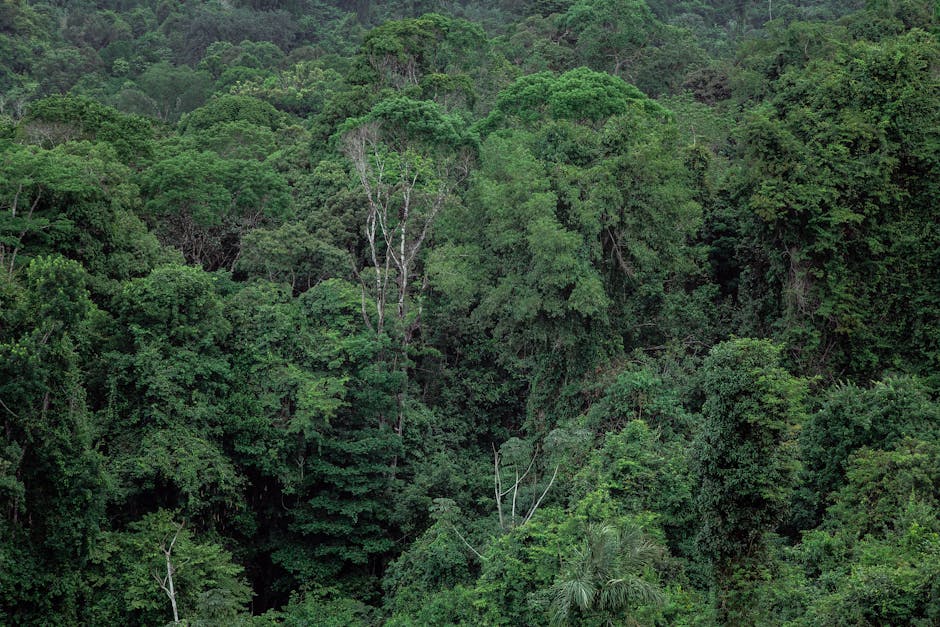
- Mining activities are causing widespread deforestation in tropical regions, particularly in sub-Saharan Africa.
- The global demand for minerals is driving the clearance of tropical forests, threatening biodiversity and ecosystem health.
- Deforestation rates near mines are significantly higher than in areas without mining activities.
- The mining industry’s environmental impact is severe, contributing to climate change and ecosystem disruption.
- Conservation efforts are needed to mitigate the effects of mining on tropical ecosystems and preserve biodiversity.
A recent analysis published in Nature has found that mining activities are causing significant deforestation in tropical regions, particularly in sub-Saharan Africa. The study, which examined the extent of deforestation near mines between 2001 and 2020, has major implications for conservation efforts in these sensitive ecosystems. As the global demand for minerals continues to grow, the rush for these resources is leading to widespread clearance of tropical forests, threatening biodiversity and ecosystem health.
Background and Context

The mining industry has long been associated with environmental degradation, and the latest findings only serve to reinforce this notion. The study’s authors used satellite data to track changes in forest cover near mines in sub-Saharan Africa, revealing a disturbing trend. As mining activities have increased in the region, so too has the rate of deforestation, with many areas experiencing significant losses of tree cover. This not only has severe consequences for local ecosystems but also contributes to climate change, as forests play a critical role in regulating the global carbon cycle.
Key Findings and Details

The analysis found that deforestation rates near mines were significantly higher than in areas without mining activities. In some cases, the clearance of forests was so extensive that it led to the complete loss of tree cover. The study’s authors identified several factors contributing to this trend, including the expansion of mining operations, the construction of roads and other infrastructure, and the influx of workers and their families. As the demand for minerals such as copper, gold, and iron ore continues to drive the growth of the mining industry, it is likely that deforestation rates will remain high unless urgent action is taken to mitigate these impacts.
Causes, Effects, and Expert Analysis

Experts warn that the causes of deforestation near mines are complex and multifaceted, involving a range of economic, social, and environmental factors. The effects of deforestation, however, are clear: the loss of biodiversity, the degradation of ecosystem services, and the exacerbation of climate change. According to research published in Nature, the mining industry must adopt more sustainable practices to reduce its environmental footprint. This could involve the implementation of stricter regulations, the use of more efficient technologies, and the engagement of local communities in decision-making processes.
Implications and Consequences

The implications of deforestation near mines are far-reaching, with significant consequences for both local and global communities. The loss of tropical forests not only threatens biodiversity but also undermines the livelihoods of people who depend on these ecosystems for their survival. As the global demand for minerals continues to grow, it is essential that the mining industry adopts more sustainable practices to reduce its environmental impacts. This could involve the use of renewable energy sources, the implementation of reclamation and rehabilitation programs, and the promotion of more efficient use of resources.
Expert Perspectives
Experts in the field offer contrasting viewpoints on the issue of deforestation near mines. While some argue that the mining industry is making progress in reducing its environmental footprint, others warn that more needs to be done to address the scale and severity of the problem. According to the World Wildlife Fund, the mining industry must prioritize sustainability and environmental responsibility to minimize its impacts on tropical forests.
Looking ahead, it is clear that the issue of deforestation near mines will remain a major concern for conservation efforts in tropical regions. As the global demand for minerals continues to grow, it is essential that the mining industry adopts more sustainable practices to reduce its environmental footprint. This will require a concerted effort from governments, industry leaders, and local communities to prioritize sustainability and environmental responsibility. One key question that remains to be answered is how the mining industry can balance its economic interests with its environmental obligations, and what role governments and regulatory bodies will play in ensuring that mining activities are conducted in a responsible and sustainable manner.
Source: Nature