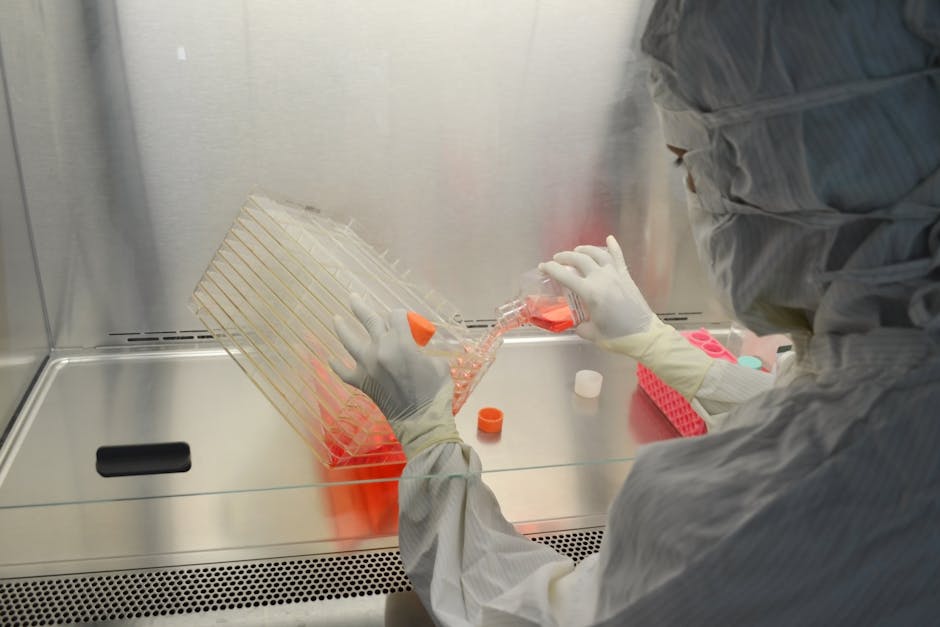
- Researchers achieved a 90% success rate in gene-editing human embryos using enhanced CRISPR technology.
- The breakthrough raises questions about the potential for gene-editing in human reproduction and sparks debate among experts.
- The improved CRISPR technique is more precise and efficient, minimizing the risk of off-target effects.
- The technology may be used in clinical settings, but issues like mosaicism must be addressed before moving forward.
- The possibility of gene-editing human babies is becoming increasingly plausible, but safety risks remain.
Researchers at a US institution have made significant progress in gene-editing human embryos using an enhanced form of CRISPR, achieving a success rate of 90% in their experiments. This breakthrough has sparked renewed debate about the potential for gene-editing to be used in human reproduction, with some experts hailing it as a major step forward and others raising concerns about the remaining safety risks. As the scientific community continues to grapple with the implications of this technology, one thing is clear: the possibility of gene-editing human babies is becoming increasingly plausible, but it is crucial to address the outstanding issues before moving forward.
The Science Behind the Breakthrough

The team’s success can be attributed to an improved form of CRISPR, which has been engineered to be more precise and efficient. According to the study, the new technique was able to edit human embryos with a high degree of accuracy, minimizing the risk of off-target effects. The researchers used CRISPR-Cas9 to target specific genes and make precise edits, demonstrating the potential for this technology to be used in a clinical setting. However, despite this progress, the issue of mosaicism – where only some cells in the embryo are edited – remains a significant challenge that must be overcome.
Key Players and Their Roles

The development of gene-editing technologies like CRISPR has been a collaborative effort, involving researchers and institutions from around the world. The US team responsible for this latest breakthrough is part of a broader community of scientists working to advance our understanding of gene editing and its applications. Organizations such as the World Health Organization and the Nature journal have also played important roles in promoting dialogue and disseminating information about the latest developments in this field. As the technology continues to evolve, it is likely that we will see new players emerge, including private companies and government agencies, which will shape the future of gene editing.
Trade-Offs and Risks

While the potential benefits of gene editing are undeniable, there are also significant risks and challenges that must be considered. One of the major concerns is the possibility of unintended consequences, such as off-target effects or mosaicism, which could have serious implications for human health. Additionally, there are ethical considerations, such as the potential for gene editing to be used to create ‘designer babies,’ which raises important questions about the limits of scientific inquiry and the need for regulation. As we move forward, it is essential to carefully weigh the potential benefits against the risks and to develop robust safeguards to prevent the misuse of this technology.
Timing and Next Steps

So why are we seeing progress in gene editing now? One reason is the rapid advancement of CRISPR technology, which has made it possible to edit genes with unprecedented precision and efficiency. Another factor is the growing recognition of the potential benefits of gene editing, including the possibility of treating genetic diseases and improving human health. As the technology continues to evolve, we can expect to see new developments and breakthroughs, but it is crucial to proceed with caution and to ensure that safety concerns are fully addressed before moving forward. The Centers for Disease Control and Prevention and other regulatory agencies will play a critical role in overseeing the development of gene editing technologies and ensuring that they are used responsibly.
Where We Go From Here
Looking ahead to the next 6-12 months, there are several possible scenarios that could unfold. One possibility is that the scientific community will make further progress in addressing the safety concerns associated with gene editing, paving the way for clinical trials and eventually, the use of this technology in human reproduction. Another scenario is that regulatory agencies will impose stricter controls on the development of gene editing technologies, limiting their use and slowing the pace of progress. A third possibility is that the debate over gene editing will become increasingly polarized, with some advocates pushing for rapid adoption and others calling for a more cautious approach. Ultimately, the future of gene editing will depend on our ability to balance the potential benefits against the risks and to develop a robust and responsible framework for the use of this technology.
In conclusion, while the latest breakthrough in gene editing is undoubtedly significant, it is crucial to approach this technology with caution and to carefully consider the potential risks and implications. As we move forward, it is essential to prioritize safety, ethics, and responsibility, and to ensure that the development of gene editing technologies is guided by a commitment to human well-being and the public interest.
Source: New Scientist