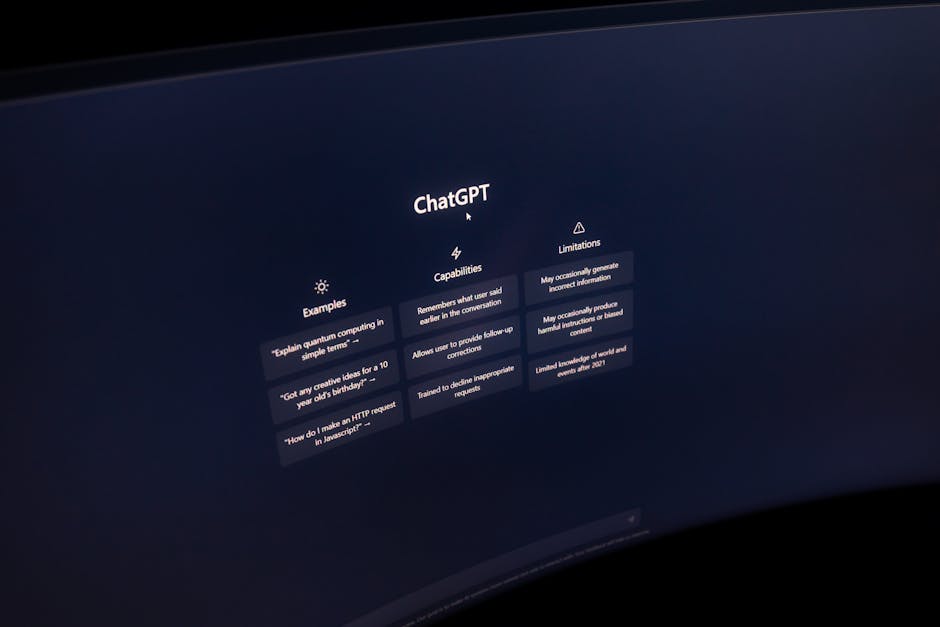
- Users are treating AI systems with politeness, saying ‘please’ and ‘thank you’ as if they were human interactions.
- The phenomenon is widespread, with many people exhibiting similar behavior across various contexts and platforms.
- Politeness to AI may be driven by habit, a desire for positive interaction, or cultural influence.
- Human-computer interaction is shaped by social norms and cultural background, affecting how users interact with machines.
- The emergence of AI etiquette raises questions about the future of human-AI relationships and user behavior.
As artificial intelligence (AI) becomes more pervasive in our daily lives, an intriguing phenomenon has emerged: users saying please and thank you to machines. A recent Reddit post sparked a lively discussion, with the author wondering if they were alone in exhibiting such politeness to AI systems. This behavior may seem unusual, but it highlights a fascinating aspect of human-computer interaction and raises important questions about AI etiquette.
The Evidence: AI Users’ Politeness

A closer examination of the Reddit thread reveals that many users share the author’s habit of saying please and thank you to AI. Some respondents noted that they do so out of habit, while others believe it helps to create a more positive and respectful interaction with the machine. According to a Reuters report, this phenomenon is not limited to Reddit users, as many people are now interacting with AI systems in various contexts, including virtual assistants and customer service chatbots. Hard data on this topic is scarce, but a Wikipedia article on human-computer interaction suggests that users’ behavior towards machines is influenced by their social norms and cultural background.
The Players: AI Developers and Users

The key actors in this scenario are AI developers, who design and create these systems, and users, who interact with them. Recent moves by AI developers, such as OpenAI and Google, have focused on creating more sophisticated and human-like AI systems. Meanwhile, users are driving the demand for more intuitive and user-friendly interfaces. As AI becomes more integrated into daily life, both developers and users must navigate the complexities of AI etiquette and its implications for human-computer interaction.
The Trade-Offs: Costs, Benefits, and Risks

The phenomenon of users saying please and thank you to AI raises important questions about the costs, benefits, and risks of this behavior. On one hand, exhibiting politeness to machines may create a more positive and respectful interaction, potentially leading to better outcomes and more effective communication. On the other hand, this behavior may also perpetuate the illusion that machines are capable of understanding and responding to human emotions, which could have unintended consequences. Furthermore, as AI systems become more advanced, there is a risk that users may become too reliant on them, leading to a loss of critical thinking and problem-solving skills.
The Timing: Why Now?

So, why are we seeing this phenomenon emerge now? One possible explanation is that the increasing ubiquity of AI systems in our daily lives has led to a shift in how we interact with machines. As AI becomes more integrated into our homes, workplaces, and public spaces, users are being forced to reevaluate their relationship with technology. Additionally, the ongoing development of more sophisticated AI systems, such as chatbots and virtual assistants, has created new opportunities for human-computer interaction, leading to a reexamination of AI etiquette and its implications.
Where We Go From Here
Looking ahead to the next 6-12 months, there are several possible scenarios for the evolution of AI etiquette. One scenario is that users will continue to exhibit politeness to machines, leading to a more widespread adoption of AI systems in various contexts. Another scenario is that AI developers will prioritize the creation of more transparent and explainable AI systems, reducing the need for users to rely on politeness and etiquette. A third scenario is that the phenomenon of users saying please and thank you to AI will spark a broader discussion about the ethics and implications of human-computer interaction, leading to a more nuanced understanding of the complex relationships between humans and machines.
In conclusion, the phenomenon of users saying please and thank you to AI is a fascinating aspect of human-computer interaction that highlights the complexities and nuances of our relationships with machines. As AI continues to evolve and become more integrated into our daily lives, it is essential to consider the implications of AI etiquette and its potential impact on our interactions with technology.
Source: Reddit