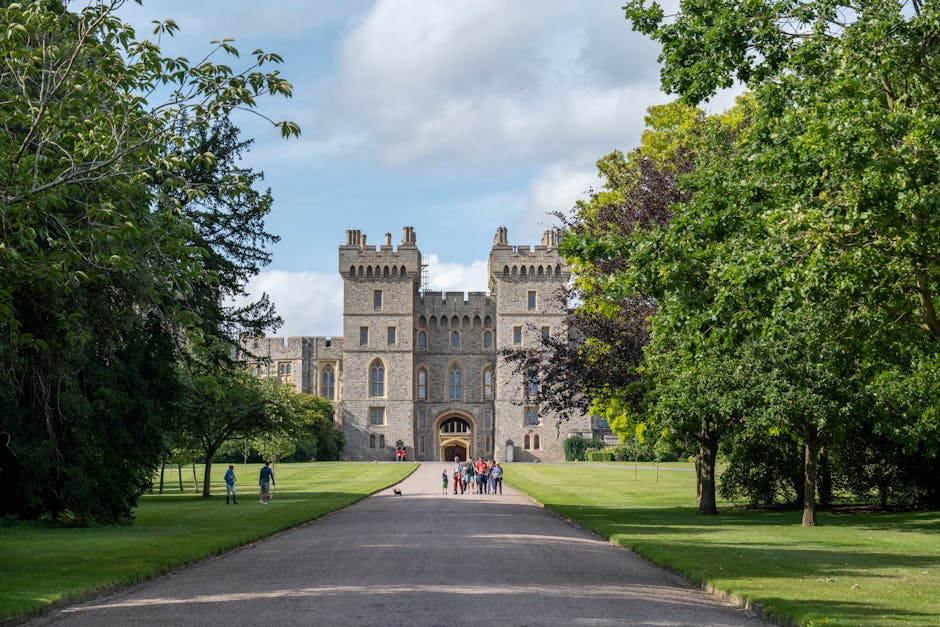
- Prince Andrew, the Duke of York, sublet three cottages at Royal Lodge for rental income while living rent-free.
- The National Audit Office investigation found that Prince Andrew received income from these properties.
- Royal Lodge is a residence for members of the British royal family, with Prince Andrew moving in after stepping down from public duties.
- Prince Andrew’s financial arrangement has raised concerns about transparency and accountability of royal finances.
- Lawmakers are calling for greater scrutiny of royal financial dealings following the NAO’s report.
Prince Andrew, the Duke of York, has been found to have sublet three cottages at Royal Lodge, a property in Windsor Great Park, for income, according to a report by the National Audit Office (NAO), a British public spending watchdog. The NAO’s investigation, which was published on June 5, 2026, disclosed that Prince Andrew received rental income from these properties while he himself lived at Royal Lodge rent-free. This development has sparked a debate about the transparency and accountability of royal finances and the use of public resources.
Background on Royal Lodge and Prince Andrew’s Financial Arrangements

Royal Lodge, a property in Windsor Great Park, has been a residence for members of the British royal family for decades. Prince Andrew moved into the property in 2019 after stepping down from public duties following a series of controversies, including his association with Jeffrey Epstein. The NAO’s report highlights that while Prince Andrew did not pay rent for his residence, he sublet three cottages on the property grounds, generating additional income. This arrangement has raised eyebrows among the public and lawmakers, who are increasingly calling for greater transparency and scrutiny of royal financial dealings.
Details of the NAO Report

The National Audit Office’s (NAO) report, which reviewed the financial management of royal properties, revealed that Prince Andrew sublet three cottages at Royal Lodge. These cottages were occupied by various individuals, and the rental income was directed to Prince Andrew. The report did not specify the exact amount of income generated but noted that the cottages were rented out continuously over the past few years. The subletting arrangement was made possible through a legal loophole that allows members of the royal family to generate income from properties they occupy, even if they do not pay rent themselves.
Analysis of the Financial and Ethical Implications

The subletting of cottages by Prince Andrew while living rent-free at Royal Lodge has significant financial and ethical implications. Financially, the arrangement raises questions about the equitable use of public resources, especially given the taxpayer-funded maintenance and security costs associated with royal properties. Ethically, it highlights a potential conflict of interest, as Prince Andrew benefits from a property that is ostensibly part of the public domain. The NAO’s report suggests that such practices need to be more transparent and regulated to ensure that they do not undermine public trust in the monarchy. The National Audit Office has recommended that the Royal Household review and clarify its policies on subletting and income generation from royal properties.
Implications for the Royal Family and Public Perception

The findings of the NAO report have the potential to affect the Royal Family’s reputation and public perception. Critics argue that the subletting arrangement appears to exploit a system designed to support the monarchy, raising concerns about the family’s financial practices and their commitment to transparency. The issue has also drawn attention to the broader financial management of royal properties, which are maintained with public funds. As public scrutiny intensifies, the Royal Family may face increased pressure to demonstrate fiscal responsibility and accountability, potentially leading to changes in how they manage and benefit from these properties.
Expert Perspectives
Dr. Robyn Butler, a constitutional historian at the University of London, stated that the subletting arrangement is a symptom of broader issues within the monarchy’s financial management. “This case highlights the need for clearer guidelines and greater transparency in how royal properties are used and managed,” she said. In contrast, Lord Peter Hain, a former Labour MP, believes that the arrangement is a minor issue compared to the larger financial challenges facing the Royal Family. “The monarchy needs to modernize and adapt to changing public expectations, but this particular case is not a major scandal,” he commented.
As the Royal Family continues to navigate public scrutiny and changing norms, the subletting issue at Royal Lodge serves as a catalyst for broader discussions about the role and responsibilities of the monarchy in a modern, transparent society. The NAO’s recommendations are expected to prompt a review of current practices, and the public will be watching closely to see how these changes are implemented. BBC News reports that the Royal Household has acknowledged the findings and is committed to addressing the concerns raised by the NAO.
Source: The New York Times