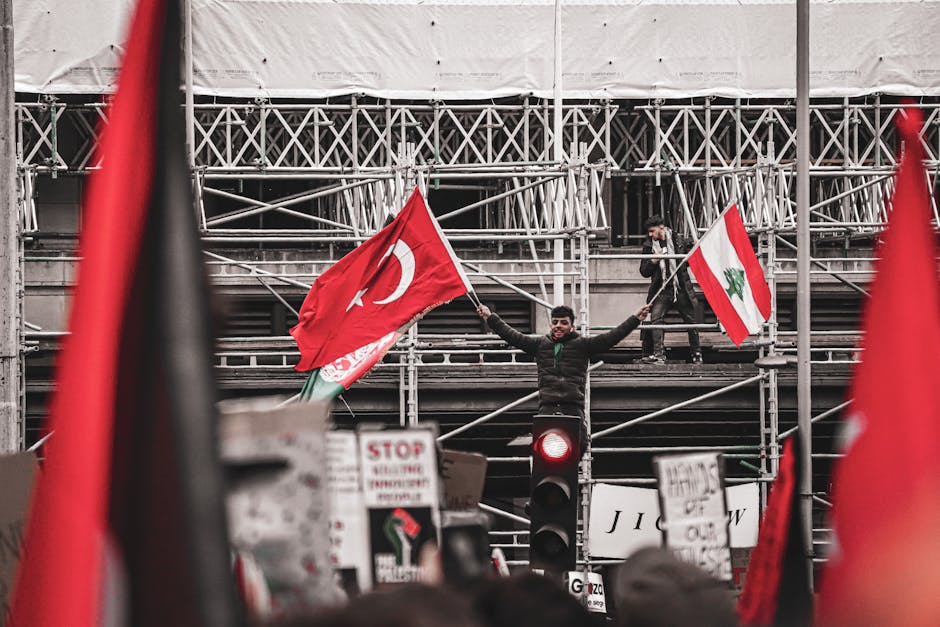
- Lebanon’s Hezbollah rejects US peace plan, raising concerns of escalating violence in the region.
- The conflict between Israel and Hezbollah has been ongoing for months, with significant losses on both sides.
- The US initiative has failed to quell the unrest, and the situation remains volatile.
- The conflict’s roots lie in a long-standing dispute over territory and ideology between Israel and Hezbollah.
- The latest rejection by Hezbollah has sparked fears of further deterioration in the situation.
Lebanon’s Hezbollah movement has rejected a new US peace plan aimed at ending the ongoing conflict with Israel, as Israeli forces continue to launch attacks on Lebanese territory. The development has raised concerns of escalating violence in the region, with the US initiative failing to quell the unrest. The conflict has been ongoing for months, with both sides suffering significant losses. The latest rejection by Hezbollah has sparked fears of further deterioration in the situation.
Background to the Conflict

The conflict between Israel and Hezbollah has its roots in a long-standing dispute over territory and ideology. The two sides have been engaged in a series of skirmishes and battles over the years, with the situation escalating in recent months. The US has been attempting to broker a peace deal, but its efforts have been met with resistance from both sides. The latest plan, which was rejected by Hezbollah, had been seen as a last-ditch attempt to prevent further violence. However, with the plan’s failure, the situation remains volatile, and the potential for further conflict is high.
Key Developments in the Conflict

The latest round of violence began several months ago, with Israel launching a series of airstrikes on Hezbollah targets in Lebanon. Hezbollah has responded with rocket attacks on Israeli territory, leading to a significant escalation in the conflict. The US has been attempting to intervene, with diplomats shuttling between the two sides in an attempt to broker a peace deal. However, the talks have been difficult, with both sides dug in and refusing to compromise. The rejection of the US peace plan by Hezbollah has sparked concerns that the conflict may be entering a new and more dangerous phase.
Analysis of the Conflict

Analysts say that the conflict between Israel and Hezbollah is complex and multifaceted, with a range of factors contributing to the ongoing violence. The dispute over territory is a major issue, with both sides claiming sovereignty over a range of areas. However, the conflict is also driven by ideological differences, with Hezbollah opposing Israel’s existence and Israel viewing Hezbollah as a terrorist organization. The US peace plan had attempted to address these issues, but its failure has left the situation unresolved. According to Reuters, the conflict has resulted in significant humanitarian suffering, with thousands of civilians displaced and many more affected by the violence.
Implications of the Conflict

The implications of the conflict between Israel and Hezbollah are far-reaching, with the potential for significant regional instability. The conflict has already had a major impact on the humanitarian situation in Lebanon, with thousands of civilians displaced and many more affected by the violence. The conflict also has the potential to draw in other regional players, including Iran and Syria, which could further escalate the situation. According to BBC, the international community is increasingly concerned about the situation, with calls for a ceasefire and a return to negotiations.
Expert Perspectives
Experts say that the rejection of the US peace plan by Hezbollah has significant implications for the region. Some analysts believe that the move may be a tactical error by Hezbollah, which could lead to further isolation and pressure from the international community. Others argue that the rejection is a reflection of the deep-seated mistrust between the two sides, which will be difficult to overcome. As one expert noted, the situation is highly complex and will require a nuanced and multifaceted approach to resolve.
Looking forward, the situation in Lebanon remains highly uncertain, with the potential for further violence and instability. The international community will be watching the situation closely, with calls for a ceasefire and a return to negotiations. However, with the US peace plan having failed, it is unclear what the next steps will be. As the situation continues to unfold, one thing is clear: the conflict between Israel and Hezbollah has the potential to have significant and far-reaching consequences for the region and beyond.
Source: Al Jazeera