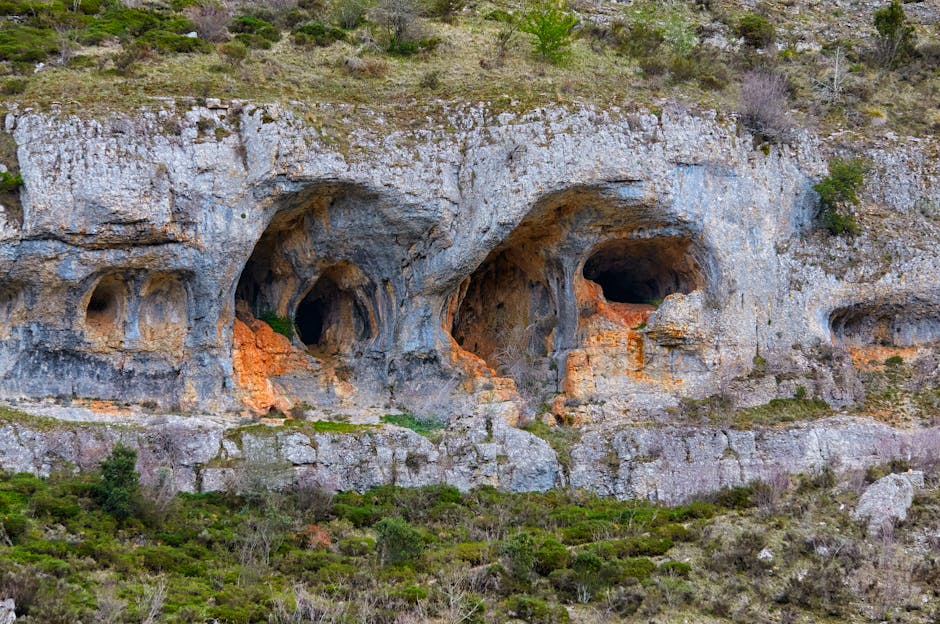
- A 5,500-year-old mountain cave in the Pyrenees has been discovered, potentially revealing the earliest high-altitude mining camp in history.
- The site contains evidence of repeated visits spanning thousands of years, indicating its importance to ancient miners.
- The discovery of a child’s tooth and green stones suggests that the cave may have been used for mining activities.
- The green stones found in the cave may hold clues to the types of minerals that were being mined at the site.
- The find has significant implications for our understanding of human history and the development of mining technologies.
Deep within the Pyrenees mountains, a team of archaeologists has unearthed a 5,500-year-old mystery that is rewriting the history of ancient mining practices. The discovery of a child’s tooth and strange green stones in a mountain cave has led researchers to believe that the site may have served as one of the earliest high-altitude mining camps ever discovered, with evidence of repeated visits spanning thousands of years. This extraordinary find has significant implications for our understanding of human history and the development of mining technologies.
Uncovering the Secrets of the Cave

The ancient mountain cave, located in the Pyrenees, has yielded a treasure trove of archaeological treasures, including the child’s tooth and green stones. The site has been dated to around 5,500 years ago, a time when mining was still in its infancy. The discovery of repeated visits to the site over thousands of years suggests that the cave was an important location for ancient miners, who may have been attracted to the site’s rich mineral deposits. The green stones, in particular, are of great interest to researchers, as they may hold clues to the types of minerals that were being mined at the site.
A History of Mining in the Region

The Pyrenees mountains have a long history of mining, dating back to the Neolithic period. The region’s rich mineral deposits, including copper, iron, and gold, made it an attractive location for ancient miners. However, the discovery of the 5,500-year-old mining camp in the mountain cave pushes back our understanding of mining in the region by thousands of years. It is likely that the site was used by successive generations of miners, who developed and refined their mining techniques over time. The discovery of the child’s tooth and green stones provides a unique glimpse into the lives of these ancient miners and their practices.
The People Behind the Discovery

The team of archaeologists behind the discovery is led by a group of experienced researchers who have spent years studying the Pyrenees region. Their motivations for exploring the site were driven by a desire to understand the history of human settlement in the region and the development of mining technologies. The discovery of the child’s tooth and green stones has been a major breakthrough for the team, who are now eager to conduct further excavations at the site. The study’s findings have been published in a recent article, providing a detailed account of the discovery and its significance.
Consequences of the Discovery

The discovery of the 5,500-year-old mining camp in the Pyrenees has significant consequences for our understanding of human history and the development of mining technologies. The site provides a unique glimpse into the lives of ancient miners and their practices, and highlights the importance of the region in the history of mining. The discovery also raises questions about the impact of mining on the environment and the health of miners, particularly in ancient times. As researchers continue to excavate the site, they may uncover further clues to the lives of these ancient miners and the consequences of their activities.
The Bigger Picture
The discovery of the 5,500-year-old mining camp in the Pyrenees is part of a larger story about human history and the development of technologies. The site provides a unique glimpse into the lives of ancient miners and their practices, and highlights the importance of the region in the history of mining. The discovery also underscores the importance of continued research and excavation in the region, as there may be many more secrets waiting to be uncovered. As researchers continue to explore the site, they may uncover further clues to the lives of these ancient miners and the consequences of their activities, providing a more complete picture of human history.
The discovery of the 5,500-year-old mining camp in the Pyrenees is a significant one, and researchers are eager to continue exploring the site to uncover its secrets. As they do, they may shed further light on the lives of ancient miners and the development of mining technologies, providing a more complete understanding of human history. The Pyrenees region is a fascinating area of study, and one that continues to yield new and exciting discoveries about our past.
Source: ScienceDaily