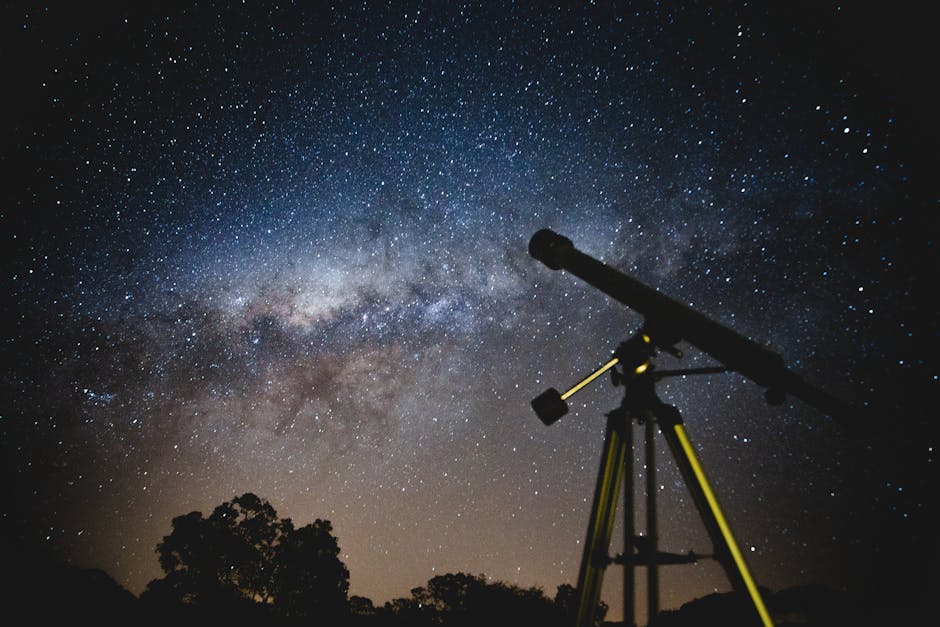
- NASA’s Roman Space Telescope will discover approximately 100,000 exoplanets, exceeding the cumulative total of all previous missions.
- The telescope will study thousands of exotic alien atmospheres, providing a vast treasure trove of data on planetary formation.
- The Roman Space Telescope will focus on unexplored regions of the Milky Way, enabling scientists to compare planetary systems.
- The mission will utilize gravitational lensing to detect exoplanets, measuring the bending of light around massive objects.
- The telescope’s advanced technology will enable the detection of exoplanets previously undetectable, expanding our knowledge of the universe.
NASA’s Roman Space Telescope is poised to revolutionize the search for alien worlds by discovering approximately 100,000 exoplanets, a number that far exceeds the cumulative total of all previous missions. This groundbreaking telescope will delve into unexplored regions of the Milky Way, enabling scientists to compare planetary systems across diverse galactic environments. As the mission unfolds, it will not only uncover rare Earth-sized planets but also study thousands of exotic alien atmospheres, ultimately providing a vast treasure trove of data that could fundamentally reshape our understanding of planetary formation.
Evidence from the Roman Space Telescope

The Roman Space Telescope is equipped with a wide-field instrument that will conduct a comprehensive survey of the Milky Way, focusing on areas that have been previously unexplored. According to NASA, this mission will utilize a technique known as gravitational lensing to detect exoplanets, which involves measuring the bending of light around massive objects. By leveraging this method, scientists anticipate that the Roman Space Telescope will be able to identify a substantial number of exoplanets, including many that are similar in size to Earth. Primary sources suggest that the telescope’s advanced technology will enable the detection of exoplanets that were previously undetectable, thereby significantly expanding our knowledge of the universe.
Key Players in the Roman Space Telescope Mission

The Roman Space Telescope mission involves a collaboration of key actors, including NASA, renowned astrophysicists, and engineers. The mission is led by a team of experienced scientists who have dedicated their careers to the study of exoplanets and planetary formation. Recent moves by the team include the successful completion of the telescope’s design and development phase, as well as the initiation of preparations for its launch. As the mission progresses, the team will work closely with international partners to analyze the vast amounts of data generated by the telescope, with the goal of advancing our understanding of the universe and the potential for life beyond Earth.
Trade-Offs and Implications of the Roman Space Telescope

The Roman Space Telescope mission is not without its challenges and trade-offs. One of the primary costs associated with the mission is its significant budget, which will be allocated from NASA’s overall budget for space exploration. However, the potential benefits of the mission far outweigh the costs, as the discovery of 100,000 exoplanets will provide unprecedented insights into the formation and evolution of planetary systems. Additionally, the mission will involve risks, such as the potential for technical malfunctions or the discovery of exoplanets that are inhospitable to life. Nevertheless, the opportunities presented by the Roman Space Telescope mission are substantial, and its success could pave the way for future missions that will further expand our understanding of the universe.
Timing and Context of the Roman Space Telescope Mission

The Roman Space Telescope mission is particularly timely, given the current state of space exploration and the growing interest in the search for alien life. In recent years, there have been numerous breakthroughs in the field of exoplanetary science, including the discovery of exoplanets that are believed to be capable of supporting life. The Roman Space Telescope mission will build upon these discoveries, providing a comprehensive survey of the Milky Way and shedding light on the formation and evolution of planetary systems. As Science Daily reports, the mission will help scientists to better understand the conditions that are necessary for life to arise, and will ultimately bring us closer to answering the question of whether we are alone in the universe.
Where We Go From Here
As the Roman Space Telescope mission progresses, there are several possible scenarios that could unfold over the next 6-12 months. One scenario is that the telescope will make a number of significant discoveries, including the detection of exoplanets that are similar in size to Earth and the identification of planetary systems that are capable of supporting life. Another scenario is that the telescope will encounter technical difficulties, which could delay or impede its ability to conduct its survey of the Milky Way. A third scenario is that the telescope will provide unprecedented insights into the formation and evolution of planetary systems, which could fundamentally reshape our understanding of the universe and our place within it. Ultimately, the success of the Roman Space Telescope mission will depend on a variety of factors, including the performance of the telescope itself and the ability of scientists to analyze and interpret the vast amounts of data that it will generate.
In conclusion, the Roman Space Telescope mission represents a major breakthrough in the search for alien worlds, with the potential to discover 100,000 exoplanets and reshape our understanding of planetary formation. As the mission unfolds, it will be important to closely follow its progress and to consider the implications of its discoveries for our understanding of the universe and our place within it.
Source: ScienceDaily