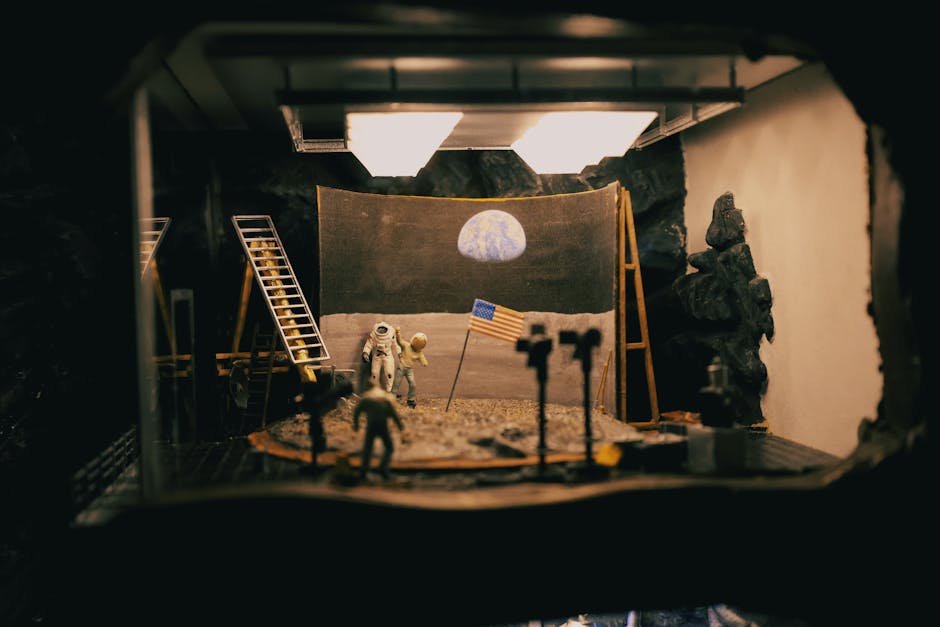
- NASA plans to establish a lunar base spanning hundreds of square kilometers to facilitate a sustainable human presence on the moon.
- The base will support extensive scientific research, resource utilization, and potential use as a stepping stone for further space exploration.
- Three missions are scheduled to launch this year to identify a suitable location for the base.
- Factors such as accessibility, resource availability, and environmental considerations will be taken into account when selecting a base location.
- NASA aims to return humans to the moon by 2025 and establish a permanent human presence on the lunar surface.
As NASA gears up to return humans to the moon by 2025, a new question arises: what will a sustainable presence on the lunar surface look like? The answer, according to recent plans, involves establishing a base spanning hundreds of square kilometres, with three missions slated to launch this year to begin the search for a suitable location. This ambitious undertaking has significant implications for space exploration and potential resource utilization, making it an exciting and crucial development for space enthusiasts and scientists alike.
What is Driving NASA’s Lunar Base Plans?

NASA’s plans for a lunar base are driven by the need for a sustainable presence on the moon, which would enable the agency to conduct extensive scientific research, exploit lunar resources, and potentially use the moon as a stepping stone for further space exploration. The base would provide a permanent human presence on the lunar surface, allowing for longer-term missions and more extensive research capabilities. With the upcoming missions, NASA aims to identify a suitable location for the base, taking into account factors such as accessibility, resource availability, and environmental considerations.
What Evidence Supports the Feasibility of a Lunar Base?

Several factors support the feasibility of a lunar base, including the moon’s relatively close proximity to Earth, the availability of resources such as water ice, and the potential for in-situ resource utilization. According to NASA, the lunar regolith, or soil, can be used as a construction material, and the moon’s gravity, although weaker than Earth’s, is still sufficient to provide a stable environment for both humans and equipment. Furthermore, the moon’s surface offers a unique environment for scientific research, with its lack of atmosphere and extreme temperatures providing opportunities for research in areas such as astronomy and materials science.
What are the Counter-Perspectives and Challenges?

While the idea of a lunar base is exciting, there are also challenges and counter-perspectives to consider. Some experts argue that the costs and risks associated with establishing a permanent human presence on the moon may outweigh the benefits, particularly given the significant technological and logistical hurdles that must be overcome. Additionally, there are concerns about the potential environmental impact of large-scale lunar development, as well as the need to ensure that any lunar base is designed and operated with sustainability and long-term viability in mind. As noted by New Scientist, these challenges must be carefully considered and addressed in order to ensure the success of NASA’s lunar base plans.
What are the Real-World Implications of a Lunar Base?

The establishment of a lunar base would have significant real-world implications, both in terms of scientific research and potential resource utilization. A permanent human presence on the moon could enable the exploitation of lunar resources, such as helium-3, a rare isotope that could be used as fuel for nuclear fusion. Additionally, the moon’s surface could provide a unique environment for the development and testing of new technologies, such as advanced life support systems and in-situ resource utilization. As the moon is also seen as a potential stepping stone for further space exploration, a lunar base could play a critical role in facilitating missions to Mars and beyond.
What This Means For You
The planned establishment of a lunar base is a significant development that has the potential to impact a wide range of fields, from space exploration and scientific research to technology development and resource utilization. As NASA moves forward with its plans, it is essential to consider the implications of a lunar base and how it may shape the future of space exploration and development. For individuals interested in space and science, this development presents an exciting opportunity to engage with and learn about the latest advancements in space technology and exploration.
As NASA’s lunar base plans continue to unfold, a key question remains: what will be the long-term consequences of establishing a permanent human presence on the moon? Will the benefits of a lunar base, including enhanced scientific research and potential resource utilization, outweigh the costs and challenges associated with its establishment? As the space community looks to the future, it is essential to consider these questions and to continue exploring the possibilities and implications of a sustainable presence on the lunar surface.
Source: New Scientist