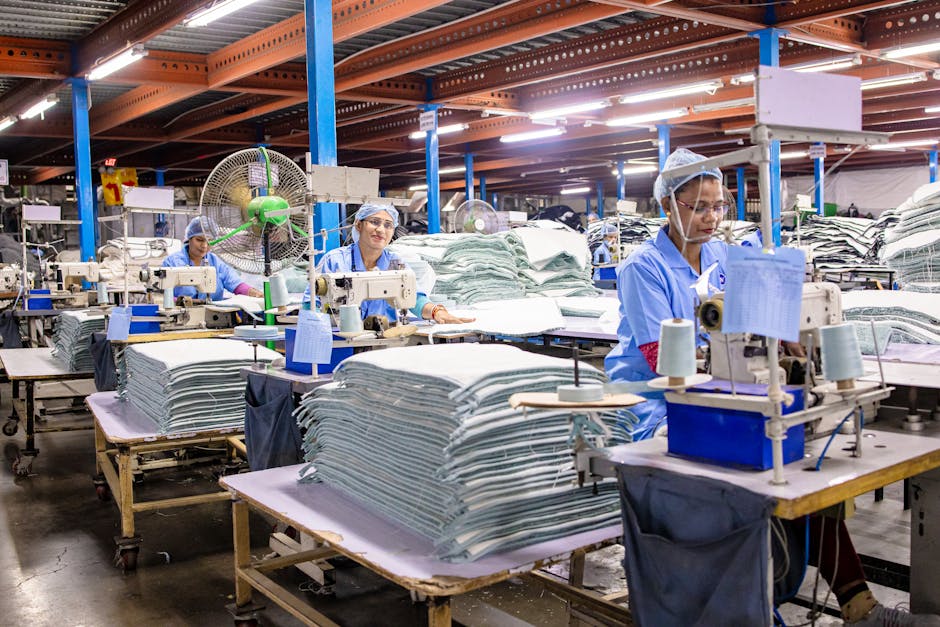
- China’s factory activity stalled in May, with a decline in demand weakening the manufacturing sector.
- The slowdown in factory activity has significant implications for China’s economy and the global trade landscape.
- Domestic and international demand are key drivers of the decline in factory activity, impacting economic growth.
- A decline in exports, construction activity, and credit conditions are headwinds facing China’s economy.
- The government faces challenges in maintaining economic growth and stability amidst the factory activity slowdown.
China’s factory activity stalled in May as demand weakened, according to recent data. The country’s manufacturing sector, which is a key driver of economic growth, is facing challenges due to a decline in domestic and international demand. This development has significant implications for China’s economy and the global trade landscape. The slowdown in factory activity is a cause for concern, as it may impact employment, investment, and overall economic growth.
Background and Context

The slowdown in China’s factory activity is not an isolated incident. The country’s economy has been facing headwinds in recent months, including a decline in exports, a slowdown in construction activity, and a tightening of credit conditions. The weakness in demand is attributed to a combination of factors, including a decline in domestic consumption, a slowdown in global trade, and a rise in uncertainty due to geopolitical tensions. As a result, China’s manufacturing sector is under pressure, and the government is facing challenges in maintaining economic growth and stability.
Key Details and Data

The data on China’s factory activity shows a significant decline in May. The purchasing managers’ index (PMI), which is a key indicator of manufacturing activity, fell to a low of 49.5 in May, down from 50.2 in April. The decline in PMI indicates a contraction in manufacturing activity, as a reading below 50 suggests a decline in production. The data also shows a decline in new orders, exports, and employment, which are all key components of the manufacturing sector. The slowdown in factory activity is expected to have a ripple effect on the entire economy, including the service sector and the labor market.
Causes and Effects

The causes of the slowdown in China’s factory activity are complex and multifaceted. The decline in domestic demand is attributed to a combination of factors, including a slowdown in income growth, a rise in debt, and a decline in consumer confidence. The slowdown in global trade is also a key factor, as China’s manufacturing sector is heavily reliant on exports. The rise in uncertainty due to geopolitical tensions is also a contributing factor, as it has led to a decline in investment and a slowdown in economic activity. The effects of the slowdown are far-reaching, and they are expected to impact not only China’s economy but also the global economy.
Implications and Outlook

The implications of the slowdown in China’s factory activity are significant. The decline in manufacturing activity is expected to impact employment, investment, and overall economic growth. The slowdown is also expected to have a ripple effect on the global economy, including the trade landscape and the financial markets. The government is facing challenges in maintaining economic growth and stability, and it is expected to implement policies to support the manufacturing sector and stimulate economic growth. As the situation evolves, it is essential to monitor the data and the policy responses to understand the implications and the outlook for China’s economy and the global economy.
Expert Perspectives
Experts have differing opinions on the slowdown in China’s factory activity. Some experts believe that the slowdown is a temporary phenomenon and that the government’s policies will help to stimulate economic growth. Others believe that the slowdown is a sign of a more profound structural shift in the economy, and that the government needs to implement more comprehensive reforms to address the challenges facing the manufacturing sector. According to Reuters, the slowdown in China’s factory activity is a cause for concern, and it is essential to monitor the situation closely to understand the implications and the outlook.
Looking ahead, it is essential to watch the data and the policy responses to understand the implications and the outlook for China’s economy and the global economy. The government’s policies, including fiscal and monetary measures, will be critical in supporting the manufacturing sector and stimulating economic growth. The situation is complex and multifaceted, and it requires a comprehensive and nuanced approach to address the challenges facing the economy. As the situation evolves, it is essential to stay informed and to monitor the developments closely to understand the implications and the outlook for China’s economy and the global economy.
Source: Reddit