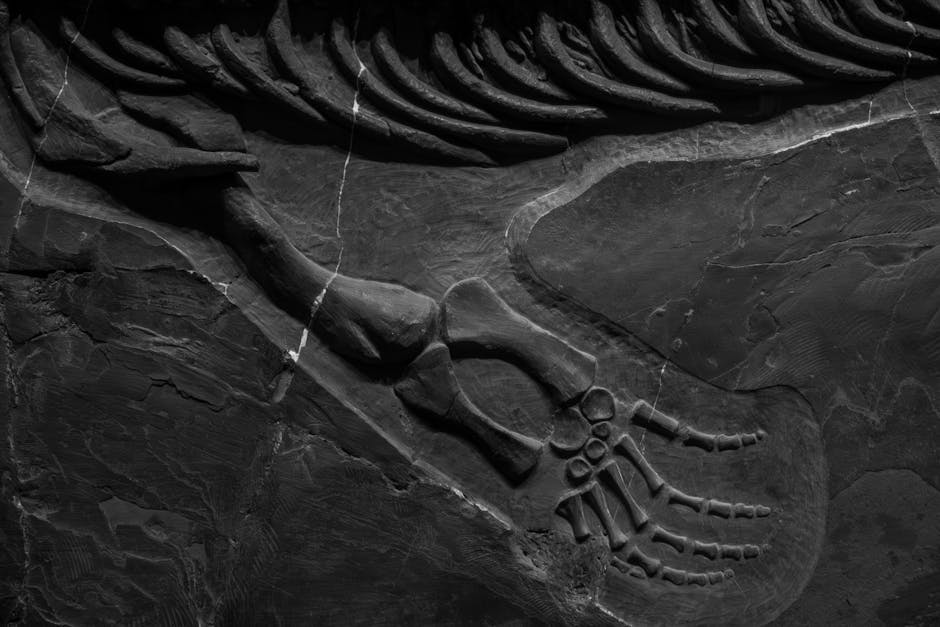
- Labrujasuchus expectatus, a Triassic crocodile relative, has been discovered with bizarre ostrich-like features.
- The creature walked on two legs, had tiny arms, and sported a toothless beak, unlike modern crocodiles.
- The discovery challenges traditional views of crocodile evolution and highlights the diversity of species during the Triassic period.
- Labrujasuchus expectatus’ fossil record provides a unique window into the evolution of crocodiles and their relatives.
- The species’ bipedalism, diminutive arms, and beak-like snout are more commonly associated with certain dinosaurs.
Scientists have made a groundbreaking discovery in the field of paleontology, unearthing the remains of Labrujasuchus expectatus, a bizarre crocodile relative from the Triassic period that defies conventional expectations of what a crocodile should look like. This ancient creature, which walked on two legs, had tiny arms, and sported a toothless beak, bears a striking resemblance to an ostrich-like dinosaur, rather than its modern crocodile counterparts. The finding has significant implications for our understanding of crocodile evolution and the diversity of species that existed during the Triassic period.
The Fossil Evidence

The fossil record of Labrujasuchus expectatus provides a unique window into the evolution of crocodiles and their relatives. According to scientific reports, the creature’s skeletal remains reveal a distinctive combination of characteristics, including its bipedalism, diminutive arms, and beak-like snout. These features, which are more commonly associated with certain dinosaurs, challenge traditional views of crocodile evolution and highlight the complexity of species development during the Triassic period. As noted by researchers, the discovery of Labrujasuchus expectatus underscores the importance of continued exploration and study of the fossil record.
The Key Players

The discovery of Labrujasuchus expectatus is the result of collaborative efforts between paleontologists and researchers from various institutions. The team, which includes experts in the fields of vertebrate paleontology and evolutionary biology, has worked tirelessly to uncover and analyze the fossil remains of this enigmatic creature. Their findings have been met with interest and enthusiasm from the scientific community, with many experts praising the discovery as a significant breakthrough in our understanding of crocodile evolution. As scientists continue to study the fossil record, they are gaining valuable insights into the lives and characteristics of ancient species like Labrujasuchus expectatus.
The Trade-Offs

The unique characteristics of Labrujasuchus expectatus raise important questions about the trade-offs involved in the evolution of species. The creature’s bipedalism, for example, may have provided advantages in terms of mobility and agility, but it also may have limited its ability to maneuver in certain environments. Similarly, the toothless beak of Labrujasuchus expectatus may have been adapted for a specific type of diet or feeding behavior, but it also may have reduced the creature’s ability to defend itself against predators. As researchers continue to study the fossil record and the characteristics of ancient species, they are gaining a deeper understanding of the complex interactions between species and their environments, and the trade-offs that are involved in the evolution of unique characteristics.
Timing and Context

The discovery of Labrujasuchus expectatus is particularly significant in the context of the Triassic period, a time of great upheaval and change in the Earth’s history. During this period, the supercontinent of Pangaea was beginning to break apart, and the climate was undergoing significant shifts. The evolution of unique species like Labrujasuchus expectatus may have been driven by these changes, as creatures adapted to new environments and ecosystems. As experts note, the study of fossil species like Labrujasuchus expectatus provides valuable insights into the complex interactions between species and their environments, and the ways in which these interactions have shaped the evolution of life on Earth.
Where We Go From Here
The discovery of Labrujasuchus expectatus opens up new avenues of research and inquiry, as scientists seek to learn more about this enigmatic creature and its place in the history of life on Earth. Over the next 6-12 months, researchers may focus on further analyzing the fossil remains of Labrujasuchus expectatus, using advanced techniques such as CT scans and 3D modeling to gain a more detailed understanding of its anatomy and biology. Additionally, scientists may explore the evolutionary relationships between Labrujasuchus expectatus and other species, both living and extinct, in order to better understand the complex patterns of species development and diversification during the Triassic period. As researchers continue to study the fossil record, they may uncover new and unexpected insights into the history of life on Earth.
Bottom line — the discovery of Labrujasuchus expectatus is a significant breakthrough in our understanding of crocodile evolution and the diversity of species that existed during the Triassic period, highlighting the importance of continued exploration and study of the fossil record.
Source: ScienceDaily