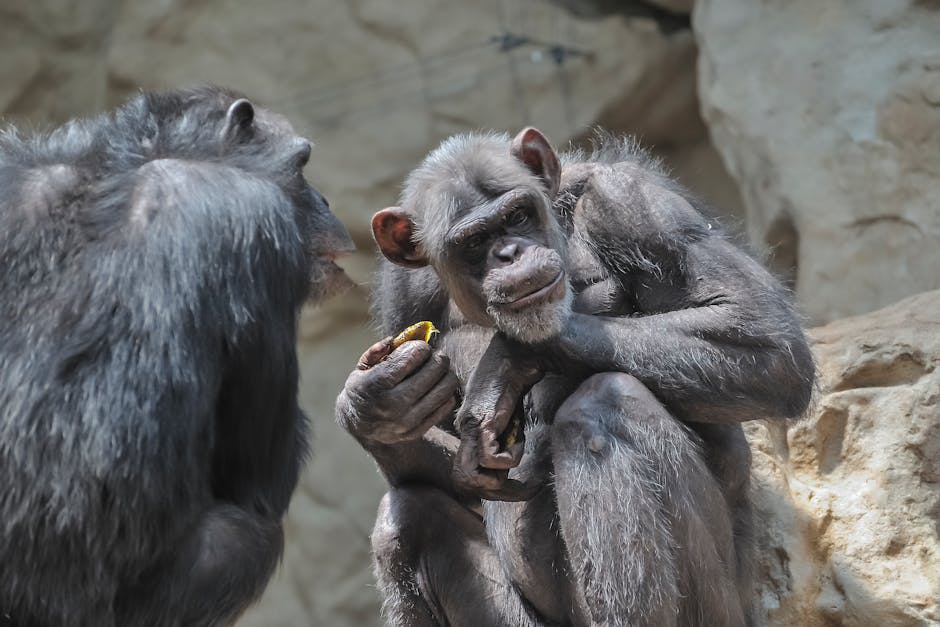
- Chimpanzees and bonobos form human-like friend circles with close inner circles and wider networks of weaker social connections.
- Grooming behavior is a key factor in forming friendships among great apes, strengthening social bonds and reinforcing trust.
- Chimpanzees become more selective with age, focusing on a few trusted partners, while bonobos maintain a more egalitarian social style.
- The unique characteristics of each species challenge the notion that great apes are inherently aggressive or competitive.
- The study’s findings have significant implications for our understanding of human evolution and social development.
What do chimpanzees and bonobos have in common with humans when it comes to social connections? A recent study published on Science Daily found that these great apes build friendships much like humans do, with close inner circles and wider networks of weaker social connections. By analyzing grooming behavior, researchers discovered that chimpanzees and bonobos form complex social structures, challenging the traditional view of their social behavior. This discovery has significant implications for our understanding of human evolution and social development.
How Do Chimpanzees and Bonobos Form Friendships?

According to the study, chimpanzees and bonobos form friendships through grooming, a behavior that strengthens social bonds and reinforces trust. Chimpanzees, in particular, focus on a few trusted partners and become more selective with age, indicating a high level of social sophistication. In contrast, bonobos maintain a more egalitarian social style, with a larger and more diverse network of friends. This difference in social behavior highlights the unique characteristics of each species and challenges the notion that great apes are inherently aggressive or competitive.
What Evidence Supports This Claim?

The study’s findings are supported by data on grooming behavior, which shows that chimpanzees and bonobos spend a significant amount of time interacting with each other. For example, a study published on Nature found that chimpanzees engage in grooming for up to 20% of their daily activity. This level of social interaction is comparable to that of humans, who also form close relationships through shared activities and mutual support. Furthermore, research by the Science Daily team found that bonobos’ social behavior is characterized by high levels of empathy and cooperation, which are essential components of human friendships.
Are There Alternative Perspectives on This Issue?

Some researchers may argue that the study’s findings are limited by the observation of grooming behavior alone, and that other factors, such as food sharing or cooperative hunting, may also play a role in shaping chimpanzees and bonobos’ social relationships. Additionally, skeptics may point out that the study’s sample size was relatively small, and that more research is needed to confirm the results. However, the study’s authors argue that their findings are consistent with existing research on great apes’ social behavior and provide a unique insight into the complexities of their social structures.
What Are the Real-World Implications of This Study?

The discovery that chimpanzees and bonobos form human-like friendships has significant implications for our understanding of human evolution and social development. For example, it suggests that the capacity for complex social relationships may have evolved earlier than previously thought, and that humans may have inherited this trait from our common ancestors. Furthermore, the study’s findings have important implications for conservation efforts, as they highlight the importance of preserving the social structures and habitats of great apes. By protecting these species and their habitats, we can help ensure the long-term survival of these intelligent and social animals.
What This Means For You
The study’s findings have practical implications for our daily lives, as they remind us of the importance of nurturing our social relationships and building strong, supportive networks. By prioritizing time with loved ones and engaging in activities that promote social bonding, we can strengthen our own friendships and improve our overall well-being. Moreover, the study’s findings encourage us to adopt a more empathetic and cooperative approach to social interactions, recognizing that these traits are essential components of healthy and fulfilling relationships.
As we continue to learn more about the social behavior of chimpanzees and bonobos, we may uncover even more surprising similarities between their friendships and our own. What other insights can we gain from studying the social structures of great apes, and how can we apply these lessons to improve our own relationships and communities? The answer to this question will require further research and exploration, but one thing is clear: the study of great apes’ social behavior has the potential to revolutionize our understanding of human relationships and social development.
Source: ScienceDaily