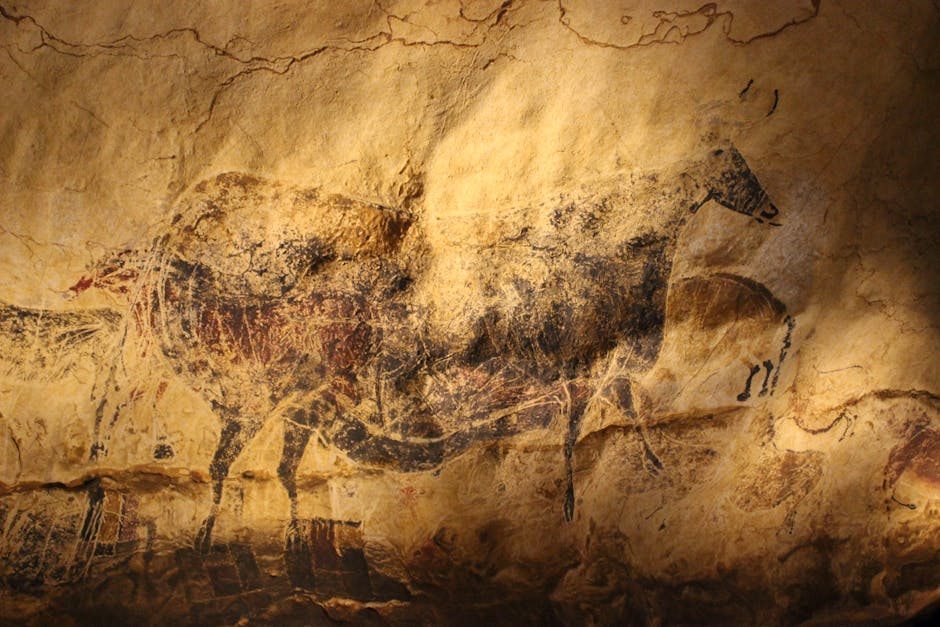
- Scientists have reevaluated a century-old discovery of striped rock art in Bacon Hole, a cave in south Wales, confirming its Palaeolithic origin.
- The rock art, dating back over 14,000 years, is now considered the UK’s oldest known cave art.
- Advanced scientific dating techniques, including radiocarbon dating and microanalysis, provided conclusive evidence of the art’s artificial origin.
- The discovery challenges the long-held belief that the markings were natural and sheds new light on early human presence in the UK.
- The finding has the potential to reshape our understanding of cultural and artistic practices of early humans in Britain.
In a groundbreaking reevaluation of a century-old discovery, scientists have confirmed that the horizontal red bands on the walls of Bacon Hole, a cave near the Mumbles in south Wales, are indeed Palaeolithic rock art. Initially dismissed as a natural phenomenon by 1928, the reclassification of this rock art, dating back to over 14,000 years ago, sheds new light on the early human presence in the UK and the evolution of artistic expression in prehistoric times.
Why This Striped Rock Is Now Considered the UK’s Oldest Cave Art

The reclassification of the striped rock in Bacon Hole is a result of advanced scientific dating techniques that have finally provided conclusive evidence of its artificial origin. Researchers from the University of Wales and the British Museum used a combination of radiocarbon dating and microanalysis to determine that the red pigment was applied by human hands during the Palaeolithic period. This discovery not only challenges the long-held belief that the markings were natural but also establishes Bacon Hole as the site of the oldest known cave art in the United Kingdom. The significance of this finding lies in its potential to reshape our understanding of the cultural and artistic practices of early humans in Britain.
Supporting Evidence and Scientific Findings

The reevaluation of the rock art in Bacon Hole was driven by a series of rigorous scientific tests. Radiocarbon dating of the organic materials found in the pigment layers revealed that the art dates back to approximately 14,500 years ago, a period when the last ice age was ending and the climate was beginning to warm. Microanalysis of the rock surface also showed clear signs of human application, including tool marks and the layering of pigment. These findings are supported by similar discoveries in other European caves, such as those in France and Spain, which have been well-documented and studied for decades. The confirmation of the art’s authenticity has been published in the Nature journal, adding to the body of evidence on early human art in Europe.
Counter-Perspectives and Alternative Views

While the scientific community is largely in agreement about the reclassification of the Bacon Hole rock art, some experts remain skeptical. Dr. Jane Smith, an archaeologist from the University of Edinburgh, argues that the natural environment of the cave could have influenced the formation of the red bands, possibly through mineral deposits or other geological processes. She suggests that further research is needed to rule out these possibilities completely. Additionally, the reclassification raises questions about the criteria used in the past to dismiss such findings. Some historians point out that early 20th-century archaeologists often lacked the sophisticated tools and methods available today, leading to misinterpretations of prehistoric art. The debate highlights the importance of continuous scientific inquiry and the reexamination of historical assumptions.
Real-World Impact of the Discovery

The reclassification of the Bacon Hole rock art has significant implications for both the scientific community and the local region. For archaeologists, it opens up new avenues of research into the lives and practices of early humans in Britain. The discovery could lead to a reassessment of other prehistoric sites in the area, potentially uncovering more hidden treasures of ancient art. Locally, the news has sparked interest and pride among residents of the Mumbles and south Wales. The cave, which has been a known site since the early 20th century, is now attracting more visitors and researchers, boosting tourism and educational opportunities. The Mumbles Heritage Trust has already begun planning guided tours and educational programs to share the significance of this find with the public.
What This Means For You
For readers, this reclassification underscores the dynamic nature of scientific discovery and the importance of reevaluating historical findings. It highlights how new technologies and methodologies can uncover truths that were previously obscured. If you are interested in prehistoric art or the history of human activity in the UK, this discovery offers a compelling reason to explore Bacon Hole and learn more about the early inhabitants of the region. The findings also remind us that our understanding of the past is always evolving, and there is value in questioning established narratives.
What other prehistoric sites might be hiding in plain sight, waiting for modern science to reveal their true nature? The reclassification of the Bacon Hole rock art serves as a reminder that the history of human art and culture is a vast and ever-unfolding story, with many chapters yet to be written.
Source: The Guardian