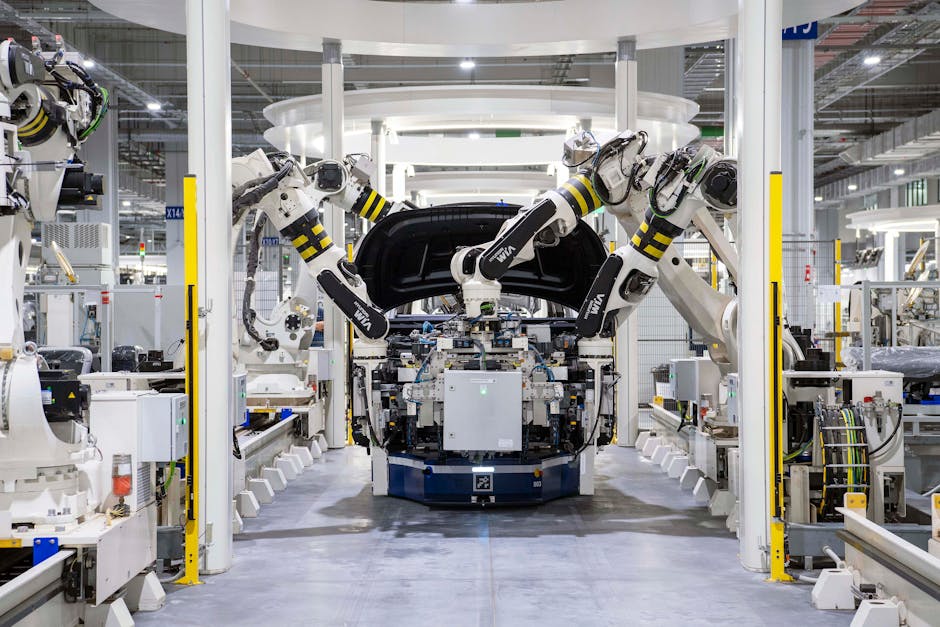
- BMW is introducing humanoid robots to its European car plant to enhance manufacturing efficiency and reduce production time.
- Humanoid robots can perform complex tasks and adapt to new situations, poised to revolutionize the manufacturing process.
- The use of humanoid robots can reduce production time by up to 30% and decrease errors and defects.
- Humanoid robots will perform tasks such as assembly and inspection, freeing up human workers for more complex tasks.
- Major automotive companies, including BMW, are investing in humanoid robots to improve manufacturing efficiency.
BMW is introducing humanoid robots to a car plant in Europe, building on similar projects in the US, as the company seeks to enhance manufacturing efficiency and reduce production time. The move marks a significant shift in the automotive industry, with humanoid robots expected to play a key role in the future of car making. With their ability to perform complex tasks and adapt to new situations, humanoid robots are poised to revolutionize the manufacturing process.
The Evidence: Increased Efficiency and Productivity

According to BMW, the introduction of humanoid robots is expected to increase efficiency and productivity at the European car plant, with the robots able to perform tasks that are currently done by human workers. The robots will be used to assemble and inspect vehicles, freeing up human workers to focus on more complex tasks. Data from similar projects in the US has shown that the use of humanoid robots can reduce production time by up to 30%, with some plants reporting a significant decrease in errors and defects. For example, a report by the BBC highlights the success of humanoid robots in the US automotive industry.
The Players: BMW and the Automotive Industry

BMW is not the only company to introduce humanoid robots to its manufacturing process, with other major automotive companies also investing in the technology. The move is seen as a key part of the company’s strategy to stay competitive in a rapidly changing industry, with the use of humanoid robots expected to become increasingly widespread in the coming years. Key actors in the industry, including suppliers and manufacturers, will need to adapt to the changing landscape and invest in the necessary technology to remain competitive. As noted by Reuters, the automotive industry is undergoing a significant transformation, driven in part by the adoption of new technologies such as humanoid robots.
The Trade-Offs: Costs and Benefits

The introduction of humanoid robots to the manufacturing process is not without its costs and benefits. While the robots are expected to increase efficiency and productivity, they also require significant investment in terms of hardware and software. Additionally, the use of humanoid robots raises concerns about job displacement, with some workers potentially facing redundancy as a result of the introduction of the new technology. However, proponents of the technology argue that it will also create new job opportunities, particularly in areas such as maintenance and programming. For example, a report by the New York Times highlights the potential benefits and drawbacks of introducing humanoid robots to the manufacturing process.
Timing: Why Now?

The introduction of humanoid robots to the European car plant comes at a time of significant change in the automotive industry, with companies facing increasing pressure to reduce costs and improve efficiency. The use of humanoid robots is seen as a key part of this strategy, with the technology expected to play a major role in the future of car making. With the industry facing significant challenges in the coming years, including the need to adapt to new technologies and changing consumer demands, the introduction of humanoid robots is a key part of BMW’s strategy to stay ahead of the curve. As noted by AP News, the automotive industry is undergoing a significant transformation, driven in part by the adoption of new technologies such as humanoid robots.
Where We Go From Here
Looking ahead, there are several possible scenarios for the future of car making, with the introduction of humanoid robots expected to play a key role. One possible scenario is that the use of humanoid robots becomes widespread, with the technology adopted by companies across the industry. Another possibility is that the introduction of humanoid robots leads to significant job displacement, with workers facing redundancy as a result of the new technology. A third scenario is that the use of humanoid robots leads to the creation of new job opportunities, particularly in areas such as maintenance and programming. As the industry continues to evolve, it will be important to monitor these developments and assess the impact of humanoid robots on the future of car making.
Bottom line, the introduction of humanoid robots to the European car plant marks a significant shift in the automotive industry, with the technology expected to play a key role in the future of car making. With its ability to increase efficiency and productivity, humanoid robots are poised to revolutionize the manufacturing process, and companies such as BMW are at the forefront of this change.
Source: BBC