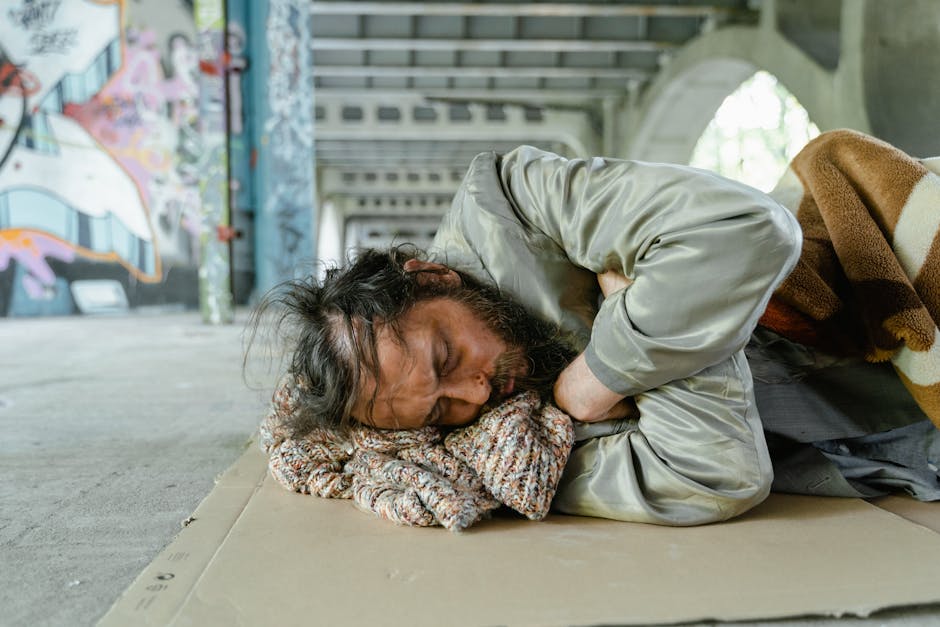
- Affordable housing is scarce on the Gold Coast, pushing homeless residents to makeshift camps on state-owned land.
- Homeless patrols have created a sense of uncertainty and fear among vulnerable individuals, exacerbating the crisis.
- The lack of access to basic necessities like sanitation and healthcare puts the health and wellbeing of homeless residents at risk.
- The Gold Coast local council’s actions have sparked concerns of a ‘monstrous catch-22’ for homeless residents.
- Homeless refugees on the Gold Coast face constant displacement and limited options for stable housing.
Luke Quinn, a 36-year-old homeless resident of the Gold Coast, is struggling to find a place to live, a necessity for him to be reunited with his daughter. As the local council continues to move on homeless individuals, Quinn has found temporary refuge on state-owned land, but this meager safety net is under threat of disappearing. The expansion of Gold Coast homeless patrols has sparked concern among advocates, who fear that vulnerable people will be locked in a “monstrous catch-22”.
The Current State of Homelessness on the Gold Coast

The situation on the Gold Coast is dire, with many homeless residents like Quinn facing constant displacement by the local council. The lack of affordable housing options has forced people to seek shelter in makeshift camps on state-owned land, which is now under threat of being cleared. The patrols, aimed at moving on homeless individuals, have created a sense of uncertainty and fear among those struggling to survive. With limited access to basic necessities like sanitation and healthcare, the health and wellbeing of these individuals are at risk.
A History of Homelessness on the Gold Coast

The issue of homelessness on the Gold Coast is not new, with the area experiencing a significant increase in homeless populations over the past decade. The lack of affordable housing, combined with the allure of the tourist destination, has drawn many vulnerable individuals to the area. Historically, the local council has struggled to provide adequate support and services, leading to a reliance on state-owned land as a last resort for those in need. The expansion of homeless patrols is the latest in a series of measures aimed at addressing the issue, but advocates argue that it will only exacerbate the problem.
The People Behind the Story

Luke Quinn’s story is not unique, with many individuals and families struggling to access affordable housing on the Gold Coast. The people shaping this narrative are not just those experiencing homelessness but also the local council members, who are tasked with finding solutions to the crisis. Their motivations, however, are often at odds with the needs of the homeless population, with a focus on maintaining the area’s tourist-friendly image. As Quinn and others like him fight for a place to call home, they are met with resistance from those in power, who seem more concerned with appearances than providing support.
The Consequences of Inaction

The consequences of inaction on the part of the local council will be severe, with the potential for increased homelessness, health problems, and social unrest. As the patrols continue to move on homeless individuals, the risk of pushing them further into poverty and desperation grows. The lack of access to basic necessities like healthcare and sanitation will only worsen the situation, leading to a humanitarian crisis. The link between homelessness and poor health outcomes is well-documented, making it essential for the local council to prioritize the needs of the homeless population.
The Bigger Picture
The issue of homelessness on the Gold Coast is part of a broader national conversation about affordable housing and social welfare. As the Centers for Disease Control and Prevention notes, homelessness is a complex issue that requires a multifaceted approach. The expansion of homeless patrols on the Gold Coast is a symptom of a larger problem, one that requires a comprehensive solution that addresses the root causes of homelessness. By prioritizing the needs of the most vulnerable members of society, we can work towards creating a more equitable and just community for all.
As Luke Quinn and others like him wait with bated breath for a solution to their housing crisis, it remains to be seen whether the local council will take a more compassionate approach. One thing is certain, however: the status quo is unsustainable, and it is time for a change. The future of the Gold Coast’s homeless population hangs in the balance, and it is up to those in power to ensure that they are given the support and dignity they deserve.
Source: The Guardian