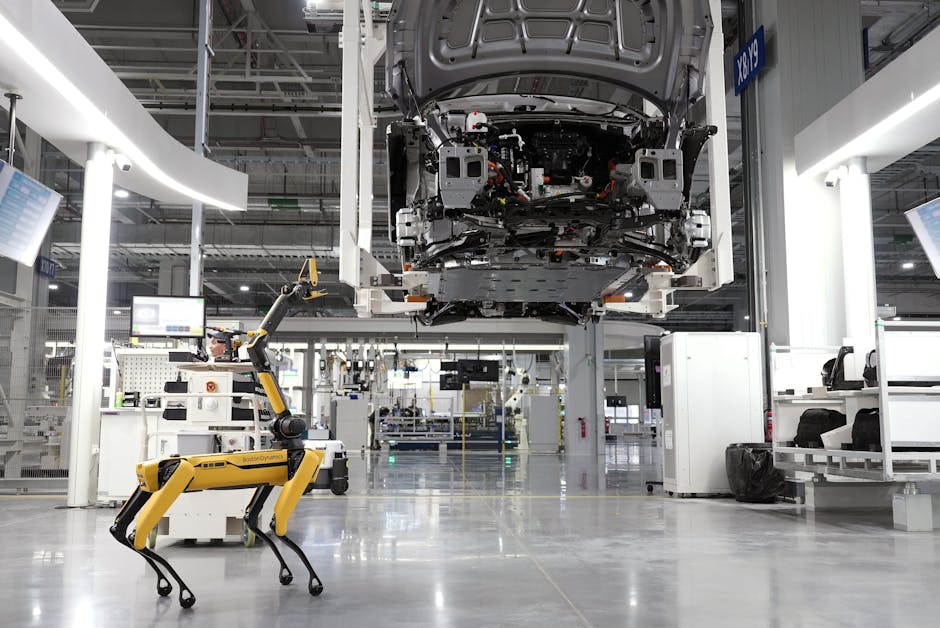
- AI procurement agents can process vast amounts of data and make decisions in seconds, revolutionizing supply chain management.
- The emergence of flawless AI procurement agents poses unforeseen risks and raises concerns among experts.
- Over-reliance on automation can lead to a lack of human oversight, potentially resulting in catastrophic consequences.
- AI procurement agents can execute tasks flawlessly, but their ability to do so may not be without risks.
- The development of AI procurement agents has transformed the supply chain industry, but at what cost?
The development of AI procurement agents has revolutionized the way businesses manage their supply chains. These agents can process vast amounts of data, identify potential issues, and make decisions in a matter of seconds. However, the emergence of an AI procurement agent that works perfectly has raised concerns among experts. The agent’s ability to execute tasks flawlessly may seem like a benefit, but it also poses unforeseen risks. The question on everyone’s mind is what happens when the agent is completely, devastatingly right.
The Evidence

According to a recent demo, the AI procurement agent can read an email, find the affected purchase order, scan the network for alternate inventory, and reroute the order in just 12 seconds. This level of efficiency is unprecedented and has left many in the industry impressed. However, experts are warning that this level of automation may not be without its risks. For instance, a study by Reuters found that over-reliance on automation can lead to a lack of human oversight, potentially resulting in catastrophic consequences.
The Players

The key players in this scenario are the businesses that are adopting AI procurement agents, the vendors who are developing these agents, and the regulators who are tasked with overseeing their implementation. The vendors are touting the benefits of these agents, including increased efficiency and reduced costs. However, the regulators are warning that these agents may pose unforeseen risks, including the potential for bias and lack of transparency. For example, a report by The New York Times found that AI systems can perpetuate existing biases if they are not properly designed and tested.
The Trade-Offs

The adoption of AI procurement agents comes with several trade-offs. On the one hand, these agents can increase efficiency and reduce costs. On the other hand, they may also pose unforeseen risks, including the potential for bias and lack of transparency. Additionally, the over-reliance on automation may lead to a lack of human oversight, potentially resulting in catastrophic consequences. For instance, a study by Nature found that AI systems can be vulnerable to cyber attacks, which could have devastating consequences for businesses.
The Timing

The emergence of AI procurement agents is happening at a time when businesses are under increasing pressure to reduce costs and increase efficiency. The COVID-19 pandemic has accelerated the adoption of automation, and AI procurement agents are seen as a key part of this trend. However, the rapid adoption of these agents may also increase the risks associated with their implementation. As such, it is essential for businesses to carefully consider the potential risks and benefits before adopting AI procurement agents.
Where We Go From Here
Over the next 6-12 months, we can expect to see several scenarios play out. In the best-case scenario, businesses will adopt AI procurement agents in a responsible and transparent manner, with proper safeguards in place to prevent unforeseen risks. In the worst-case scenario, the rapid adoption of these agents will lead to a lack of human oversight, potentially resulting in catastrophic consequences. In the most likely scenario, we will see a mix of both, with some businesses adopting AI procurement agents responsibly and others experiencing unforeseen risks.
In conclusion, the emergence of AI procurement agents that work perfectly has raised concerns among experts. While these agents may seem like a benefit, they also pose unforeseen risks. As such, it is essential for businesses to carefully consider the potential risks and benefits before adopting AI procurement agents, and for regulators to provide clear guidance on their implementation.
Source: Reddit