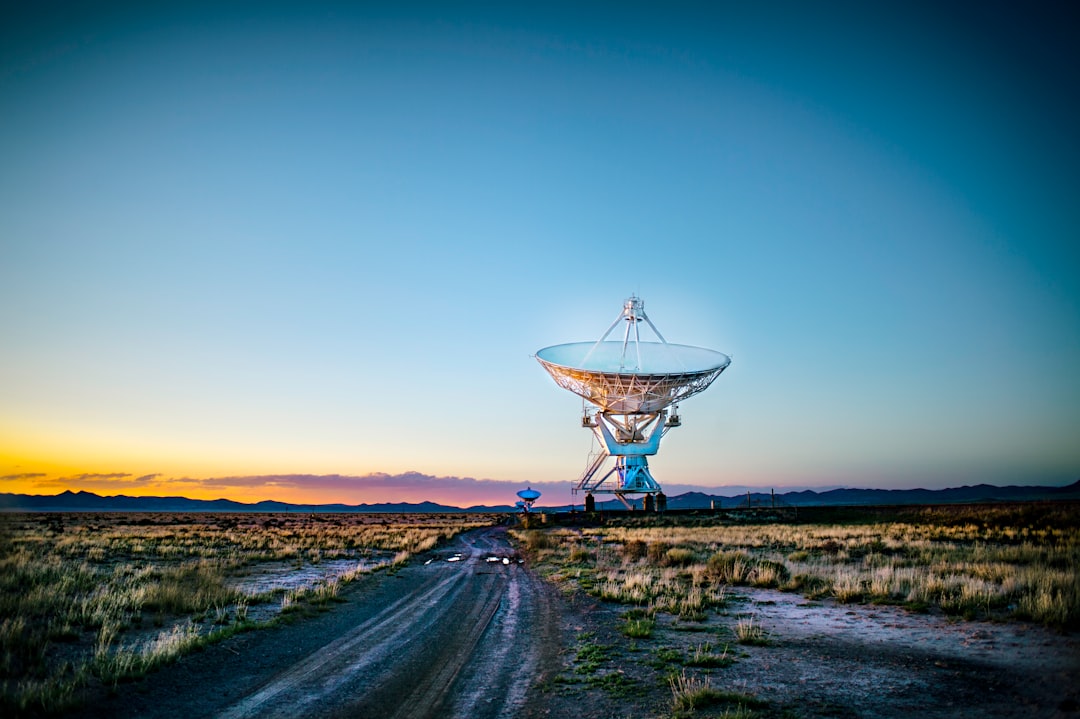
- The Next Generation Very Large Array (ngVLA) is a groundbreaking radio telescope project featuring 263 antennas across the US and Mexico.
- The ngVLA will offer ten times the sensitivity and spatial resolution of its predecessor, the Karl G. Jansky Very Large Array.
- The ngVLA will enable scientists to study the formation of planets, galaxy structure, and dark matter with unprecedented clarity.
- The ngVLA is backed by the National Science Foundation and spearheaded by the National Radio Astronomy Observatory.
- The ngVLA will revolutionize radio astronomy by 2030, marking a transformative shift in how astronomers study cosmic origins.
The Next Generation Very Large Array (ngVLA), a groundbreaking radio telescope project featuring 263 antennas spread across the United States and Mexico, is set to redefine the frontiers of astronomy by 2030. This ambitious observatory will offer ten times the sensitivity and spatial resolution of its predecessor, the Karl G. Jansky Very Large Array, enabling scientists to probe the formation of planets, the structure of galaxies, and the elusive signatures of dark matter with unprecedented clarity. Backed by the National Science Foundation and spearheaded by the National Radio Astronomy Observatory, the ngVLA represents a pivotal leap in humanity’s ability to observe the universe in radio wavelengths. Its deployment marks not just a technological upgrade, but a transformative shift in how astronomers study cosmic origins—making it a cornerstone of 21st-century astrophysics.
What Is the ngVLA and How Does It Work?

The ngVLA is a next-generation interferometric radio telescope designed to capture faint radio emissions from space using a network of 263 dish antennas, each 18 meters in diameter. These antennas will be distributed across a vast geographic footprint, stretching from the central United States into northern Mexico, with the core cluster located in New Mexico. By combining signals from widely separated dishes using a technique called very-long-baseline interferometry, the ngVLA effectively functions as a single, continent-sized telescope. This configuration allows it to achieve angular resolutions finer than a milliarcsecond—sharp enough to detect a golf ball on the Moon. Unlike optical telescopes, radio observatories like the ngVLA can peer through cosmic dust, revealing hidden processes such as star birth, molecular cloud dynamics, and the environments around supermassive black holes. Its frequency range, spanning from 1.2 to 116 GHz, makes it uniquely suited to study both cold interstellar gas and energetic phenomena across billions of light-years.
What Scientific Discoveries Could the ngVLA Enable?

Scientists anticipate that the ngVLA will unlock transformative insights across multiple domains of astrophysics. One of its primary goals is to observe the earliest stages of planet formation within protoplanetary disks, potentially identifying the chemical fingerprints of life-supporting molecules like water, ammonia, and complex organics. According to project scientists at the National Radio Astronomy Observatory, the ngVLA will be able to resolve disk structures at scales comparable to our own solar system’s asteroid belt, providing direct evidence of planetesimal assembly. Additionally, the telescope will map hydrogen gas across cosmic time, tracing the evolution of galaxies and shedding light on the nature of dark matter through gravitational lensing studies. It may also detect previously invisible populations of pulsars and fast radio bursts, helping to clarify their origins. As noted in a 2025 Nature Astronomy review, the ngVLA’s capabilities could redefine the search for biosignatures beyond optical spectroscopy.
Are There Challenges and Skeptical Views?

Despite its promise, the ngVLA faces technical, financial, and environmental hurdles. With an estimated price tag of $2.6 billion, securing sustained federal and international funding remains a critical challenge, especially amid competing priorities in space science. Some astronomers argue that resources might be better allocated to space-based observatories, which avoid atmospheric interference altogether. Others question whether ground-based radio arrays can keep pace with advancing satellite constellations, which increasingly pollute radio frequencies with signal interference. Indigenous communities and environmental groups in New Mexico and Mexico have also raised concerns about land use and ecological disruption in the proposed antenna zones. Moreover, the sheer volume of data the ngVLA will generate—estimated at petabytes per day—requires unprecedented computing infrastructure and machine learning tools for real-time processing. As ScienceDaily reported in 2025, balancing scientific ambition with practical and ethical considerations will be key to the project’s long-term success.
What Real-World Impact Will the ngVLA Have?

Beyond advancing pure science, the ngVLA is expected to drive innovation in technology, education, and international collaboration. The development of ultra-sensitive receivers and high-speed data networks for the array will likely spill over into telecommunications, quantum computing, and artificial intelligence. Educational institutions across the U.S. and Mexico will gain access to real-time data streams, enabling students to participate in authentic research projects. The project also strengthens North American scientific infrastructure, fostering partnerships between universities, government agencies, and private research labs. If successful, the ngVLA could serve as a model for future global observatories, much like the Atacama Large Millimeter Array (ALMA) in Chile. Its findings may even influence planetary protection policies and the ethical frameworks guiding future interstellar exploration, especially if it detects prebiotic chemistry in distant systems.
What This Means For You
The ngVLA represents more than a scientific instrument—it’s a window into humanity’s cosmic origins and future. Its observations could answer age-old questions about how planets form and whether life exists elsewhere in the universe. For the public, this means a deeper, more nuanced understanding of our place in the cosmos, conveyed through vivid images and data-driven narratives. As telescope technology becomes more integrated with digital platforms, anyone with an internet connection may soon explore ngVLA data as easily as browsing a star map.
What remains to be seen is how the ngVLA will handle the ethical and logistical complexities of big science in the 21st century. Can it deliver revolutionary discoveries while maintaining transparency, inclusivity, and environmental responsibility? And if it detects molecular precursors to life in distant systems, how will society respond? These questions will shape not only the success of the ngVLA, but the future of how we explore the universe.
Source: The New York Times