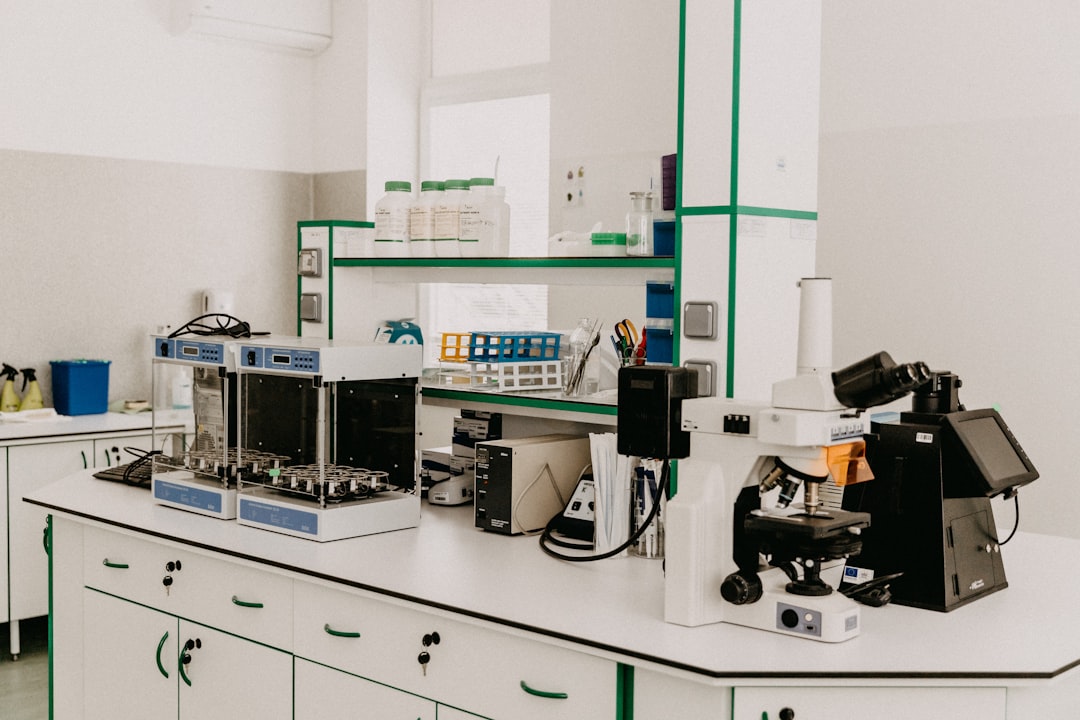
- South African research laboratories face an average of 150 power outages annually, totaling over 500 hours without electricity each year.
- Scientists use contingency measures like diesel generators and uninterruptible power supplies to prevent sample loss and equipment damage.
- Power disruptions threaten global research collaborations in fields like virology and climate science where South Africa plays a crucial role.
- The situation highlights a growing disparity in research infrastructure between high- and middle-income nations.
- South Africa’s power grid instability affects international science participation, exacerbating existing inequality.
South African research laboratories are operating under one of the most unstable power grids among science-producing nations, enduring an average of 150 planned and unplanned outages annually—totaling over 500 hours without electricity each year, according to data from Eskom and the National Research Foundation. Despite these challenges, scientists across institutions like the University of Cape Town, Stellenbosch University, and the Council for Scientific and Industrial Research (CSIR) have developed robust contingency measures including diesel generators, uninterruptible power supplies (UPS), and revised experimental timelines to prevent sample loss and equipment damage. This persistent adaptation is critical not only for local scientific integrity but also for global research collaborations in fields ranging from virology to climate science, where South Africa plays an essential role. The situation underscores a growing disparity in research infrastructure between high- and middle-income nations, threatening equitable participation in international science.
Extent and Impact of Power Disruptions

Between 2022 and 2026, South Africa experienced escalating stages of load-shedding, reaching record levels in early 2023 when the country faced 200 days of power cuts in a single year—some lasting up to 12 hours daily during Stage 6 outages. According to Eskom, the state-owned utility, the national grid’s capacity deficit exceeded 6,000 megawatts during peak instability. For laboratories, this meant refrigerators housing sensitive biological samples, electron microscopes, DNA sequencers, and cell cultures were at constant risk. A 2024 survey by the Academy of Science of South Africa (ASSAf) found that 78% of research institutions reported at least one major equipment failure due to sudden power loss, with average repair costs exceeding ZAR 250,000 (~USD 13,000). Cold chain breaches alone led to the loss of irreplaceable datasets in tuberculosis and HIV research at multiple sites. Institutions in Gauteng and KwaZulu-Natal were disproportionately affected due to higher grid dependency and aging infrastructure. The cumulative effect has been a measurable slowdown in publication rates and delayed grant deliverables, particularly in long-term ecological and medical studies.
Key Players in Research Continuity

Leading the response are university engineering teams, private energy firms, and government-backed initiatives. At the University of the Witwatersrand, engineers have installed hybrid power systems combining solar arrays with lithium-ion battery banks capable of sustaining core lab functions for 72 hours. Meanwhile, the CSIR has partnered with Siemens and local startup Sunbird Energy to pilot microgrids at its Pretoria campus. Individual researchers have also taken initiative: Dr. Nolwazi Mkhize, a molecular biologist at Stellenbosch, redesigned her lab’s workflow to cluster energy-intensive tasks during predicted grid availability, reducing dependency on backup systems. On a policy level, the Department of Science and Innovation (DSI) allocated ZAR 180 million in 2025 specifically for laboratory resilience, though only 40% of applicants received funding due to high demand. International partners, including the Wellcome Trust and the U.S. National Institutes of Health, have begun factoring in power instability when awarding collaborative grants, sometimes requiring proof of backup capacity before disbursement.
Trade-offs Between Resilience and Equity

Maintaining research continuity under chronic blackouts comes with steep financial, environmental, and ethical trade-offs. Diesel generators, while effective, increase operational costs by 20–40% and contribute to carbon emissions and noise pollution on campuses. A single generator can consume over 1,000 liters of fuel monthly during high-outage periods, creating logistical and safety challenges. Battery storage offers a cleaner alternative, but initial installation costs for a mid-sized lab can exceed ZAR 1.2 million, placing it out of reach for underfunded institutions. This has created a two-tier system: well-resourced universities maintain near-normal operations, while historically disadvantaged institutions, particularly in rural areas, face mounting delays and data loss. Moreover, the cognitive load of constant contingency planning diverts scientist time from innovation to crisis management. As Nature reported in May 2026, some early-career researchers are reconsidering careers in experimental science altogether, raising concerns about long-term brain drain.
Why the Crisis Is Peaking Now

The current strain on laboratories reflects a convergence of aging infrastructure, insufficient investment in energy transition, and rising scientific ambition in South Africa. While load-shedding began in the mid-2000s, its frequency and duration worsened after 2019 due to coal plant breakdowns, corruption-related maintenance delays, and underinvestment in renewable integration. At the same time, South Africa has expanded its role in global science—from hosting the Square Kilometre Array telescope to leading regional responses to emerging infectious diseases. This growing scientific footprint now collides with deteriorating energy reliability. The 2023 National Energy Crisis Act, while enabling faster private energy procurement, has not yet translated into stable power for research facilities. Additionally, climate change is exacerbating water shortages, affecting coal-powered plants that rely on cooling systems. Together, these factors have turned power resilience from a logistical concern into a central determinant of scientific output.
Where We Go From Here
In the next 6–12 months, three scenarios could unfold. First, if private investment in renewable microgrids accelerates, major research hubs may achieve energy independence, setting a model for other African nations. Second, continued grid instability could force international funders to redirect collaborative projects to more stable regions, weakening South Africa’s scientific standing. Third, a national energy reform package—currently under debate in Parliament—could unlock state co-funding for lab-specific energy solutions, particularly for historically marginalized universities. What’s clear is that long-term sustainability will require more than stopgap measures: integrated energy planning must become part of research infrastructure policy. Without systemic support, even the most resourceful scientists may reach their limits.
South African laboratories exemplify scientific resilience in the face of infrastructural adversity, but their struggle highlights an urgent need for equitable investment in energy-stable research environments to ensure the country remains a credible leader in global science.
Source: Nature