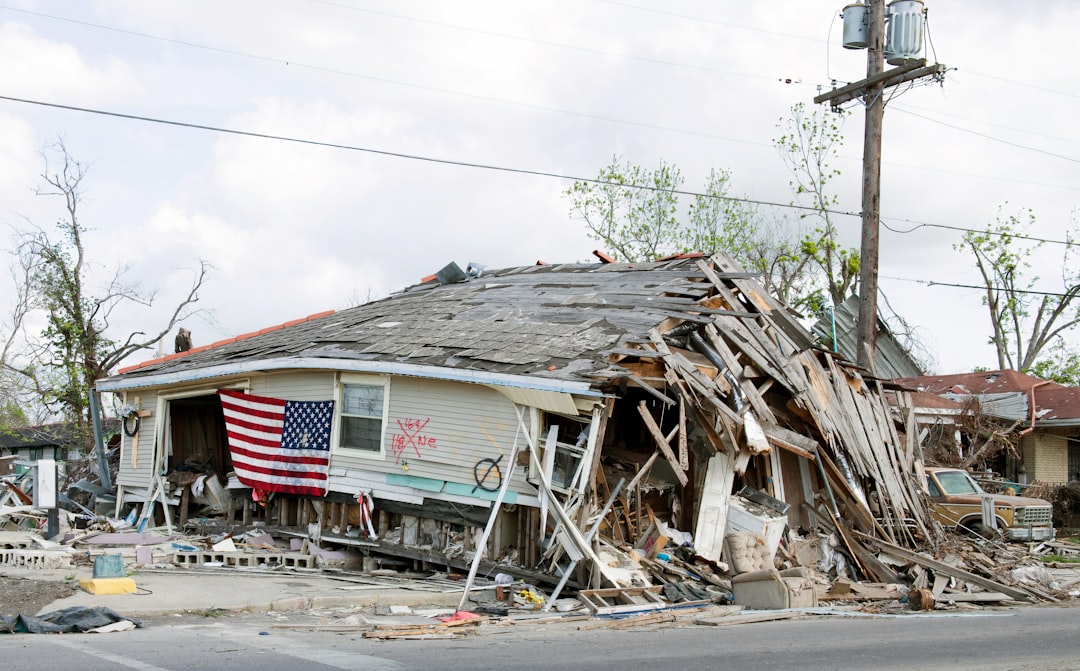
- New Orleans is on an irreversible path toward submersion due to accelerating sea level rise and land subsidence.
- Parts of the city are sinking at a rate of nearly two inches per decade, while Gulf waters rise at more than 0.3 inches annually.
- Experts argue that managed retreat must become central to the city’s long-term survival strategy to combat climate change.
- Rising oceans and sinking land are converging catastrophically in southern Louisiana, threatening the city’s future.
- Climate models predict the region could see an additional 2 to 4 feet of sea level rise by 2050.
New Orleans is on an irreversible path toward submersion due to accelerating sea level rise, land subsidence, and coastal erosion, scientists say. With parts of the city already sinking at a rate of nearly two inches per decade and Gulf of Mexico waters rising at more than 0.3 inches annually—nearly double the global average—the window for adaptation is closing. Experts from Tulane University and the U.S. Geological Survey now argue that managed retreat, not just flood barriers or levees, must become central to the city’s long-term survival strategy. The implications extend beyond Louisiana, offering a stark preview of what climate change could force on hundreds of coastal communities worldwide in the coming decades.
New Orleans Is Sinking While the Sea Rises

The dual forces of rising oceans and sinking land are converging catastrophically in southern Louisiana. A 2025 USGS study confirmed that some areas around New Orleans are subsiding at rates up to 1.8 inches per decade, primarily due to sediment compaction and groundwater extraction. At the same time, sea levels in the northern Gulf have risen by over a foot since 1950, a trend accelerating due to thermal expansion and melting ice sheets. According to climate models cited in the Nature Climate Change journal, the region could see an additional 2 to 4 feet of sea level rise by 2050. High-tide flooding, once rare, now occurs dozens of times a year in neighborhoods like the Lower Ninth Ward. Infrastructure, including pumps and levees, is already operating beyond design limits during routine storms, and saltwater intrusion is contaminating freshwater aquifers essential for drinking and agriculture.
Decades of Environmental Mismanagement Deepened the Crisis

The vulnerability of New Orleans is not solely a product of climate change but of over a century of human intervention in natural systems. The city was built below sea level on deltaic sediments, relying on levees and flood control structures that disrupted the Mississippi River’s ability to deposit silt and rebuild marshlands. Historically, seasonal floods replenished coastal wetlands that acted as storm buffers; now, those wetlands are vanishing at a rate of a football field every 100 minutes, according to a 2024 report by the Louisiana Coastal Protection and Restoration Authority. Oil and gas extraction further exacerbated subsidence, while navigation canals allowed saltwater to penetrate fragile ecosystems. These decisions, made for economic development and flood protection, have created a feedback loop: less land means less protection, which increases reliance on engineered solutions that further degrade the environment. The Army Corps of Engineers’ post-Katrina upgrades improved short-term safety, but scientists now say they cannot withstand the long-term trajectory of sea level rise.
Scientists and Community Leaders Push for Managed Retreat

Researchers like Dr. Shelley Gibson at Tulane’s School of Architecture and Dr. Ansel Nguyen at the ByWater Institute are advocating for a shift from defense-based engineering to strategic relocation. Their proposal, dubbed the Louisiana Adaptive Futures Initiative, calls for a state-led, federally funded managed retreat program that prioritizes the most at-risk communities. This includes buyouts for homeowners in flood-prone zones, investment in inland resettlement hubs, and cultural preservation for communities with deep historical roots, such as the Isle de Jean Charles Band of Biloxi-Chitimacha-Choctaw, already undergoing relocation. While some residents resist leaving ancestral homes, others see relocation as inevitable. “We’ve rebuilt after every storm,” said Monique Verdin, a community advocate and resident, “but we’re not asking whether we should keep rebuilding in the same place.” The challenge lies in building political and financial will for a plan that acknowledges retreat—not as failure, but as adaptation.
What This Means for Residents and Policymakers

For New Orleans residents, especially in low-income and historically marginalized neighborhoods, the path forward is fraught with uncertainty. Insurance costs have skyrocketed, with many homeowners facing annual premiums over $10,000. Federal flood maps, last updated in 2023, now classify over 60% of Orleans Parish as high-risk, affecting property values and mortgage availability. Meanwhile, state and federal policymakers face a dilemma: continue investing billions in levees and pumps for a city that may be unviable in 30 years, or pivot toward relocation with no existing national framework for climate-induced migration. The Biden administration’s Climate Resilience Program has allocated $120 million to Louisiana for adaptation planning, but experts say hundreds of billions will be needed nationwide for equitable retreat strategies.
The Bigger Picture
New Orleans is not alone. Cities like Miami, Jakarta, and Dhaka face similar threats from sea level rise and subsidence. What makes New Orleans a critical case study is its advanced stage of environmental degradation and its cultural significance—making the conversation about retreat both urgent and emotionally complex. The city’s fate underscores a global blind spot: most national policies still treat sea level rise as a future problem, not a present crisis. As climate impacts intensify, governments will need new legal, financial, and social tools to manage the displacement of millions. The choices made in Louisiana could set precedents for how the world handles climate migration in the 21st century.
What comes next will depend on whether leaders act before disaster forces their hand. Pilot relocation programs are already underway, but scaling them requires unprecedented coordination and funding. Scientists stress that delaying action will only increase human and financial costs. As one researcher put it, “We’re not saving New Orleans by keeping people in place—we’re prolonging the inevitable. The real question is whether we can move with dignity, or be pushed by catastrophe.”
Source: Cnn