- Kate Ip, a Hong Kong police officer, became the first person from Hong Kong to travel to space aboard China’s Shenzhou-18 mission.
- Ip’s six-month stay on the Tiangong space station will focus on biomedical and materials experiments in microgravity.
- As a payload scientist, Ip was selected for her expertise in forensic science and laboratory research, not piloting or engineering.
- The mission marks a milestone in Beijing’s efforts to integrate Hong Kong into China’s national scientific and technological framework.
- The historic launch highlights China’s expanding civilian space capabilities and fosters regional pride and unity.
Kate Ip, a 43-year-old Hong Kong police officer and mother of three, has made history as the first person from Hong Kong to travel to space, launching aboard China’s Shenzhou-18 mission on April 25, 2024. Serving as a payload scientist, Ip is responsible for conducting biomedical and materials experiments aboard the Tiangong space station. Her journey marks a symbolic milestone in Beijing’s efforts to integrate Hong Kong more closely into its national scientific and technological framework. This mission not only highlights China’s expanding civilian space capabilities but also signals a strategic move to foster regional pride and unity through high-profile scientific achievement, with implications for both space exploration and political symbolism across the region.
Historic Launch from Jiuquan Satellite Launch Center

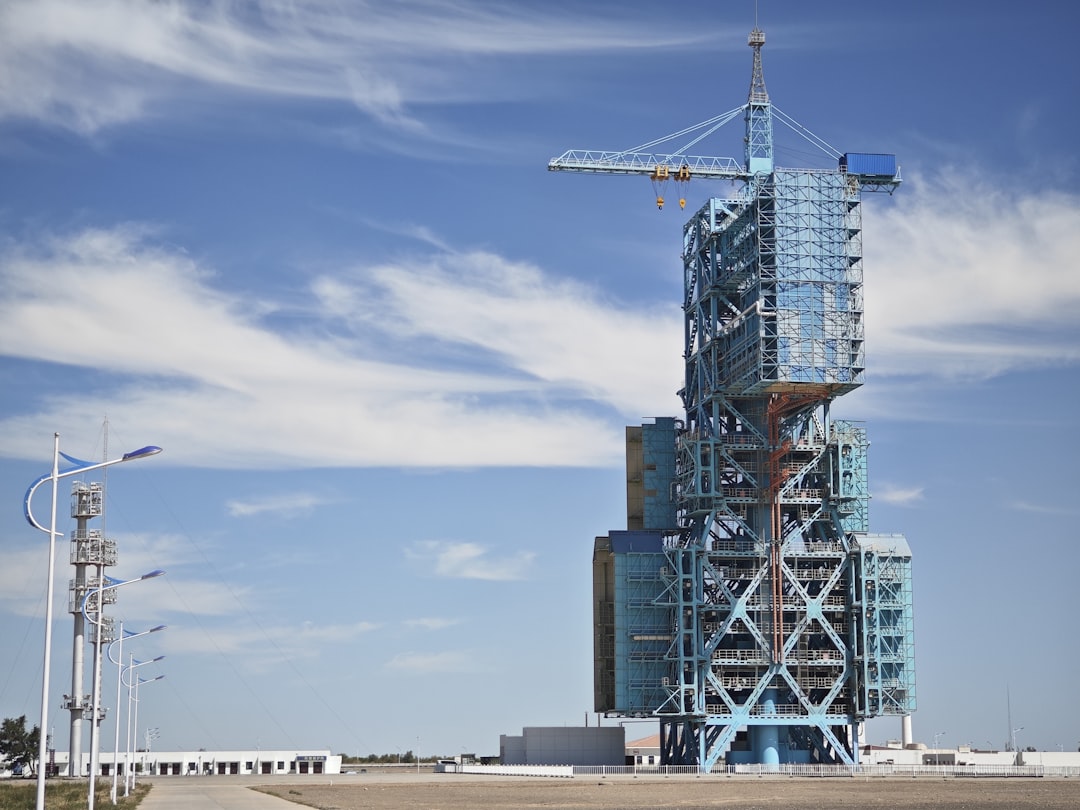
The Shenzhou-18 spacecraft lifted off from the Jiuquan Satellite Launch Center in China’s Gobi Desert at 8:59 p.m. local time, propelled by a Long March 2F rocket. Alongside two Chinese astronauts—mission commander Ye Guangfu and fellow crew member Li Cong—Kate Ip entered orbit for a six-month stay aboard the Tiangong space station. As a payload scientist, her role centers on managing and executing a series of experiments in microgravity, particularly in biotechnology and advanced materials. Unlike traditional taikonauts, Ip was not selected for her piloting or engineering background but for her expertise in forensic science and laboratory research, skills honed during her two-decade career in the Hong Kong Police Force. The successful launch underscores China’s growing confidence in deploying non-career astronauts for specialized scientific roles, a model increasingly adopted by other spacefaring nations.
From Forensic Lab to Low Earth Orbit

Ip’s path to space began not in an aerospace academy but in Hong Kong’s forensic science division, where she spent years analyzing evidence with precision and discipline—qualities now essential in space-based research. In 2023, China initiated a nationwide call for scientists and engineers to join its civilian astronaut corps, seeking specialists capable of advancing research aboard Tiangong. Hong Kong, despite its limited domestic space infrastructure, was invited to participate as part of broader national integration policies. Over 1,200 applicants from the Special Administrative Region applied; Ip emerged as the top candidate due to her scientific rigor and physical resilience. She underwent 14 months of intensive training at the Astronaut Center of China in Beijing, mastering spacecraft systems, emergency protocols, and microgravity adaptation. Her selection reflects a shift in China’s space program: from military-led missions to multidisciplinary civilian science, aligning with global trends seen in NASA and ESA crew compositions.
The People Behind the Mission

Kate Ip is not only a scientist and officer but also a symbol carefully curated by both local and national authorities. Her identity—as a woman, a mother, and a Hong Kong resident—resonates with Beijing’s narrative of unity, inclusion, and technological prowess. Officials in Hong Kong and mainland China have celebrated her as a role model for youth, particularly young women in STEM fields. Behind the scenes, her mission was supported by a joint team of scientists from the University of Hong Kong, the Chinese Academy of Sciences, and the China Manned Space Agency. While Ip’s personal motivation appears rooted in scientific curiosity and service, her presence in space also serves geopolitical purposes: reinforcing Hong Kong’s place within China’s national project at a time when regional identity remains complex and contested. Her calm demeanor and technical competence have already drawn comparisons to pioneering astronauts like Sally Ride and Liu Yang.
Scientific and Political Implications

Ip’s mission carries dual significance—scientific and symbolic. On the research front, her experiments could yield insights into cellular aging and protein crystallization, with applications in medicine and industrial design. For Hong Kong, the mission elevates its role in China’s science and technology strategy, potentially unlocking new research funding and collaborative opportunities. Politically, it reinforces Beijing’s message that Hong Kong remains an integral part of national advancement, even as autonomy concerns persist. However, some observers caution against overemphasizing symbolism at the expense of transparency; details about the experiments and crew communications remain limited compared to Western space agencies. Still, for a region with no independent space program, Ip’s journey represents a tangible leap into the future of science and national identity.
The Bigger Picture
This milestone reflects a broader transformation in human spaceflight: the gradual opening of space to non-traditional astronauts from diverse backgrounds and regions. Just as private missions have carried civilians into orbit, national programs like China’s are now incorporating specialists from outside the military-engineering pipeline. According to BBC analysis, the inclusion of regional figures like Ip may become more common as space becomes a stage for soft power and national cohesion. Moreover, as competition intensifies between the U.S., China, and emerging space actors, scientific collaboration—and representation—will play an increasingly strategic role in shaping global perceptions of leadership and innovation.
What comes next could define a new era for Hong Kong’s scientific community. Will Ip’s journey inspire a wave of STEM engagement across the region? Will China invite more non-mainland Chinese into future missions? And how will the world interpret these missions—as pure science or political theater? One thing is clear: space is no longer just the final frontier. It’s also a mirror reflecting Earth’s evolving geopolitical and social dynamics. Kate Ip, floating above the planet, carries both the hopes of a city and the ambitions of a nation.
Source: BBC