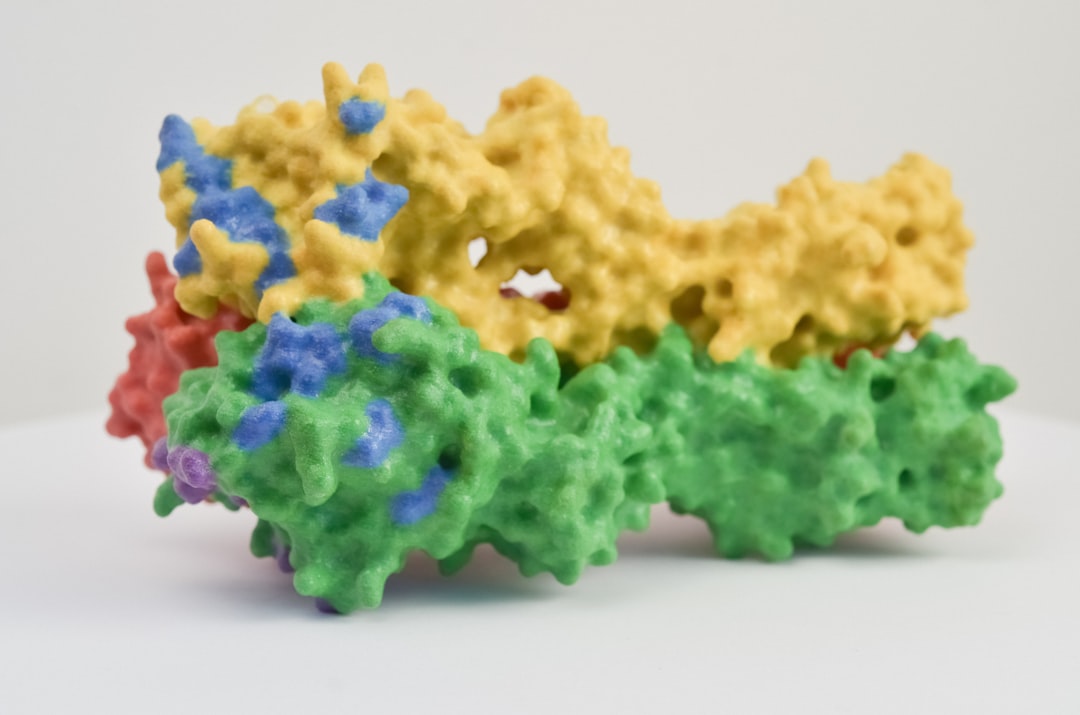
- A new AI model, ESMFold2, has predicted 1 billion protein structures, a 10-fold increase over existing databases.
- The model uses deep learning to infer protein folding from genetic sequences, with a particular strength in microbes and environmental organisms.
- Protein structure predictions accelerate drug discovery, enzyme engineering, and our understanding of evolution across the tree of life.
- ESMFold2 was trained on a diverse dataset of 617 million protein sequences, enabling it to generalize across evolutionary distance.
- The model achieved high confidence for 612 million of its 1.03 billion predictions, indicating reliable structural accuracy.
ESMFold2, a new open-source artificial intelligence model developed by Meta AI and the University of California, San Francisco, has predicted the 3D structures of over 1 billion proteins—ten times more than previously cataloged—dramatically expanding the known protein universe. Published in Nature on 27 May 2026, the atlas leverages deep learning to infer protein folding from genetic sequences alone, with particular strength in microbes, viruses, and environmental organisms largely absent from prior databases. This leap matters because protein structure determines biological function, and unlocking these shapes accelerates drug discovery, enzyme engineering, and our understanding of evolution across the tree of life.
One Billion Predicted Structures, From Soil to Sea

The scale of ESMFold2’s output is unprecedented: 1.03 billion protein structure predictions derived from metagenomic sequences—genetic material sampled directly from environments like ocean water, soil, and the human gut. Unlike earlier models trained primarily on proteins from cultivated organisms, ESMFold2 was trained on a massive, diverse dataset of 617 million protein sequences, enabling it to generalize across evolutionary distance. According to the Nature paper, the model achieved high confidence (pLDDT score >70) for 612 million of these predictions, a threshold indicating reliable structural accuracy. For comparison, AlphaFold DB contains around 214 million predictions, mostly from well-studied model organisms. ESMFold2’s dataset includes 270 million proteins from uncultivated microbes, a resource previously inaccessible to structural biologists. Researchers can now explore hypothetical proteins from deep-sea vents or soil microbiomes with atomic-level detail, opening doors to novel antibiotics or bioremediation tools. The full atlas is publicly available through the Open Protein Database, hosted on Amazon Web Services and supported by the Chan Zuckerberg Initiative.
Meta AI and UCSF Drive Open Science Breakthrough

The breakthrough emerged from a collaboration between Meta AI’s fundamental research team and the Rouskin Lab at UCSF, which specializes in RNA and protein biology. While DeepMind’s AlphaFold relied on attention mechanisms inspired by language translation, ESMFold2 builds on evolutionary scale modeling (ESM), a protein language model that treats amino acid sequences as text and learns patterns of mutation across species. This approach, refined over several generations, allows ESMFold2 to make accurate predictions with less computational overhead than AlphaFold. The team, led by Meta AI scientist Alexander Rives and UCSF’s Genevieve Rouskin, emphasized open access from the start—releasing both the model weights and prediction pipeline under permissive licenses. This stands in contrast to DeepMind’s more restricted data use policies, which limit commercial applications. The decision aligns with a broader push in computational biology toward democratization, enabling researchers in low-resource institutions and developing countries to leverage state-of-the-art tools without licensing barriers.
Trade-Offs: Speed and Scale vs. Precision

While ESMFold2 excels in breadth and accessibility, it trades some accuracy for speed and scalability. Independent benchmarks suggest its per-residue confidence scores are slightly lower than AlphaFold’s in complex, multi-domain proteins, particularly those requiring precise interface modeling for drug design. AlphaFold’s reliance on multiple sequence alignments (MSAs) and template-based modeling gives it an edge in high-stakes applications like therapeutic target validation, where atomic precision is non-negotiable. However, ESMFold2 processes proteins up to 60 times faster and requires significantly less memory, making it feasible to run on standard GPUs. This efficiency enables large-scale screening—such as scanning entire microbial ecosystems for CRISPR-like systems or antimicrobial peptides. Moreover, for exploratory research, a good-enough model of an unknown protein can generate testable hypotheses faster than waiting for experimental validation via cryo-EM or X-ray crystallography, which can take months or years.
Why Now? The Rise of Protein Language Models

The timing of ESMFold2’s release reflects rapid advances in self-supervised learning for biological sequences. Over the past five years, protein language models—trained on vast, unlabeled sequence databases—have matured to the point where they can infer structural and functional constraints without explicit structural data. This mirrors the trajectory of large language models in NLP, where context alone enables prediction. The availability of petabase-scale metagenomic data from projects like the Earth Microbiome Project and Tara Oceans provided the raw fuel for training. Simultaneously, Meta AI’s investment in foundational science, despite its consumer AI focus, has yielded tools with outsized scientific impact. The convergence of algorithmic innovation, data abundance, and open infrastructure has created a tipping point: where predicting protein structure is no longer a bottleneck but a scalable service.
Where We Go From Here
In the next 6 to 12 months, three scenarios are likely: First, academic labs will begin mining the ESMFold2 atlas for novel enzymes, particularly in extremophiles and symbiotic microbes, potentially leading to new biotech patents. Second, pharmaceutical companies may integrate ESMFold2 into early-stage target discovery pipelines, especially for understudied pathogens like those causing neglected tropical diseases. Third, the open-source nature of the model could spur a wave of derivative tools—such as ESM-Predict, a planned extension for protein-protein interaction modeling. However, challenges remain: experimental validation will be essential to confirm predictions, and ethical concerns around biosecurity may arise as more people gain access to engineered protein designs. The field may also see consolidation, with hybrid models combining ESM’s speed and AlphaFold’s precision.
Bottom line — ESMFold2 represents a paradigm shift in structural biology, transforming protein structure prediction from a targeted, resource-intensive effort into a global, open-access infrastructure that democratizes discovery across the life sciences.
Source: Nature