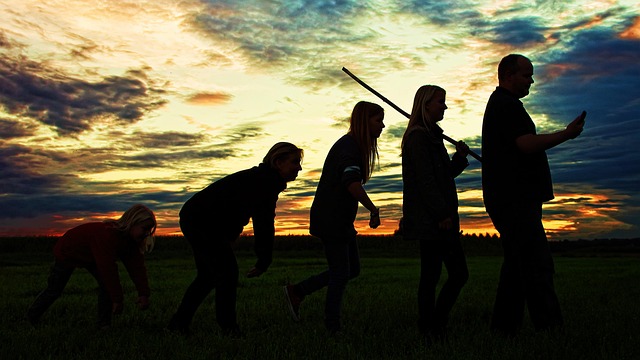
- Research suggests that exposure to fire burn injury drove the evolution of efficient healing processes in humans.
- A million years of fire exposure led to accelerated genetic evolution in wound-healing and inflammatory pathways.
- Early humans’ constant risk of fire injury favored individuals with effective wound-healing mechanisms, shaping human evolution.
- Fire exposure impacted human evolution, particularly in regions prone to injury such as hands and face.
- Genetic data and fossil records confirm the significant influence of fire on human evolution.
A new study published in the journal PMC suggests that the use of domestic fire by early humans led to accelerated genetic evolution in our wound-healing and inflammatory pathways. The research argues that over a million years of exposure to recurring fire burn injury drove the development of more efficient healing processes, ultimately shaping the course of human evolution. This finding provides new insights into the complex relationship between humans and fire, and highlights the significant impact that this relationship has had on our species. The study’s authors suggest that the constant risk of fire injury presented a selective pressure that favored individuals with more effective wound-healing mechanisms, leading to the evolution of new genetic traits.
The Current State of Human Evolution

The study’s findings are based on an analysis of genetic data from modern humans, as well as fossil records and archaeological evidence. The researchers found that the genes involved in wound-healing and inflammation show signs of accelerated evolution, particularly in regions of the body that are most prone to fire injury, such as the hands and face. This suggests that early humans were frequently exposed to fire, and that this exposure had a profound impact on the evolution of our species. The study’s authors also note that the use of fire would have presented a range of other selective pressures, including the need for more efficient thermoregulation and the risk of air pollution.
A Brief History of Fire Use

The use of fire by early humans dates back to at least 1.5 million years ago, during the early Pleistocene era. It is believed that fire was first used for cooking and warmth, but later became an essential tool for a range of activities, including hunting and social gatherings. The control of fire would have presented a significant advantage to early humans, allowing them to expand their range and adapt to new environments. However, it also would have presented a range of risks, including the risk of fire injury and the need for more complex social structures to manage fire use.
The Key Players in Human Evolution

The study’s authors suggest that the evolution of more efficient wound-healing mechanisms would have been driven by the need for early humans to recover quickly from fire injury. This would have been particularly important for individuals who played a key role in fire management, such as hunters and gatherers. The researchers also note that the use of fire would have presented a range of social and cultural challenges, including the need for more complex communication and cooperation. As evolutionary anthropologists have long argued, the use of fire would have played a key role in shaping human social structures and cultural practices.
The Consequences of Fire Injury

The study’s findings have significant implications for our understanding of human evolution and the impact of fire on our species. The researchers suggest that the constant risk of fire injury would have presented a significant selective pressure, favoring individuals with more effective wound-healing mechanisms. This would have led to the evolution of new genetic traits, ultimately shaping the course of human evolution. The study’s authors also note that the use of fire would have presented a range of other consequences, including the risk of air pollution and the need for more complex social structures to manage fire use.
The Bigger Picture
The study’s findings provide new insights into the complex relationship between humans and fire, and highlight the significant impact that this relationship has had on our species. As researchers have noted, the use of fire has played a key role in shaping human evolution, from the development of more efficient wound-healing mechanisms to the evolution of more complex social structures. The study’s authors suggest that the use of fire would have presented a range of benefits and risks, ultimately driving the evolution of our species in complex and multifaceted ways.
In conclusion, the study’s findings provide a fascinating glimpse into the complex relationship between humans and fire, and highlight the significant impact that this relationship has had on our species. As we continue to evolve and adapt to our environments, it is clear that the use of fire will remain an essential part of human life, presenting both benefits and risks that will continue to shape our species in complex and multifaceted ways. The study’s authors suggest that further research is needed to fully understand the impact of fire on human evolution, and to explore the complex relationships between humans, fire, and our environments.
Source: Pmc