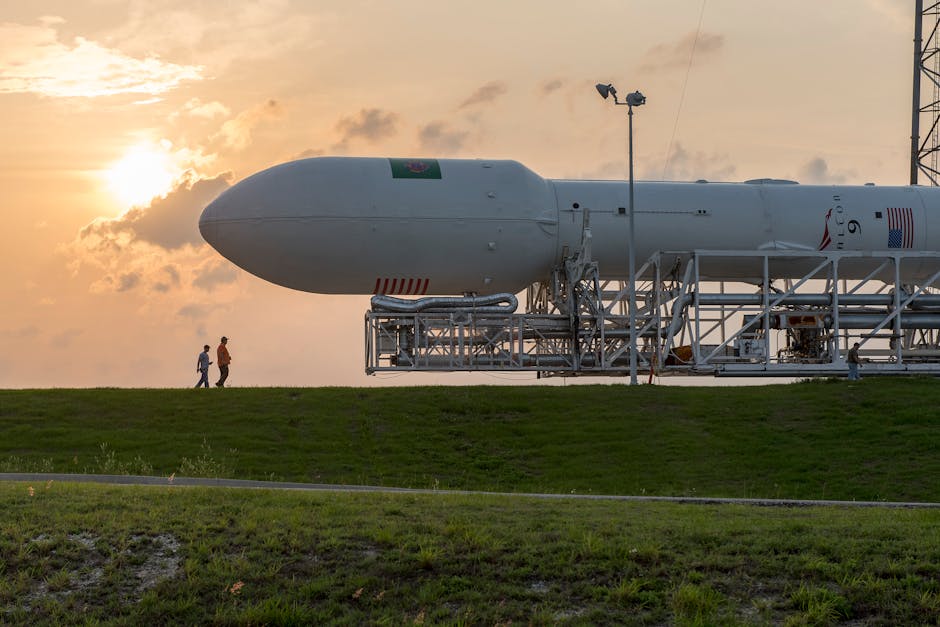
- SpaceX’s Starship V3 prototype successfully launched from Texas, becoming the first to reach space during a test flight.
- Despite falling short of its full flight profile, the mission marked a significant milestone in Starship’s development, demonstrating improved performance.
- Achieving full orbital capability is essential for Starship’s role in NASA’s Artemis lunar missions and future Mars colonization plans.
- The test flight signals meaningful progress in SpaceX’s iterative design philosophy, with improvements in the Raptor engine’s reliability and flight control systems.
- The partial success is a critical step toward transformative space access, despite technical hurdles remaining.
SpaceX’s Starship V3 prototype successfully launched from Starbase, Texas, in May 2026, becoming the first iteration of the vehicle to reach space during a test flight, though it ultimately failed to achieve low-Earth orbit. The mission marked a significant milestone in the development of the world’s largest and most powerful rocket, demonstrating improved performance over previous versions despite falling short of its full flight profile. The outcome matters because achieving full orbital capability is essential for Starship’s role in NASA’s Artemis lunar missions, future Mars colonization plans, and large-scale satellite deployment—making this partial success a critical step toward transformative space access, even as technical hurdles remain.
Why This Test Flight Was a Pivotal Moment

Starship V3’s ascent to space—without exploding or losing control, as earlier versions did—signals meaningful progress in SpaceX’s iterative design philosophy. Unlike the first two integrated flight tests, which ended in midair detonations due to propulsion and guidance failures, V3 completed stage separation and ignited its upper stage engines in near-vacuum conditions, a first for the program. This advancement reflects improvements in the Raptor engine’s reliability, the hot-staging mechanism, and flight control systems. The test’s timing is crucial: NASA is counting on Starship to serve as the Human Landing System for Artemis III, which aims to return astronauts to the lunar surface. With that mission scheduled for no earlier than 2027, every incremental success or failure directly impacts the timeline for America’s return to the Moon.
Flight Profile and Key Technical Outcomes

The Starship V3 mission began with liftoff from Boca Chica, Texas, powered by 33 Raptor engines on its Super Heavy booster. After approximately two and a half minutes, the booster executed a successful hot-stage separation, firing the upper stage’s six Raptor engines while still attached—reducing the risk of collision and improving thrust efficiency. The Super Heavy then initiated its return burn, aiming for a controlled splashdown in the Gulf of Mexico, a maneuver critical for reusability. Meanwhile, the Starship upper stage continued its climb, reaching an apogee of over 150 kilometers—technically above the Kármán line, the boundary of space—but failed to achieve sustained orbital velocity. Telemetry indicated a premature shutdown in one of the vacuum-optimized Raptor engines, likely due to propellant flow instability, preventing the vehicle from completing its planned half-orbit before reentry.
Engineering Challenges and Performance Analysis

The root cause of the engine shutdown is under investigation, but early data suggests issues with the methane fuel supply system under microgravity conditions. Engineers at SpaceX will scrutinize data on tank pressurization, turbopump performance, and combustion stability during the transition from atmospheric to exoatmospheric flight. While the vehicle demonstrated resilience in surviving max aerodynamic pressure and executing stage separation—historically weak points—its inability to maintain full engine operation highlights the complexity of scaling propulsion systems for such a massive vehicle. According to aerospace experts, reaching space is a milestone, but achieving orbit requires not just altitude but velocity: roughly 28,000 kilometers per hour. Reuters analysis of prior test data suggests that even minor deviations in thrust vectoring or fuel mixture ratios can cascade into mission failure at high speeds.
Implications for NASA, Commercial Space, and Future Missions

The partial success of Starship V3 has immediate consequences for NASA’s lunar ambitions and commercial satellite operators eyeing the rocket’s 100+ metric ton payload capacity. While NASA has expressed cautious optimism, program managers emphasize that orbital refueling and full reusability—both dependent on flawless Starship flights—remain unproven. Delays in achieving orbit could push back Artemis III and subsequent missions, potentially ceding leadership in deep space exploration to international competitors. For private sector stakeholders, including satellite constellations like Starlink Gen2, Starship’s reliability will determine launch cost reductions and deployment timelines. Moreover, regulatory scrutiny from the FAA and environmental groups may intensify with each test, especially if debris or splashdown zones raise concerns.
Expert Perspectives
Space industry analysts are divided on how much to celebrate the V3 outcome. Some, like Dr. Laura Forczyk of Astralytical, argue that “reaching space without catastrophic failure is a major win” given the vehicle’s complexity. Others, such as former NASA engineer Wayne Hale, caution that “partial success isn’t enough—operational missions demand 100% reliability.” Aerospace historian Robert Zubrin contends that SpaceX’s rapid test-and-iterate model is inherently risky but essential for breakthrough innovation, comparing it to early aviation development. Meanwhile, competitors like United Launch Alliance stress the importance of proven systems, suggesting that traditional rockets may still play a role in critical missions until Starship matures.
Going forward, all eyes will be on Starship V4, already in assembly at Starbase, which is expected to feature upgraded Raptor engines and enhanced thermal protection. Upcoming tests will likely focus on in-orbit engine reignition and controlled reentry—key steps toward reusability. SpaceX must also prepare for its first planned orbital refueling demonstration, a make-or-break capability for lunar missions. Regulators, investors, and space agencies will be watching closely: the path to Mars begins not with a perfect flight, but with the lessons drawn from each one that falls short.
Source: Ars Technica