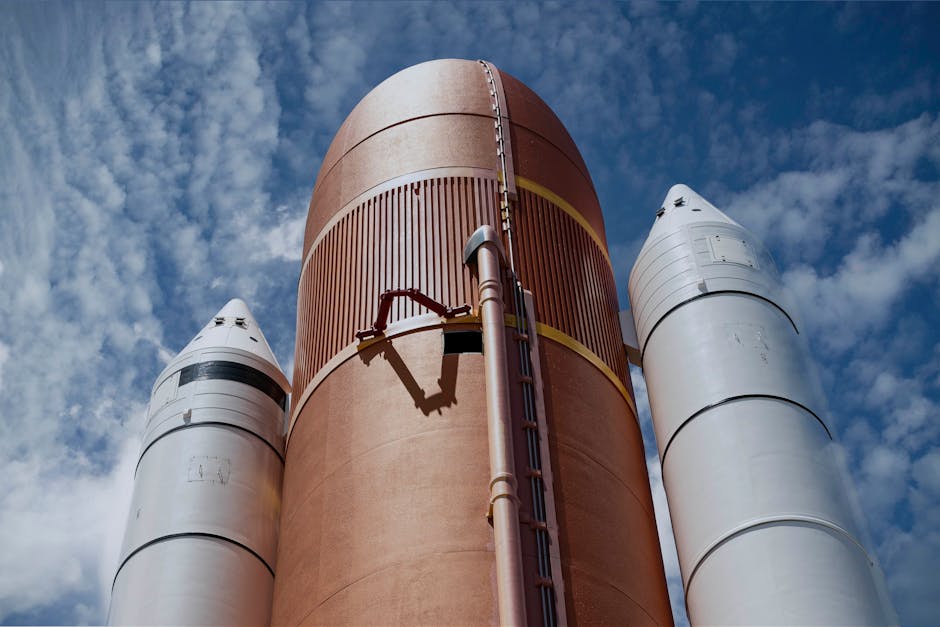
- The Starship V3 achieved most mission objectives despite losing the Super Heavy booster during return sequence.
- The launch demonstrated successful stage separation, payload door operations, and a controlled coast through space.
- The Super Heavy booster generated 17 million pounds of thrust at liftoff, making it the most powerful rocket ever flown.
- The Starship upper stage reached an altitude exceeding 150 kilometers and traveled over 6,000 kilometers.
- The flight marked a major technical progress in SpaceX’s campaign to make Starship the backbone of future lunar, Martian, and interplanetary missions.
SpaceX has taken a critical step toward deep space exploration with the first flight of its upgraded Starship V3, achieving most mission objectives despite the loss of the Super Heavy booster during its return sequence. The launch, conducted from Starbase in Boca Chica, Texas, marked the most advanced test of the fully integrated Starship system to date, demonstrating successful stage separation, payload door operations, and a controlled coast through space. While the booster failed to complete its landing burn, the upper stage reached orbital velocity and transmitted valuable telemetry before a planned reentry over the Pacific—signaling a net gain in SpaceX’s campaign to make Starship the backbone of future lunar, Martian, and interplanetary missions.
Flight Data Confirms Major Technical Progress

NASA and SpaceX telemetry confirmed that the Starship V3 launch achieved several firsts for the program. The Super Heavy booster, powered by 33 Raptor engines, generated approximately 17 million pounds of thrust at liftoff—making it the most powerful rocket ever flown. The vehicle cleared the pad and completed max aerodynamic pressure without incident. Stage separation occurred at approximately 2 minutes and 45 seconds via a hot-staging mechanism, with the upper stage’s six Raptor engines igniting while still attached to the booster—enabling a cleaner disengagement. The Starship upper stage reached an altitude exceeding 150 kilometers and traveled over 6,000 kilometers downrange, hitting speeds near 26,000 km/h. Although it did not achieve a full orbit due to trajectory constraints, it maintained stable flight and executed a simulated payload deployment. According to SpaceX’s post-flight update, over 87% of test objectives were met—a significant improvement over previous iterations. Flight data published by Reuters shows enhanced thermal protection and avionics stability during reentry heating.
SpaceX and NASA Drive Next-Gen Space Ambitions

SpaceX remains the primary private architect of U.S. deep space capability, with Starship central to both commercial and government ambitions. Elon Musk’s company has invested heavily in rapid iteration, building and testing prototypes at a pace unseen in traditional aerospace. The V3 version includes thicker heat shield tiles, improved Raptor engine reliability, and a redesigned propellant transfer system critical for future lunar missions. NASA, meanwhile, has staked the success of its Artemis III moon landing on Starship’s ability to serve as the Human Landing System (HLS). The agency has committed over $4 billion to SpaceX for lunar variant development and has closely monitored each test flight. International partners, including JAXA and ESA, are also evaluating Starship for cargo delivery and potential joint missions. With each test, SpaceX strengthens its position as the dominant force in next-generation launch, challenging legacy contractors and reshaping the global launch economy.
High Risk, High Reward in Rapid Development Model

SpaceX’s approach prioritizes speed over perfection, accepting hardware loss as part of the learning curve. The loss of the Super Heavy booster during its boost-back burn—likely due to engine relight failure—echoes earlier Starship and Falcon 9 development phases. Yet, the ability to gather real-world data on stage separation, thermal stress, and flight control outweighs the cost of a single booster, which SpaceX can now produce in weeks. The trade-off is regulatory and environmental scrutiny: the Federal Aviation Administration (FAA) must sign off on future launches after each anomaly, and environmental groups continue to challenge the expansion of Starbase. However, the benefits are transformative—Starship V3’s 150-ton payload capacity to low Earth orbit could reduce launch costs to under $1,000 per kilogram, enabling mega-constellations, space-based solar, and deep space infrastructure. If reusability is fully achieved, Starship could render current launch systems obsolete within a decade.
Why This Launch Marks a Turning Point

The Starship V3 flight comes at a pivotal moment: after three developmental flights with mixed results, SpaceX needed to demonstrate tangible progress to maintain investor, regulatory, and NASA confidence. The upgrades implemented since the last test—particularly in heat management and engine sequencing—were born from direct analysis of prior failures. The timing also aligns with U.S. strategic goals; NASA aims to land astronauts on the Moon by late 2026, and Starship must prove readiness for uncrewed and crewed lunar dockings. Geopolitically, China is advancing its own super-heavy rocket, the Long March 10, setting up a new space race. SpaceX’s ability to fly frequently and affordably gives the U.S. a critical edge. With V3, the company has moved from proof-of-concept to system maturation—crossing the threshold from experimental vehicle to operational architecture.
Where We Go From Here
In the next six to twelve months, three scenarios could unfold. In the optimistic path, SpaceX achieves rapid reflight approval, conducts two more tests this year with full booster recovery and orbital refueling demonstrations, and begins HLS-specific modifications by Q1 2025. A moderate scenario sees continued progress but with delays from FAA reviews or hardware issues, pushing key milestones into 2026. In a constrained outcome, another major failure triggers a lengthy investigation, jeopardizing Artemis III timelines and forcing NASA to consider contingency landers. Regardless, Starship’s trajectory is upward: production of V4 and V5 vehicles is already underway, and SpaceX is building orbital launch infrastructure at Kennedy Space Center. The era of super-heavy reusable launch is no longer theoretical—it is accelerating.
Bottom line — despite losing the booster, SpaceX’s Starship V3 flight delivered the most complete test yet, proving that rapid iteration can overcome complexity and bringing humanity measurably closer to sustainable deep space exploration.
Source: TechCrunch